Get Full Government Meeting Transcripts, Videos, & Alerts Forever!
Get email alerts on the Parks topic
No spam. Unsubscribe anytime.
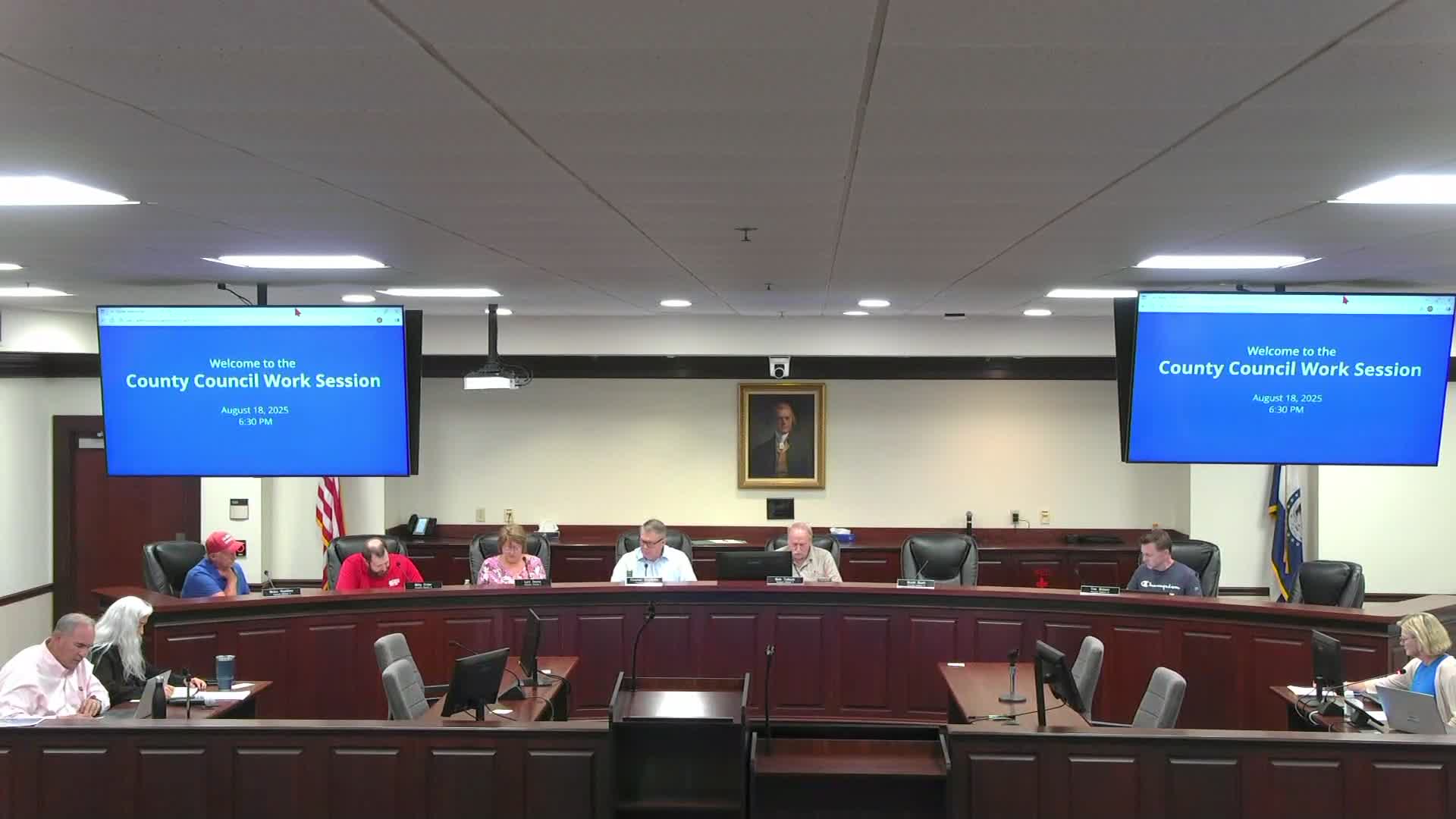
Jefferson County councilors debate swim ban, enforcement and long-term fixes at Rockford Park
Summary
Councilors, park staff and residents discussed temporary swimming prohibitions, signage, enforcement tools and federal restoration funding after drownings at Rockford Park; staff warned legal limits because the Big River is a navigable waterway owned by the state, and members agreed to draft a resolution and prepare ordinance language for periodic review.
Jefferson County councilors spent over an hour Monday debating how to reduce drownings and rescue risk at Rockford Park, weighing a temporary ban on swimming, enforcement mechanisms and longer-term habitat fixes.
Councilwoman Loria Irons opened the discussion by urging respectful debate and noting media coverage; Laura Schurr described recent park use and said rescuers face dangerous conditions, saying the water was “72 in the water and 55 on the bank” when she visited. Councilman Haskins and others argued that restricting access or copying ordinances used by nearby jurisdictions would reduce drownings and protect first responders.
Parks Director Bob Pigg told the council the Big River is, in his view, a navigable waterway owned by the state and that the county’s authority is limited to control of access from county park property. “We do have control over if they're coming from our space into that water,” Pigg said, noting enforcement questions: what specific violation would officers cite, and how to ensure a rule has “teeth.” He also raised operational constraints such as deed restrictions that may require returning property to a conservation department for certain closures.
Executive Gannon and staff described two funding paths for long-term removal of low-head dams and restoration. Councilmember Grodeky outlined a 2019 U.S. Army Corps of Engineers study that estimated approximately $73 million in federal and $39 million in nonfederal costs (about $113 million total) to address multiple dams and river restoration. Another staff member noted a roughly $22 million settlement fund identified for Big River restoration work. Members warned those federal and settlement funds would move slowly.
Several councilors pushed for an ordinance rather than a nonbinding resolution to give the county enforcement authority and fines, and proposed legal drafting to reinstate a previously removed restriction (section U) that would restrict swimming. Pigg recommended practical measures such as gates or targeted parking closures, increased signage, and stronger trespass or citation language; he also suggested rescue fees for people who require emergency responses.
There was no formal vote on a ban. The council agreed, by consensus, to draft a resolution and simultaneously prepare ordinance language (including a possible sunset and periodic review) and to pursue coordinated outreach to state and federal agencies about restoration funding. The council also asked staff to return with enforceable language and implementation options.
What happens next: staff will draft a county resolution and ordinance language for council consideration and schedule follow-up, with periodic review dates to assess whether additional action or coordination with state/federal agencies is feasible.