
Whatcom County panel spotlights Indigenous overrepresentation in county jail, urges cultural supports and community alternatives
Get AI-powered insights, summaries, and transcripts
Subscribe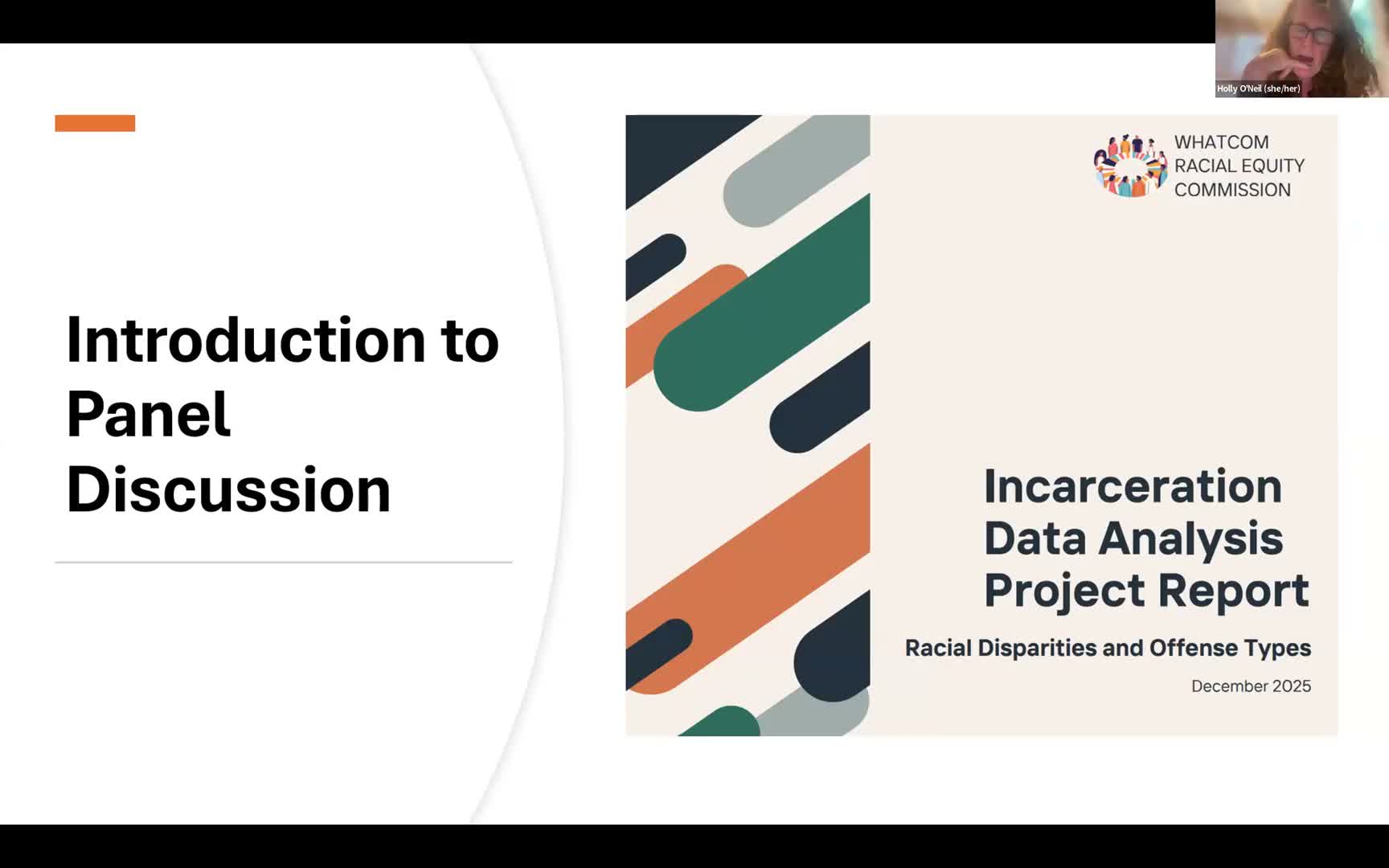
Summary
At a Feb. 19 Justice Project Oversight and Planning Committee meeting, panelists with lived experience said Indigenous people are 12.5% of the Whatcom County Jail population though about 1.4% of county residents. They urged culturally grounded programming, tribal–county collaboration and expanded reentry options as the county plans a new facility.
At a Feb. 19 meeting of the Justice Project Oversight and Planning Committee, panelists with lived experience and public defenders raised alarm about the overrepresentation of Indigenous people in the Whatcom County Jail and urged the county to pair any new facility with culturally grounded programming, tribal access and investments in alternatives to incarceration.
Holly O’Neil, a facilitator for the committee, opened the panel by citing a commission data analysis of 2024 jail statistics that the committee asked it to examine. "There were 12.5% Indigenous inmates compared with 1.4% of the Indigenous individuals in the county population," O’Neil said, highlighting the scale of the disproportionality the group is trying to understand.
The panel included people who had been through the criminal-legal system and staff who work in prevention and reentry. Rosa Hunter, a task force member and researcher, described her experience as someone convicted in 2005 who found the system difficult to navigate after release: "The system wasn't for me to get better," she said, citing transportation barriers for parole meetings and limited tribal support because she is not from the local tribe.
Several panelists described how survival needs, trauma and lack of services drive repeated bookings. "Fear drives what's going on," said Matthew Hewitt, a substance-use disorder professional trainee, describing housing instability, untreated behavioral-health conditions and patterns of survival-related petty offenses. Stefan Kinley, a researcher who participated in juvenile drug court and later the men's reentry home, emphasized that structured reentry programs and education helped him change course.
Panelists proposed concrete changes the county could build into planning for a new jail to improve outcomes and reduce repeat incarceration. Suggestions included permitting culturally specific programming and visits inside the facility (panels of community members, some ceremonial items within safety limits), expanding 12-step and lived-experience speaker programs, creating trustee or work options that give people purposeful activity while detained, and ensuring tribal service providers have easy access to people in custody.
"I picked up a drum," Hewitt said of his recovery, explaining that reconnecting to culture and spirituality played a key role in his turnaround and could be incorporated into programming. Talon Paul, an investigator with the public defender's office, urged collaborative planning with tribes and county agencies so tribal staff and community programs can more readily connect to detained people and help with reentry.
County officials and a public defender leader framed the reforms as both a moral and operational imperative. Stark Folas, director of the County Public Defender's Office, told the committee that reducing overincarceration would both serve justice goals and help the county manage the jail footprint and costs.
The committee also heard administrative updates: organizers said an interim data dashboard will be posted for review and a sequential-intercept workshop is scheduled for Feb. 25–26 to identify barriers and improve diversion at points from law-enforcement contact through reentry. A second community engagement workshop is scheduled March 19 at 6 p.m. at Linden City Chambers; the committee's next meeting is also March 19.
The panel and public commenters repeatedly called for investment in prevention, housing and community-based reentry services rather than only planning for a larger detention facility. Kaya Gilia of the Whatcom Peace and Justice Center told the group that design changes alone are insufficient and urged the county to pair facility planning with efforts to return land, resources and support that help communities thrive.
The committee closed by thanking panelists for their lived experience and input and inviting continued conversations on tribal–county collaboration, programming and alternatives to incarceration.