Maryland corrections faces staffing, overtime and restrictive‑housing scrutiny; contractors and transgender treatment draw public concern
Loading...
Summary
DPSCS Secretary Carolyn Scruggs and DLS analysts told the subcommittee that rising medical and overtime costs, facility staffing shortfalls and a planned closure of MCIJ drive fiscal pressure; advocates and unions testified about staffing, assaults, facility conditions and alleged anti‑union activity by the contracted health provider Centurion while watchdogs pressed for continued oversight of transgender housing and PREA complaints.
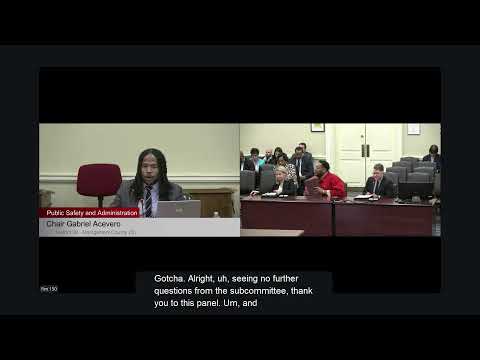
The Maryland Department of Public Safety and Correctional Services (DPSCS) faced intense questioning on Jan. 30 over staffing shortages, high overtime costs, care and housing for transgender incarcerated people, and delays on a women's prerelease facility.
DLS analyst Josh Weinstock said the department’s fiscal 2027 corrections allowance falls about $23 million to $1.1 billion but includes proposed fiscal 2026 deficiency appropriations totaling $57 million to cover shortfalls tied to lower-than-expected vacancies and inmate medical costs. Weinstock highlighted large line items: the inmate medical-care contract accounts for roughly one-quarter of spending and proposed reductions reflect salary and overtime adjustments plus savings tied to the planned partial closure and transfer of housing at MCIJ.
Secretary Carolyn J. Scruggs told the committee that DPSCS has taken steps to roll out the reentry passport (MD Benefits Port) and that nearly 3,000 documents have been uploaded for incarcerated people. She said case managers must volunteer to submit applications and that incarcerated people cannot create email accounts while inside correctional facilities; to address that, DPSCS is training Division of Parole and Probation (DPP) agents and expanding internet-cafe access at certain sites to help link individuals to documents upon release.
DLS raised disparities in how transgender individuals are housed and how often they spend time in restrictive housing: transgender people comprised fewer than 1% of the incarcerated population in FY25 but were 2.7 times more likely to be placed in restrictive housing and accounted for a disproportionate share of restrictive-housing days. The department acknowledged policy revisions in intake screeners and a medical-evaluations manual that include transgender-specific chapters, and Assistant Secretary Angelina Guarino said the policies are in legal review and expected to be implemented "soon," meaning within about a month.
Advocacy groups and university legal researchers urged sustained oversight. Sam Williamson of the Public Justice Center and co-leader of the Trans Rights Advocacy Coalition (TRAC) said the department’s own records show persistent problems with PREA complaint adjudication and heavy reliance on restrictive housing for protection. Michael Tynes of the University of Baltimore said Maryland had paid more than $840,000 in settlements related to mistreatment of transgender individuals by late 2025 and urged continued budget language requiring DPSCS reporting.
Unions and corrections staff pressed the committee for more resources and higher compensation. AFSCME Council 3 President Patrick Moran and correctional union leaders described unsustainable overtime (DLS cited a Creative Corrections staffing analysis showing millions of overtime hours equivalent to thousands of full‑time posts), rising assaults and several 2025 deaths in custody; they urged the committee to reject recommended position cuts and to invest in frontline staffing, pay and retention. Multiple witnesses alleged that Centurion, the contracted health-care provider, engaged in anti‑union conduct inside state facilities; union leaders asked the committee and state officials to investigate those allegations. DPSCS leaders said they were unaware of such activities and pledged to look into the claims.
On the women’s prerelease facility mandated by statute, Secretary Scruggs said a site was selected but litigation and objections prompted a pause; department officials said they are ready to resume planning once site disputes are resolved and DGS signals readiness to proceed.
What comes next: DLS recommended committee narratives and continued reporting on transgender treatment, reentry passport rollout and Project FRESH participation. DPSCS agreed to provide the requested reports and the committee indicated it will follow up on contractor conduct and staffing metrics.