
Parole‑and‑probation agents press lawmakers on staffing, caseloads and safety equipment
Get AI-powered insights, summaries, and transcripts
Subscribe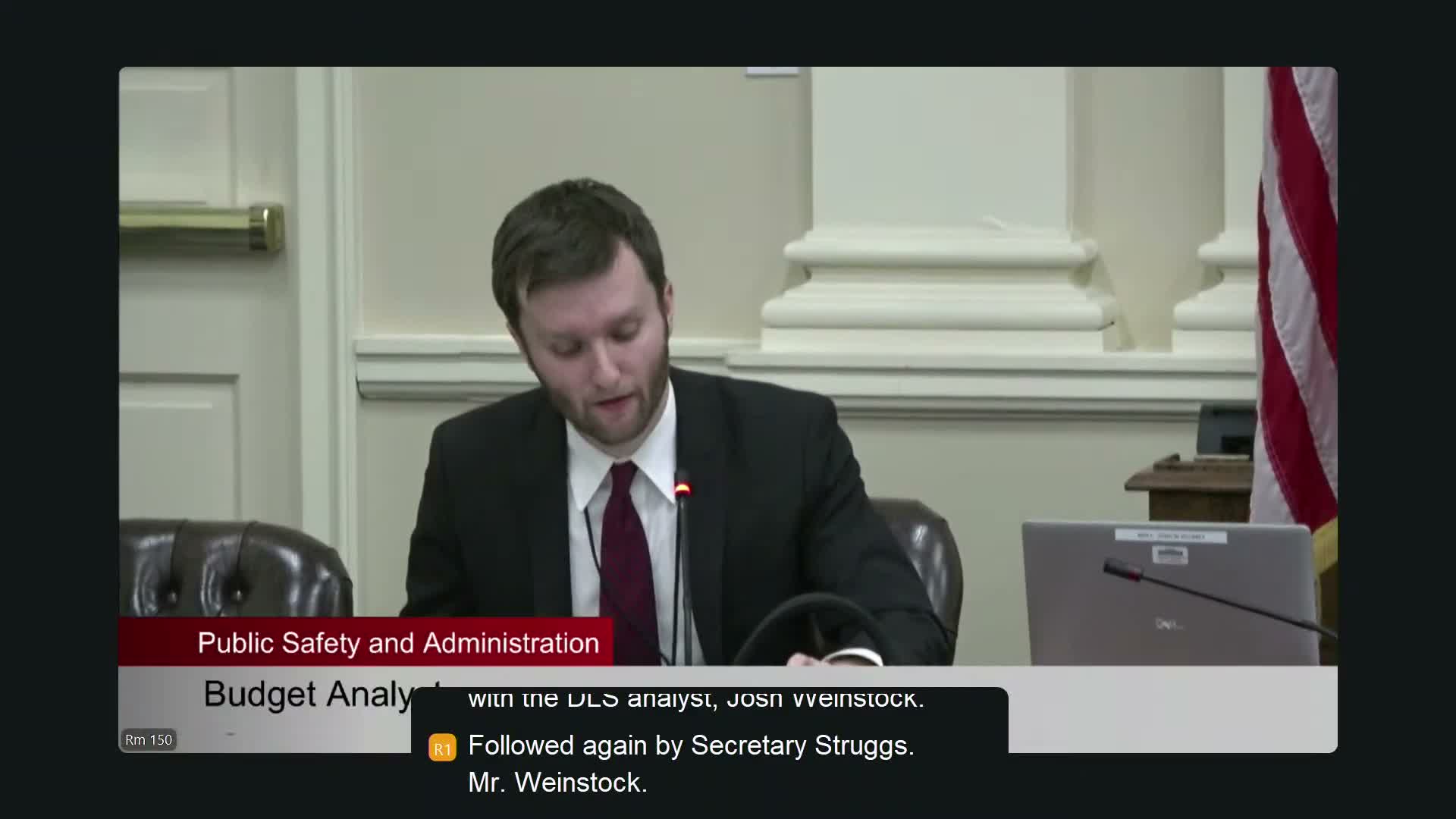
Summary
Union witnesses told the committee that understaffing, high caseloads and wage concerns threaten safety and retention; DLS and DPSCS described recent equipment purchases, a phased resumption of home visits after a 2024 agent murder, and a planned customized risk‑assessment tool.
DLS presented the fiscal 2027 allowance for the Department of Public Safety and Correctional Services’ community supervision division and used the hearing to highlight safety and operational changes following the May 31, 2024, murder of parole agent Davis Martinez. The DLS analyst said the department paused home visits, equipped field staff with multi‑threat ballistic vests, law‑enforcement pepper spray, Bluetooth tracking tags and iPhone 15 devices for emergency messaging, and phased the full resumption of home visits after staff completed training and equipment rollout.
Secretary Carolyn J. Scruggs told the committee the department had equipped hundreds of agents with protective gear and that the risk‑assessment tool procurement is in pre‑award legal review. Scruggs said DPP plans to commission a customized assessment tool and has deployed EPICS‑2 trainer certification to create a train‑the‑trainer model for evidence‑based client‑interaction skills.
Union speakers described ongoing operational stresses. John Preston, a parole and probation agent, said offices on the Eastern Shore lack administrative support and face wage compression that drives veteran staff out. Renika Robinson, president of AFSCME Local 3661, told the committee that caseloads are unevenly distributed and that the department’s proposed threshold—40 intensive cases per agent—exceeds the American Probation and Parole Association’s recommended limit of about 20.
Christian Goble (AFSCME Maryland Council 3) cited an American Correctional Association review completed after agent Martinez’s death that documented low morale, insufficient staffing, unclear rollouts of internal initiatives, and delayed equipment procurement. The union witnesses asked the committee to back wage increases and other steps to retain experienced staff and reduce caseloads.
DLS recommended committee narrative requesting reports on agent safety efforts, body‑worn camera implementation, and caseload data; the department agreed to provide the requested updates. No formal vote or budget decision was taken in the hearing record.