
Committee considers limited cooperatives for licensed cannabis producers, cap set at three licenses
Get AI-powered insights, summaries, and transcripts
Subscribe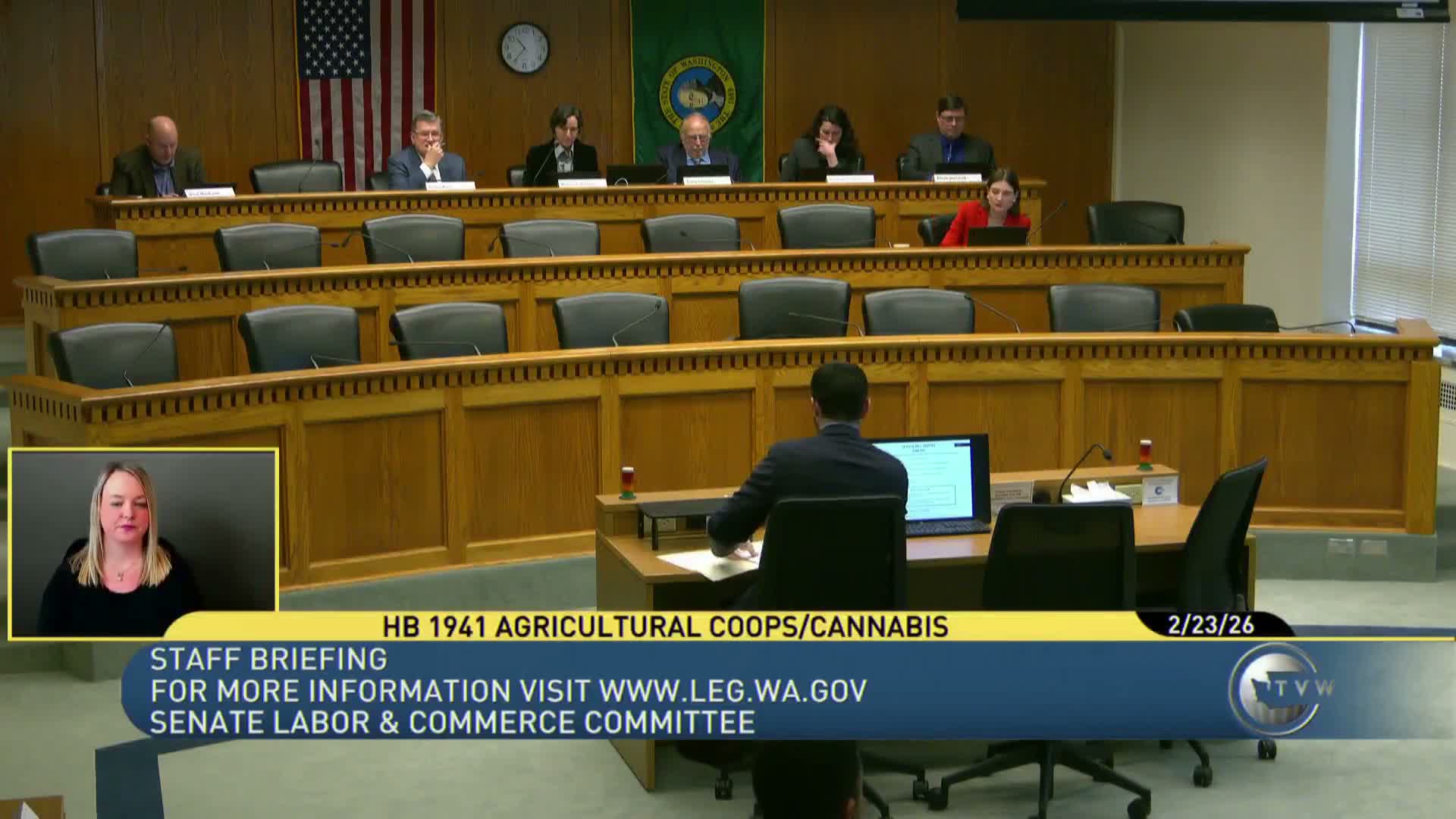
Summary
A striking amendment to HB 1941 would let licensed cannabis producers form agricultural cooperatives for collective processing, handling, and marketing while capping representation at three producer licenses to limit consolidation.
The Senate Labor & Commerce Committee heard a striking amendment to Engrossed House Bill 19-41 that would permit licensed cannabis producers to form agricultural associations or cooperatives to collectively process, handle, and market cannabis products, subject to limits intended to prevent consolidation.
Committee staff explained the amendment replaces a prior 30% licensed-canopy restriction with a simpler cap: no single cooperative may represent more than three producer licenses at any given time. Stakeholders from the producer community supported the change as a way to provide small family growers with tools other agricultural sectors enjoy, while several witnesses and the LCB (Liquor and Cannabis Board) stressed the measure is governed under agriculture statutes and does not dissolve the state's three-tier firewall separating production, processing and retail.
Industry speakers warned that Washington's licensed canopy capacity far exceeds current market demand and urged caution so the amendment would not unintentionally advantage larger operators. Producers and trade groups urged forward-looking provisions for federal legalization and interstate commerce; committee staff and LCB indicated the amendment was crafted to limit potential market concentration and preserve consumer protections.
The committee heard supportive testimony from several producer and industry associations, and LCB staff confirmed the board's role on enforcement questions but noted primary governance is in the Department of Agriculture's agricultural cooperative statutes.
Committee members asked for follow-up from WSDA on agricultural impacts. The amended bill proceeded through public testimony and was later included in executive action recommendations.