Get AI Briefings, Transcripts & Alerts on Local & National Government Meetings — Forever.
Heated testimony as Senate committee hears ban on noncompete agreements
Summary
House Bill 1155 would void noncompete covenants statewide; testimony split between labor and healthcare/industry groups over workforce mobility, patient continuity, and protections for employer investments.
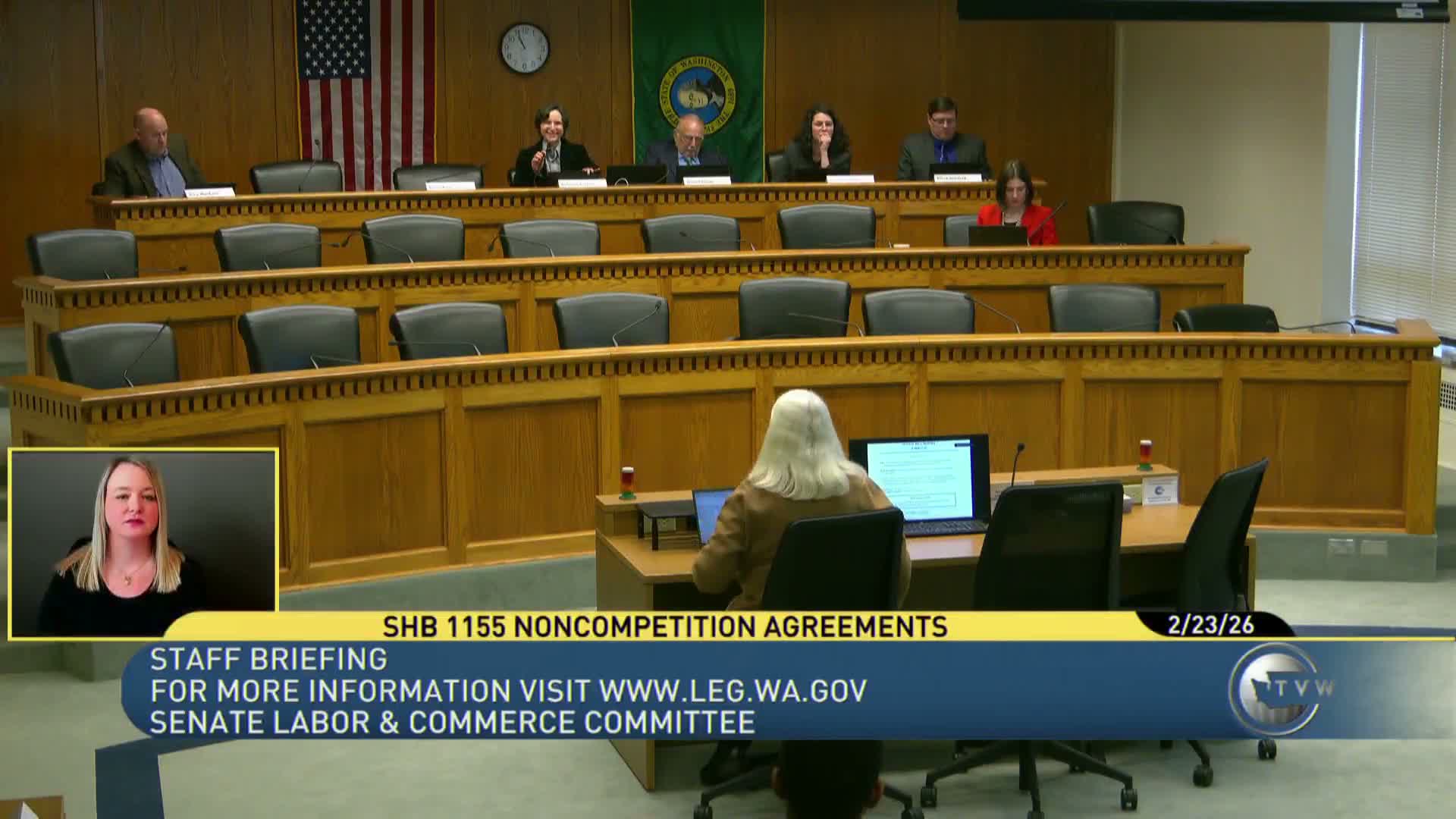
The Senate Labor & Commerce Committee heard testimony Feb. 25 on engrossed substitute House Bill 11-55, a proposal to make noncompete covenants void and unenforceable statewide.
Committee staff summarized the bill. Under HB 1155 noncompete covenants would be void regardless of when they were entered into or the worker's earnings level; the bill expands the definition of covered covenants, preserves private causes of action and Attorney General authority, and includes limited exceptions such as agreements where an employer pays an employee's educational expenses. The bill also establishes notice requirements for employers to inform current and former employees that noncompetes are void by Oct. 1, 2027.
Proponents — including the Washington State Labor Council, the Washington Employment Lawyers Association, and individual workers who described litigation they faced — framed the bill as restoring mobility and preventing punitive suits that impede employment. "This House Bill 11-55 does finish the job," said Carissa Larson of the Washington State Labor Council, urging the committee to move the measure forward.
Representatives of the medical community and some businesses voiced concerns. Alexa Silver of Vancouver Clinic said her organization relies on reasonable, limited noncompetes to prevent market destabilization and aggressive poaching by consolidated, private-equity-backed groups, and urged a narrow amendment. Business groups (Association of Washington Business, Community Bankers) asked for narrowly tailored exemptions for senior executives or functions that legitimately risk the stability of smaller organizations.
The record includes a range of written comments and a large number of written submissions, plus live panels that reflected the policy trade-offs: worker mobility and client continuity versus narrowly tailored protections for particular employers or functions. Committee members asked clarifying questions about health-care-specific amendments and whether the bill's language considered certain employer investments; witnesses suggested potential targeted fixes.
Committee action on the bill was deferred pending further consideration. The hearing record will inform any amendments considered during committee deliberations.