
Senate committee hears bill to create wage-recovery fund, raise penalties for wage theft
Get AI-powered insights, summaries, and transcripts
Subscribe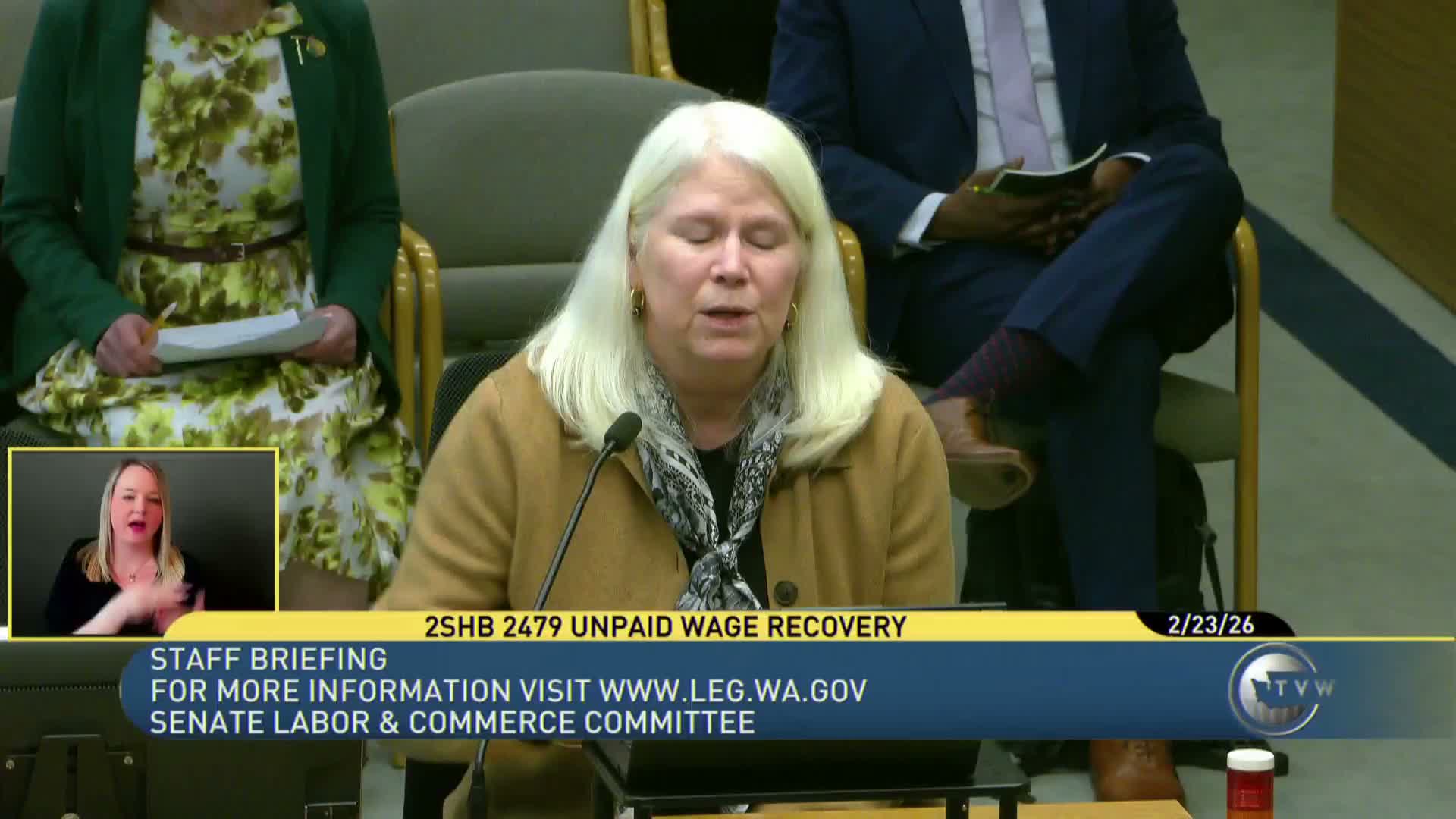
Summary
A Senate Labor & Commerce Committee hearing advanced a bill that would let Labor & Industries pay eligible low-wage workers up to $2,500 from a new wage recovery account before final adjudication and strengthen penalties for repeat wage violators; the proposal is funded by redirected civil penalties.
A Washington Senate Labor & Commerce Committee hearing on Feb. 25 advanced a bill to create a wage recovery program intended to get money to low-wage workers faster while Labor & Industries (L&I) pursues collection from employers.
Committee staff explained that second substitute House Bill 2,479 would create an account administered by L&I funded by civil penalties assessed under wage-complaint statutes. The program would allow L&I to provide prompt relief to eligible employees — up to 85 percent of anticipated wages, capped at $2,500 — when the department determines the worker would suffer immediate economic harm if payment were delayed. The bill also redirects penalties previously deposited in the supplemental pension fund into the new account and requires JLARC to review the program and report to the legislature.
Prime sponsor Rep. Mary Fossey told the committee the bill reflected unanimous recommendations from a worker wage recovery work group. "We rank the ninth worst nationwide in Washington state when it comes to wage theft," Fossey said, adding an estimate that "over $600,000,000 is stolen from workers through wage theft in our state annually." She said the bill balances prompt relief for workers with accountability measures for employers.
The proposal raises minimum civil penalties (to $1,500 or 10% of unpaid wages as specified) and removes a fixed $20,000 maximum for willful violations in favor of a rulemaking matrix for penalty assessment. A fiscal note prepared for the bill estimates indeterminate receipts and expenses and references approximately $2,000,000 potentially affecting accident medical aid accounts for 2025–2029.
Supporters at the hearing — including law students who work on wage cases and construction and contractor associations — said the fund would allow L&I to prioritize severe wage complaints and provide immediate relief to workers who otherwise must wait months for outcomes. Opponents were limited in the public record during the hearing; committee members asked staff and L&I about administrative details, implementation timelines, and whether the fund would require general-fund dollars. Staff and witnesses explained the account is financed by penalties and other non‑general-fund sources as written in the bill.
The committee paused consideration for later procedural steps and public testimony was recorded for the bill before other agenda items were heard.
The bill record and public testimony will be available through the committee as it moves to subsequent steps.