Get Full Government Meeting Transcripts, Videos, & Alerts Forever!
Get email alerts on the County Administration topic
No spam. Unsubscribe anytime.
Consultant tells Riley County commissioners to create county administrator to protect bond rating and streamline operations
Summary
Attorney David Cooper recommended the Board of County Commissioners create a county administrator position, citing statute KSA 19-3802, the pending retirement of the county clerk, and potential impacts on budget and personnel reallocation; he urged a phased, stakeholder-driven approach.
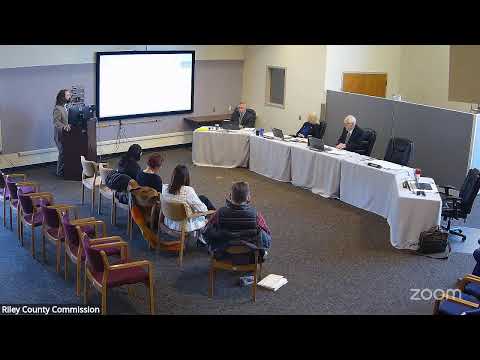
A consultant for Riley County urged commissioners on Feb. 23 to create a county administrator position to centralize day‑to‑day management, preserve the county’s bond rating and modernize government operations.
David Cooper, an attorney with Fisher Patterson Sailor & Smith, presented a Feb. 11 report that recommended the county adopt a county administrator role rather than a county manager. Cooper said an administrator typically oversees personnel, human resources, budgeting and finance functions while policy authority remains with the elected commission.
“Your most important charge for your county administrator is your bond rating,” Cooper told the board, explaining that an administrator’s duties include measuring how budget choices affect long‑term creditworthiness. He said Riley County has functioned without a formal administrator because a long‑serving county clerk has performed many of those duties, but that clerk has announced an intent not to seek re‑election.
Cooper recommended creating the position by a resolution under the statutory framework (citing KSA 19‑3802), not necessarily through home‑rule, and warned that shifting HR and finance positions currently funded under the clerk’s budget will require coordination with the clerk and likely a budget amendment if done outside the normal cycle. He estimated that recruitment for an experienced executive could take months and that compensation for such roles is typically in the higher ranges to attract qualified candidates.
Commissioners asked about timing and implementation. Cooper suggested building the change into the budget cycle to be effective Jan. 1, 2027, if included in the next budget, or amending the current budget to accelerate the transition. He also recommended stakeholder engagement and a public timeline for the reorganization.
Cooper offered to assist with drafting the resolution and the transition plan; commissioners agreed further internal discussion and public work sessions would be appropriate steps before taking formal action.