Lifetime Citizen Portal Access — AI Briefings, Alerts & Unlimited Follows
California HAB coordinators report dozens of bloom reports, confirmed animal incidents and continued emphasis on partner monitoring
Loading...
Summary
Regional HAB coordinators reviewed 2025 monitoring: hundreds of partner samples, dozens of advisories across regions, 53 reported blooms in Region 5, and illness work group reporting of freshwater human, dog and fish cases to OHABS.
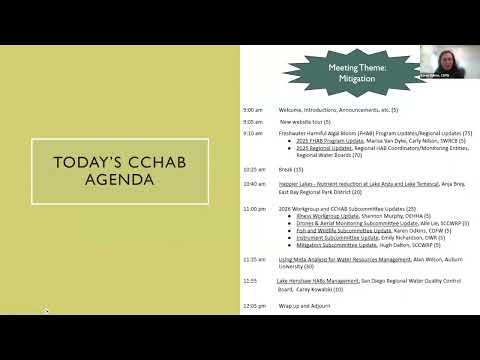
Regional HAB coordinators and the state illness work group used the CC Hub meeting to summarize 2025 monitoring, postings and health investigations across California.
Dana Schultz, FHAB program coordinator for the Central Valley Water Board, said the Central Valley received 53 bloom reports from late February through November 2025 across 30 water bodies in 14 counties, and that 89% of those reports arrived through the water‑board online form. "The HAB illness work group investigated 23 of them," Schultz said, and "four reports were determined to be HAB‑related and submitted to OHABS: three fish events and one dog event." (Region 5 summary.)
Shannon of the statewide Illness Work Group told the hub the group's OHABS submissions for freshwater include a total of 12 human cases (with additional dog, fish and wildlife reports) for the period reported; marine case reporting was ongoing at the time of the meeting. Shannon noted that some group events (for example, the Clear Lake fish kill) can represent lake‑wide impacts and be more consequential than single‑person reports.
Regional presenters highlighted specific notable incidents and surveillance trends. Emily Duncan (Los Angeles region) recalled the Venice Canals incident that drew attention after multiple dog deaths and elevated toxins in scum and benthic mat samples. Brianne Cicada (DWR) highlighted several State Water Project reservoirs posted with advisories and reported that Castaic Lake had recent very high microcystin measurements during an ongoing bloom in 2025.
Coordinators emphasized the continuing reliance on partner networks — tribes, local parks, watershed councils, county health departments and volunteers — to extend monitoring coverage, especially in long, sparsely staffed regions. The Illness Work Group also previewed new outreach materials (FAQ brochure) and planned updates to public tracking pages in spring.
Speakers urged continued reporting to the online bloom form and prioritized training for benthic monitoring protocols and rapid response coordination across agencies.