
Florida House committee advances bill to create FDLE counterintelligence unit amid civil‑liberties concerns
Get AI-powered insights, summaries, and transcripts
Subscribe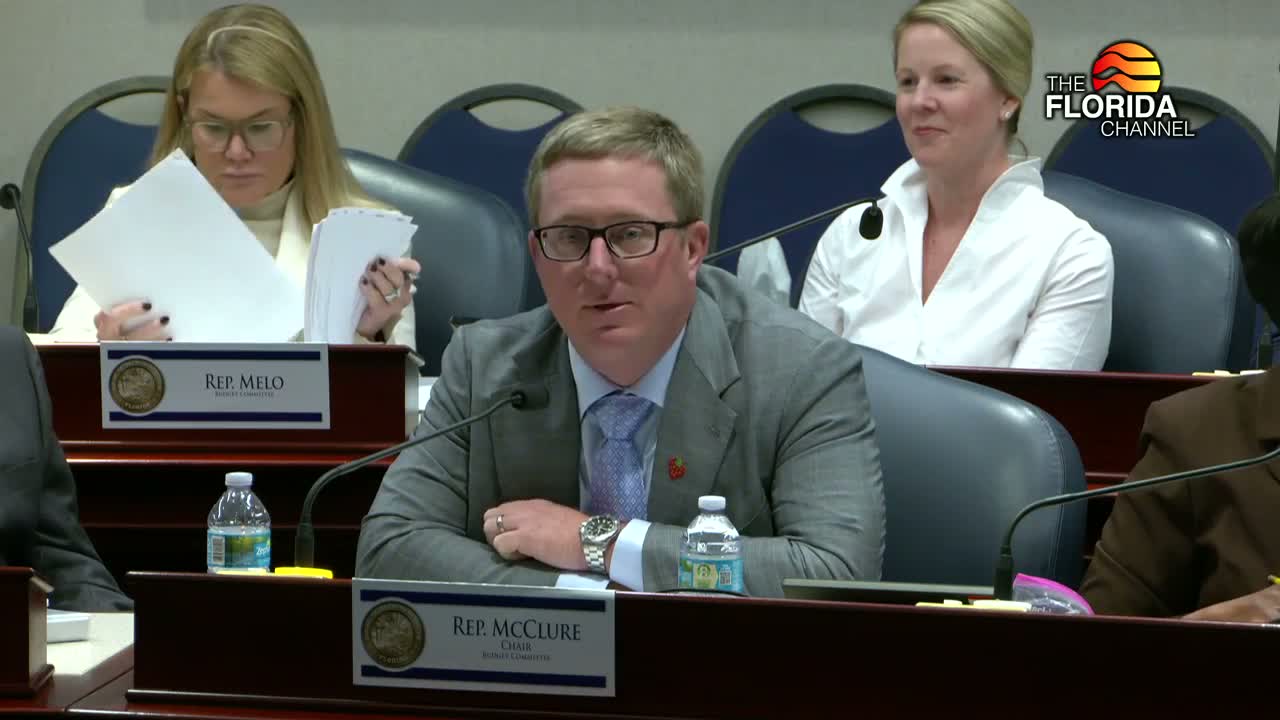
Summary
The House Budget Committee voted to report HB 945 favorably after debate and public opposition from civil‑liberties groups. Sponsor Rep. Alvarez said the unit would target nation‑state actors and require a criminal predicate; ACLU and First Amendment advocates warned of vague language and lack of statutory guardrails.
TALLAHASSEE — The Florida House Budget Committee voted to report House Bill 945 favorably after a full day of debate and public testimony raising First Amendment and oversight concerns.
Rep. Alvarez, the bill sponsor, told the committee the proposal would establish a counterintelligence and counterterrorism unit within the Florida Department of Law Enforcement (FDLE) that would focus on nation‑state threats, terrorists and threats to critical infrastructure. “This is going after, terrorists, nation state bad actors, not political speech,” he said, adding that a criminal predicate would be required before any investigation.
Opponents, including Bobby Block of the First Amendment Foundation and Abila Skier of the ACLU of Florida, urged the committee to reject the bill as written. Block said the bill empowers undefined investigative tradecraft and pattern‑of‑life analysis without statutory limits or independent oversight: “If you cannot point to those limits in the law itself, you are not voting for policy, you are voting for discretion.” Skier warned the measure’s “vague and overbroad language” could be “weaponized against everyday Floridians engaged in First Amendment‑protected activity.”
Members pressed the sponsor on costs and safeguards. Rep. Rayner asked whether a full fiscal analysis had been completed; the sponsor said FDLE had provided preliminary estimates of roughly $2 million initial startup for 10 positions and $1.4–$1.5 million in recurring annual costs. Rep. Overdorf and others pressed how the unit would avoid being used for political purposes; Alvarez replied that FDLE must follow existing jurisprudential protections and that warrants and other judicial authorizations would be required when they are required under current law.
The committee heard repeated testimony calling for clearer statutory thresholds and built‑in, independent oversight rather than reliance on internal agency restraint. Supporters argued Florida needs a statewide capacity that can operate across local jurisdictions and respond to threats the federal government may not cover.
After debate and public testimony, the committee called the roll and the chair announced the bill passes out of committee.
What happens next: Sponsor Alvarez said amendments addressing constitutional and oversight concerns are forthcoming and would appear in subsequent committee consideration.