
Witnesses tell House panel Michigan’s mySUD treatment locator is unreliable and raises privacy concerns
Get AI-powered insights, summaries, and transcripts
Subscribe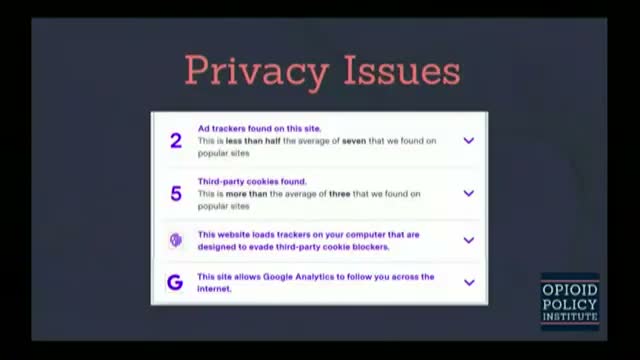
Summary
Testimony before the House Oversight Committee on Public Health and Food Security said Michigan’s state‑run mySUD treatment locator has usability, data‑completeness and privacy defects and urged MDHHS to halt promotion until fixes are made and community input is taken.
LANSING — Witnesses told a House Oversight Committee on Feb. 12 that Michigan’s state‑developed mySUD substance use disorder treatment locator is difficult to use, omits many evidence‑based outpatient services and collects tracking data that could expose people seeking care.
Jonathan Stoltman, director of the Opioid Policy Institute, told the committee that freedom‑of‑information responses show persistent development problems and internal feedback eight months before launch that remained unaddressed 16 months later. "The locator does not meet responsive design requirements of the state of Michigan 13 60 0.11," he said, and flagged the site’s use of cookies, advertising trackers and browser fingerprinting.
"Fingerprinting is especially troubling," Stoltman said, adding that such profiling cannot be controlled through ordinary browser settings and that, in his view, promotions of the tool expose visitors to privacy risk. He cited FOIA records saying the site had "more than 3,000 unique visitors in its first month" and noted a steady‑rate assumption the site has had roughly 16,000 visits to date.
Clinical witnesses said the tool’s data gaps and user experience problems can block timely access to care. "If it's easier to get their drug of choice than to find a doctor, that is the choice that many patients are forced to make," Dr. Colleen Lane, a board‑certified addiction medicine physician representing the Michigan Society of Addiction Medicine, told the committee. She said seven outpatient walk‑in clinics she directs are not listed because the locator reportedly limits listings to SUD‑licensed programs, excluding many outpatient addiction‑medicine practices that prescribe buprenorphine and provide same‑day care.
Frontline public health consultant Ashley Shukite described using the locator during urgent moments and said listings are often incomplete, unclear about Medicaid acceptance or capacity, and difficult to navigate on mobile phones. "Each unsuccessful call chips away at hope," Shukite said, adding that callers frequently learn after long waits that a specific plan is not accepted or that capacity is full.
Representatives on the panel pressed for more information about who contracted and authorized the site and whether MDHHS staff could explain the development and promotion decisions. Representative Green criticized the site’s technology, saying it appeared to be an embedded Microsoft Power BI application rather than a native mobile‑friendly web page and asking who approved that approach.
Stoltman recommended three immediate steps: stop promoting the mySUD resource until its deficiencies are fixed; redirect existing web traffic from the mySUD URL to the federal findtreatment.gov resource as an interim measure; and open the development process to meaningful public and clinical input to decide whether a state‑level locator is warranted.
The committee recorded that Representative Green moved to approve the Feb. 3 minutes and that the motion was approved. Committee members said they had reached out to MDHHS and plan to meet with department staff to review the concerns raised and discuss improvements.
No MDHHS representative testified during this meeting, and witnesses' recommendations were not tested by departmental response at the hearing. The committee said it intends to continue the conversation with MDHHS and stakeholders.