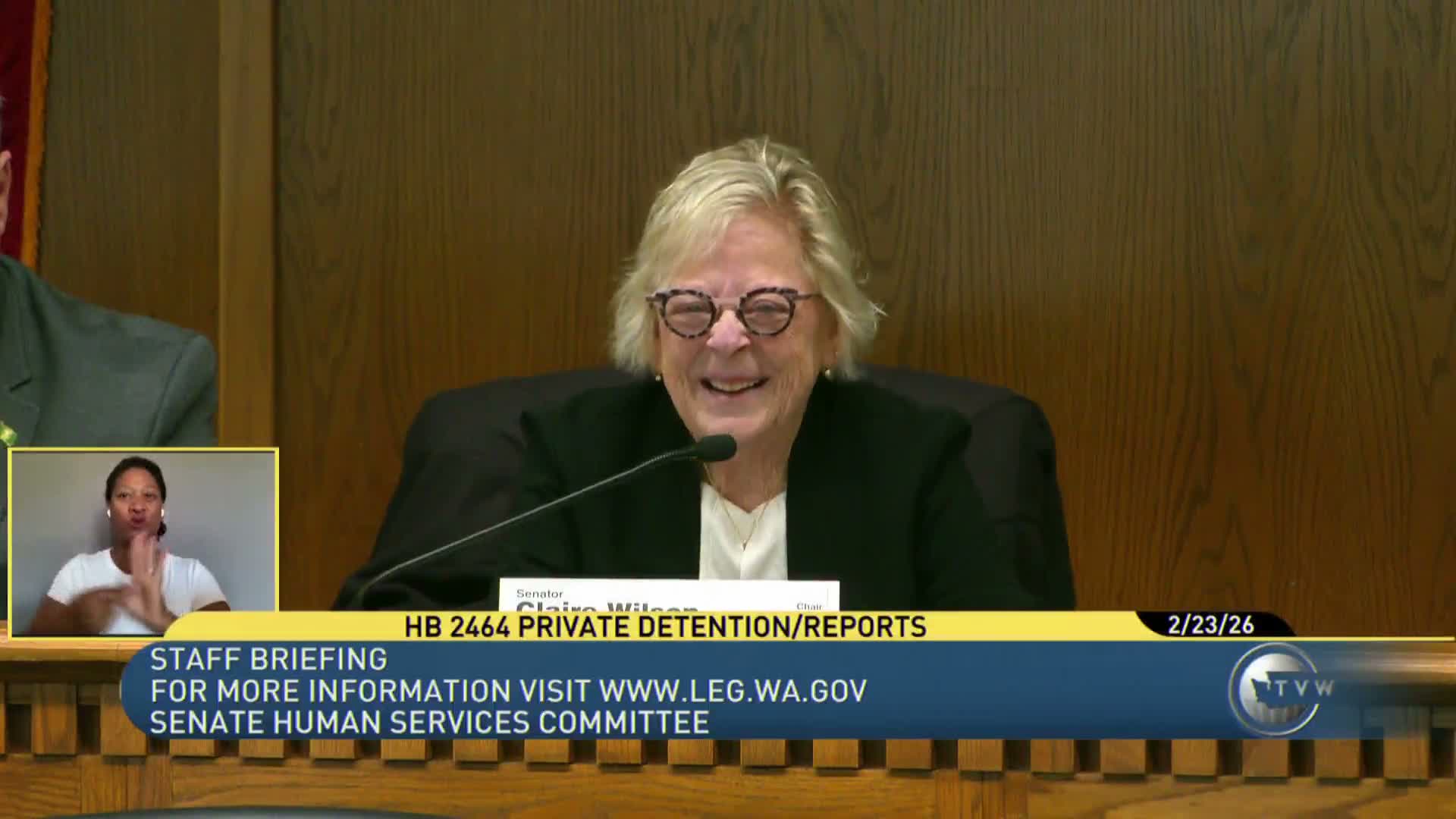
Bill would require private detention facilities to report serious incidents to health department and local police

Senate Human Services Committee · February 23, 2026

Get AI-powered insights, summaries, and transcripts

Sign Up Free
AI-Generated Content: All content on this page was generated by AI to highlight key points from the meeting. For complete details and context, we recommend watching the full video. so we can fix them.

Summary

House Bill 2464 would require private detention operators to report serious incidents— including allegations of abuse, death, suicide, inpatient hospitalizations and service disruptions—to the Department of Health and the local law-enforcement agency by the end of the next business day; advocates said the change is needed because detainees face barriers to reporting crimes.

House Bill 2464, sponsored in the House and briefed to the Senate Human Services Committee on Feb. 23, would require private detention facilities to notify the Washington State Department of Health and the local law-enforcement agency of serious or undesirable outcomes "by the end of the next business day" after the incident.

Will Tronson, staff for the committee, told members the bill covers private, non‑governmental facilities operating under contract with federal, state or local governments and requires Department of Health rule‑making to ensure sanitary, hygienic and safety conditions are monitored and reported. The bill would not apply to facilities operating under a contract in effect before Jan. 1, 2023 for the duration of that contract, but would apply to any extensions or modifications of such contracts.

Representative Lillian Ortiz Self, sponsor and member of the 21st Legislative District, told the committee she and other lawmakers have struggled to obtain timely and consistent incident information from the two private detention facilities in the state. "We will hear about a suicide a month later. We'll hear about hunger strikes after they've been on the thirtieth day," Ortiz Self said, urging mandated reporting so oversight is based on data rather than anecdotes.

Advocates and legal services providers who testified in support described long‑standing barriers to crime reporting inside private detention. Hannah Warner of Columbia Legal Services cited research by the University of Washington Center for Human Rights, saying the UW review found multiple reports of sexual assault at the Northwest ICE Processing Center that were not reported by its private operator to Tacoma police. "We need the stringent reporting requirements in this bill to protect survivors of assault and other abuses committed within private detention facilities," Warner said.

Lydia Zapata of the League of Women Voters described encountering detainees who could not directly call 911 and said guards typically controlled contact with dispatchers. "In my 7 years of visiting folks at this facility, I have heard from detainees about many, many assaults," she said, adding that she had confirmed with multiple police chiefs that Tacoma has jurisdiction over crimes occurring in the Tacoma facility but that practical barriers prevent police from investigating.

Proponents said the Attorney General would have authority to enforce reporting violations on its own initiative or in response to complaints. The bill also would require the law‑enforcement agency with jurisdiction over a private detention facility to submit an annual report to the Department of Health about calls received from each facility.

The committee did not take a vote on HB 2464 at the hearing. Chair Wilson and other members asked staff and sponsors to continue conversation about how the reporting requirements would be implemented and how the bill differs from other pending legislation that focuses on inspection access and administrative penalties.

Next steps: the bill was discussed in the committee briefing and public testimony was recorded; the matter will proceed to the committee executive schedule for further action.