Washington committee hears divided testimony on bill tightening sheriff qualifications and limiting volunteer powers
Loading...
Summary
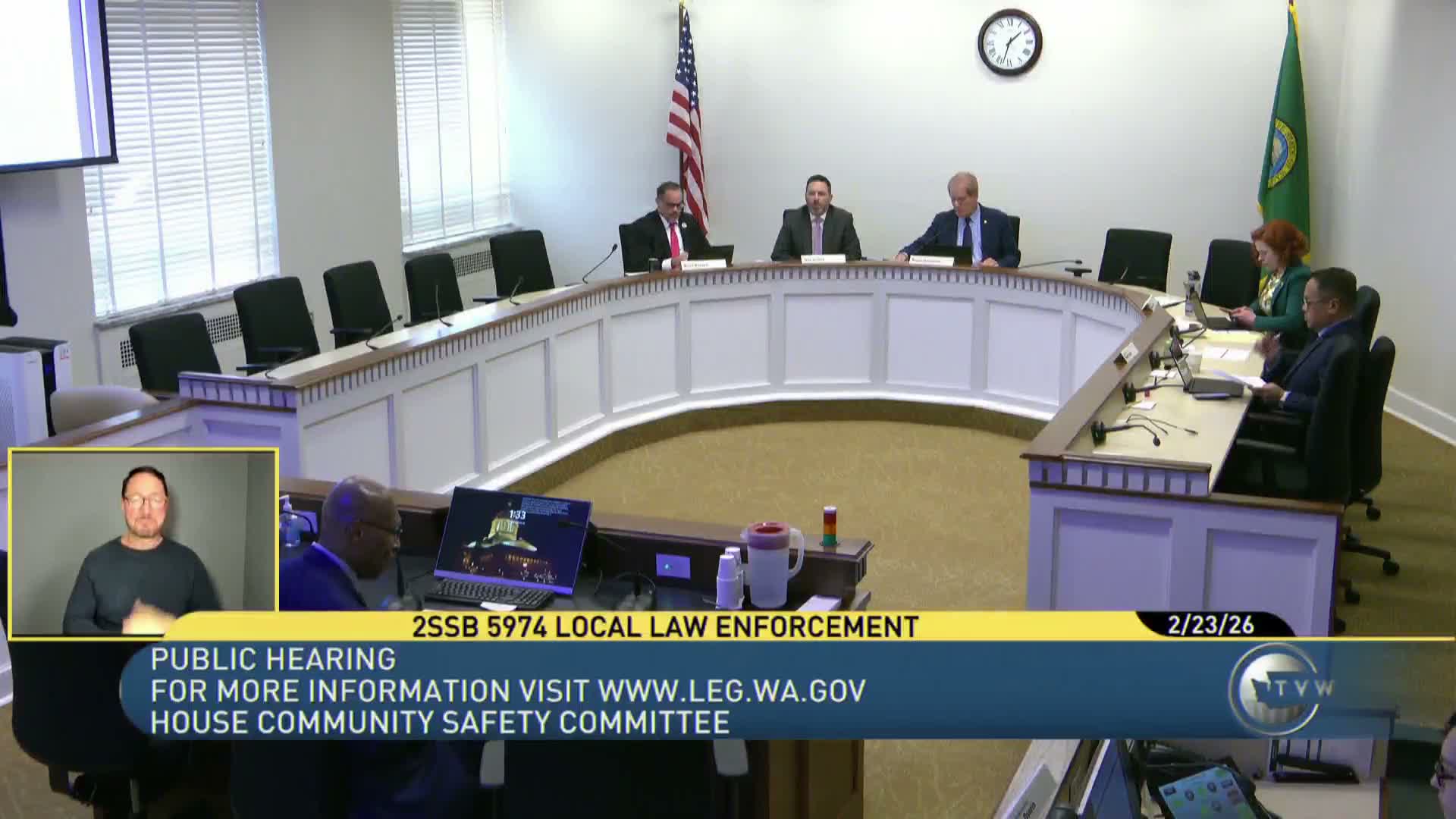
The House Community Safety Committee heard hours of testimony Feb. 23 on Second Substitute Senate Bill 59 74, which would set uniform certification and experience requirements for sheriffs, chiefs and marshals and curb law-enforcement volunteers' authority. Proponents said the bill raises standards and accountability; opponents, including multiple county sheriffs, said it raises constitutional and fiscal concerns.
The House Community Safety Committee on Monday debated proposed changes to who can serve as a sheriff, police chief or marshal under Second Substitute Senate Bill 59 74, including a requirement of five years of full‑time government law‑enforcement experience, a prohibition on candidates with unvacated gross‑misdemeanor convictions, and limits on the duties volunteers and posses may perform.
Supporters said the bill brings leaders in line with the training and accountability requirements already applied to rank‑and‑file officers. "Leaders should have at least the same standards of accountability as those who work for them," said Anita Yandle of the Policing Project. The League of Women Voters also testified in favor, noting current law sets almost no eligibility floor for sheriffs.
Advocates for survivors and disability communities urged the committee to pass the measure. "This bill strengthens deterrents and closes gaps that currently exist," Paula Reid of Children's Advocacy Centers of Washington said, urging a due‑pass recommendation.
Opposition from elected sheriffs and the Association of Sheriffs and Police Chiefs focused on constitutional and operational risks. Mark Kreider, sheriff of Walla Walla County, said the measure creates an unfunded mandate for counties that would have to pay for background checks and other compliance costs and argued existing remedies such as recall processes provide accountability. "This is another unfunded mandate that's going to come down hard on our rural communities," Kreider said.
John Knowles, sheriff of Spokane County, warned that decertification‑based vacancy provisions could bypass the recall power of voters and "create an unelected gatekeeper to candidacy," risking legal challenges. The Association of Sheriffs and Police Chiefs repeated that concern in testimony and urged lawmakers to preserve election processes and avoid retroactive application of new requirements.
The committee heard from a mix of civil‑rights, public‑safety and community groups that pressed for clear rules on when volunteers may assist law enforcement and for procedures that prevent individuals with serious misconduct histories from remaining in leadership roles that control investigations and access to secure databases.
Committee staff said striking amendments had been drafted to address several stakeholder concerns, including grandfathering current officeholders from some new experience requirements and clarifying the scope of volunteer duties. Members asked staff for comparative materials on similar laws in other states; witnesses promised to provide additional documentation. The committee did not vote on SB 59 74 during this session; the bill remained under consideration at adjournment.