
Votes at a glance: Housing Committee executive session outcomes, Feb. 23
Get AI-powered insights, summaries, and transcripts
Subscribe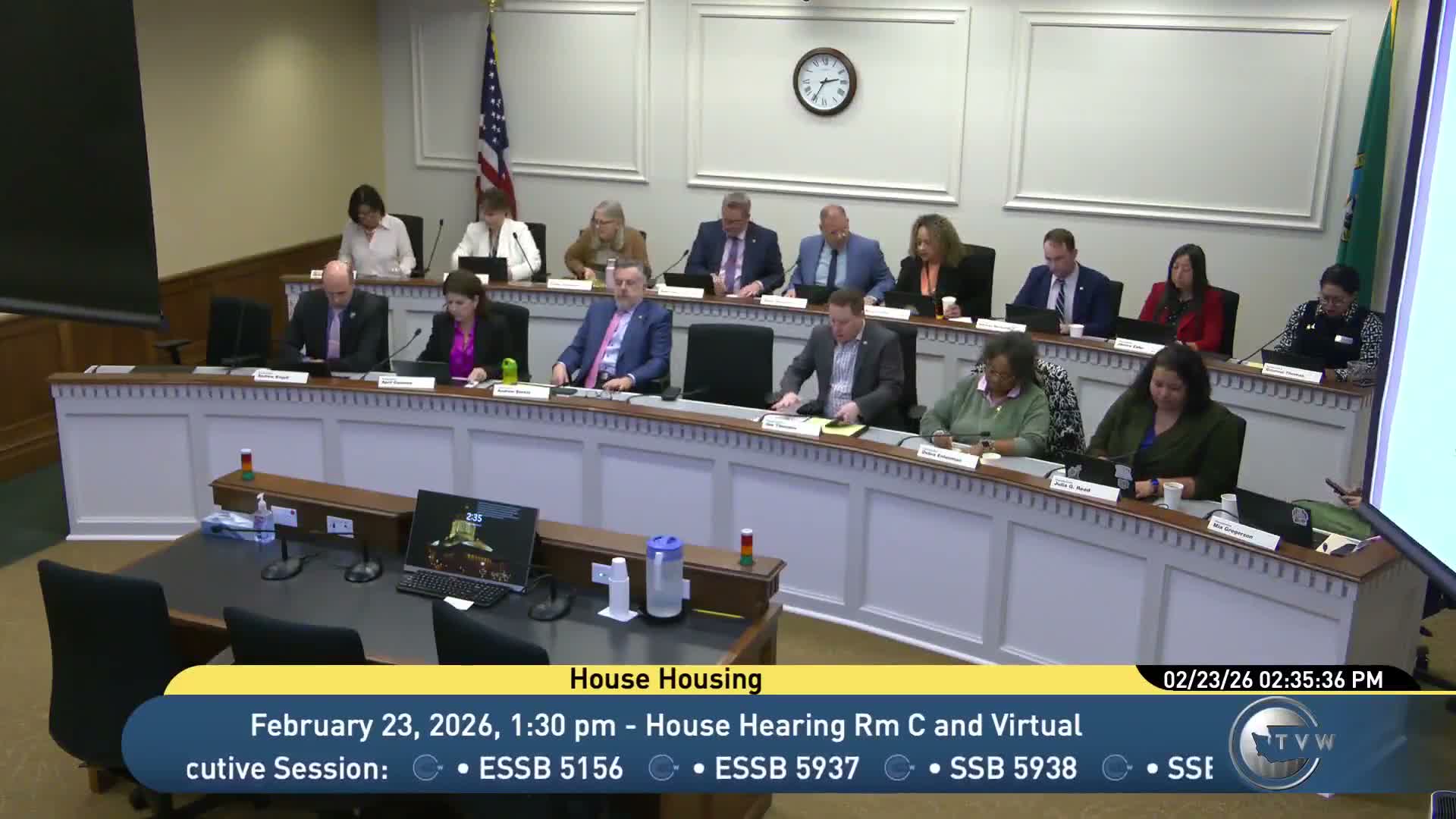
Summary
Committee approved multiple bills in executive session, adopting technical amendments on elevator standards, wildfire/hardening materials and foreclosure-fee clarifications; several bills reported out of committee with recorded tallies noted below.
The House Housing Committee moved several bills out of committee during an executive session on Feb. 23. Key outcomes documented on the record:
- Engrossed Substitute Senate Bill 5,156 (elevator standards for smaller apartment buildings): Amendment SCRE 246 (removing an intent subsection) was adopted by voice vote; ESSB 5,156 was reported out of committee with a due-pass recommendation. The clerk recorded 17 ayes and 0 nays on the tally sheet.
- Engrossed Substitute Senate Bill 5,937 (privacy/door technology measure): Reported out of committee with a due-pass recommendation; the clerk recorded 17 ayes and 0 nays.
- Substitute Senate Bill 59-38 (foreclosure prevention fee clarifications): The committee considered and adopted technical amendments (Voss 259; Voss 254 adopted; Vase 257 not adopted). On final tally the clerk recorded 12 ayes and 5 nays without recommendation; the bill was reported out with a due-pass recommendation as amended.
- Substitute Senate Bill 6,054 (permitting fire-hardened building materials in common-interest communities): The committee adopted amendment VOS 262 and reported the bill out as amended with a due-pass recommendation. The clerk recorded 16 ayes and 1 nay without recommendation.
- Substitute Senate Bill 6,237: Reported out of committee with a due-pass recommendation; clerk tally recorded 12 ayes, 1 "do not pass" and 4 nays without recommendation (as entered in the record).
These tallies are as read into the record by the clerk during the committee session. For detailed roll-call votes and amendment language members should consult the official committee minutes and the clerk's tally sheets.
What happens next: Bills reported out with due-pass recommendations proceed to the next steps in the House process; clerk records and amendment texts will be published with the committee report.