Washington committee hears bill to cap large investors at 100 single-family homes
Loading...
Summary
Lawmakers and witnesses debated Senate Bill 5,496, which would bar business entities owning more than 100 single-family homes from buying additional single-family properties (with exemptions for nonprofits and new construction). Supporters cited housing access; industry groups warned of market disruption and asked for more data.
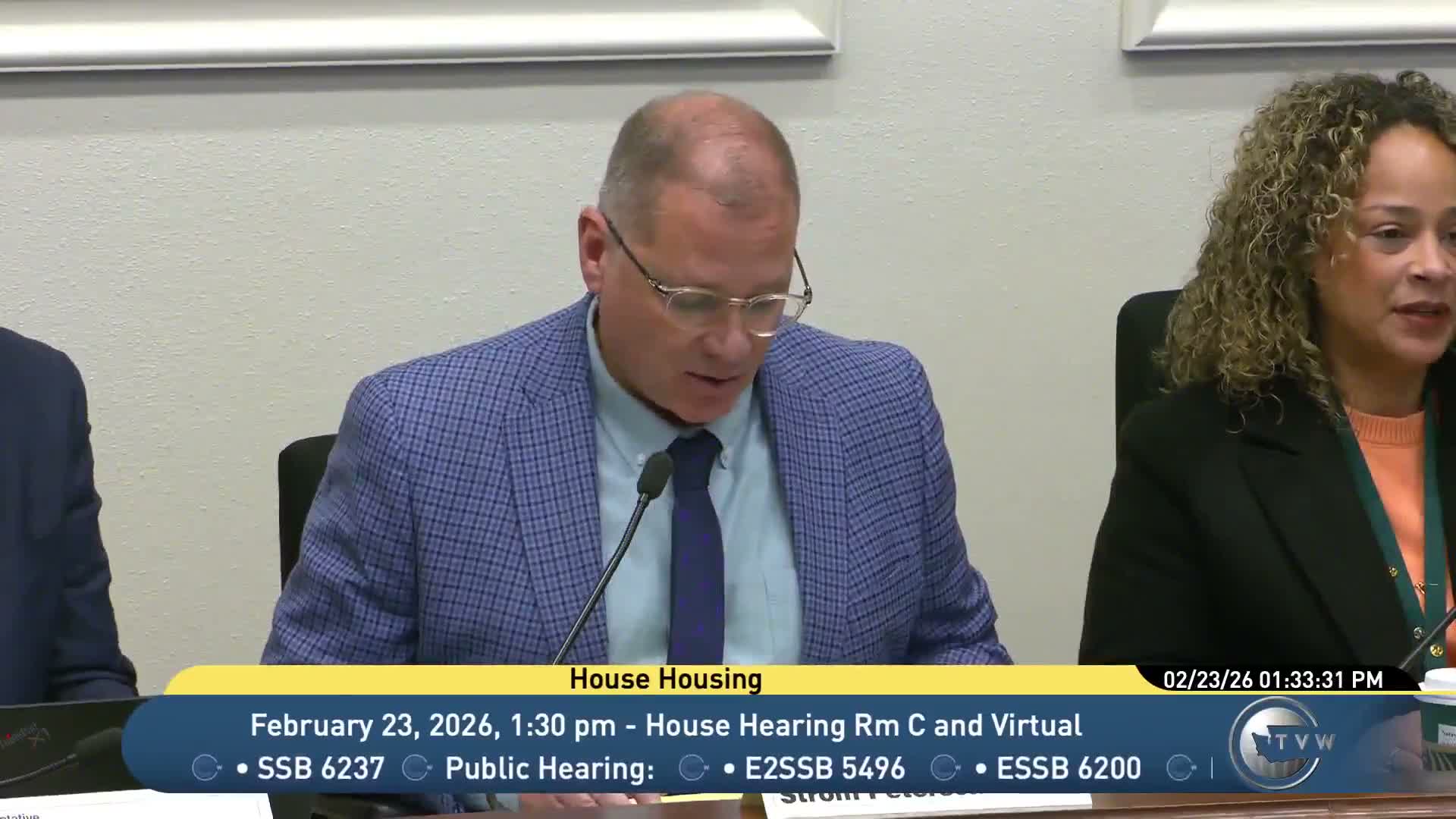
Sen. Emily Alvarado, sponsor of Senate Bill 5,496, told the House Housing Committee on Feb. 23 that the measure would limit the ability of large corporate investors to buy more than 100 single-family residential homes in Washington, aiming to keep more homes available for owner-occupants. "We want investors to help us build new housing stock, not speculate on the existing market," Alvarado said.
Audrey Vacek, staff to the committee, summarized the bill for members, saying it would prohibit a business entity that already has an interest in more than 100 single-family properties from acquiring additional single-family properties, while exempting nonprofits that preserve homes as permanently affordable, developers building new housing, and entities acquiring properties through foreclosure servicing. Violations would be civil violations under the Consumer Protection Act with penalties up to $100,000 per violation and a one-year court-ordered sale to an independent third party, Vacek said.
Supporters argued the cap would slow institutional purchases that can price out first-time buyers. Ryan Donahue of Habitat for Humanity Seattle King and Kittitas Counties said rising investor purchases have left many working families without a realistic path to ownership. "When single-family homes are increasingly treated as financial assets rather than places for people to live, opportunity narrows," Donahue said.
Opponents said the bill could have unintended consequences for sellers and for the rental supply. Andrea Smiley of the Building Industry Association of Washington said recent data show institutional ownership above the 100-home threshold accounts for a small share of single-family homes in parts of the state and warned the cap could reduce market liquidity and affect REITs that back retirement accounts. "We don't see that the data supports that this is an issue here in the State of Washington," Smiley said.
Tricon Residentialrepresentative Catherine Mahoney told the committee her company provides single-family rentals that it says help families who are not yet ready for homeownership and argued the bill treats different corporate structures unevenly by distinguishing LLCs, REITs and other entities.
Committee members pressed the sponsor for data about where institutional purchases are concentrated and how many units are actually owned by those entities. Alvarado said she would follow up with the committee on state-specific studies such as Redfin data and acknowledged other states have taken varying approaches, including higher thresholds or county-based caps.
Several members also asked whether pension funds and REITs would be covered. Alvarado said investment entities are defined in the bill to include real estate investment trusts and pooled-fund managers who owe fiduciary duties to investors, but noted the statute exempts institutions regulated under state or federal banking and finance laws.
The committee did not take final action on the bill during the Feb. 23 session. Chair Peterson closed the public hearing and encouraged additional written testimony.
What happens next: Committee staff will collect requested data and suggested drafting changes from members and stakeholders; the bill may return for amendment or a future vote.