
Bill to let renters install portable cooling devices framed as health, not housing, bill
Get AI-powered insights, summaries, and transcripts
Subscribe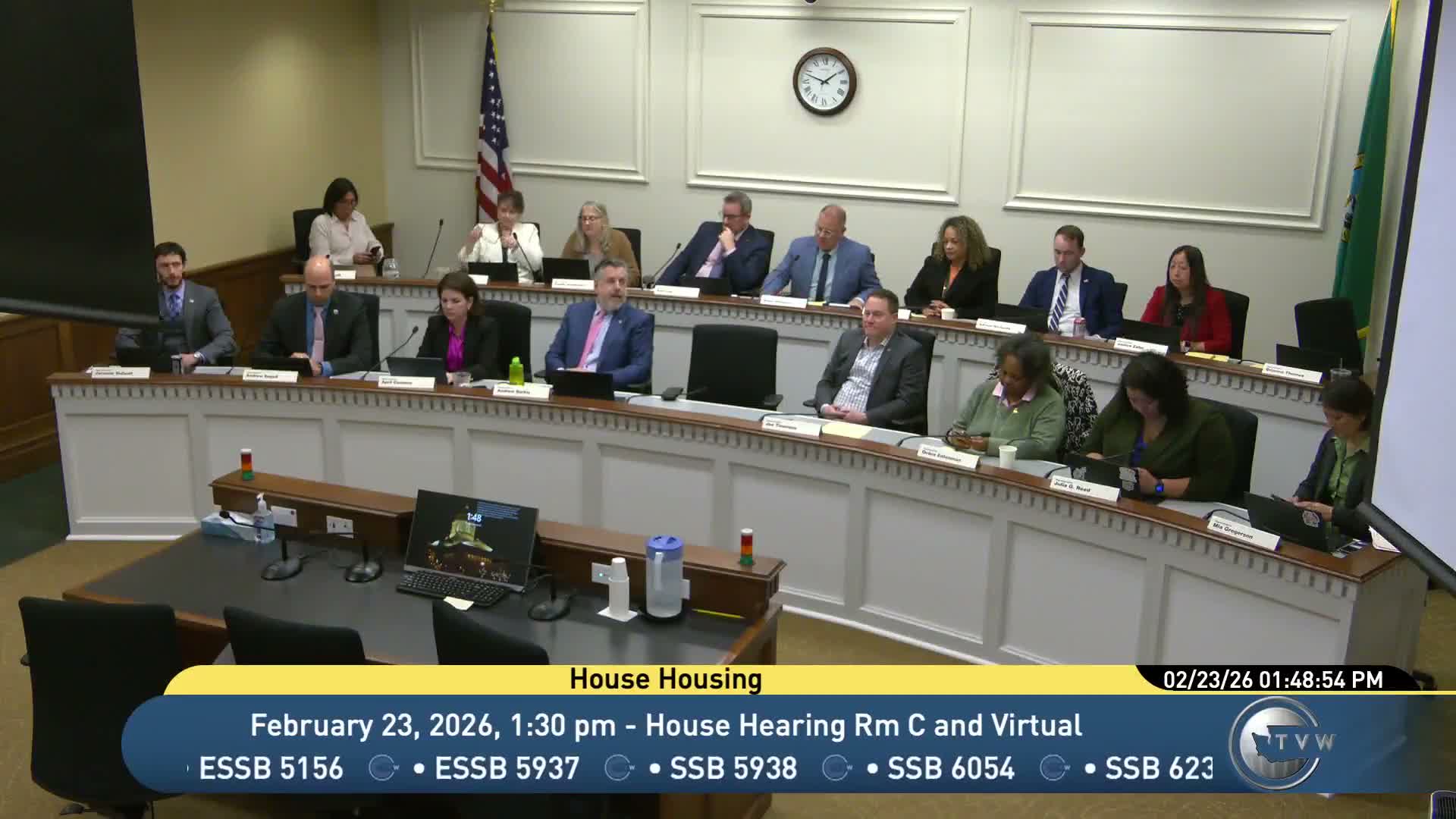
Summary
Sen. Vandana Slatter told the committee SB 6,200 allows tenants to install portable cooling devices with safety guardrails (inspections, notice, electrical and egress exceptions); supporters emphasized the 2021 heat dome’s toll and urged action; landlords asked for technical changes on window units, insurance and evaporative coolers.
Senator Vandana Slatter (48th Legislative District) told the House Housing Committee on Feb. 23 that Engrossed Substitute Senate Bill 6,200 is a narrowly targeted housing and public‑health measure to allow tenants to install portable cooling devices during extreme heat events without requiring landlords to install air conditioning. "This bill is basically a housing and health bill," Slatter said, invoking the 2021 heat dome that led to hundreds of heat‑related medical visits and dozens of deaths in Washington.
Staff summarized the measure: tenants under both the Residential Landlord‑Tenant Act (RLTA) and the Manufactured/Mobile Home Landlord‑Tenant Act (MHLTA) could not be prohibited from installing portable cooling devices except where the dwelling already has a permanently installed, working heat pump; where installation would violate building codes or federal law; where the device would violate the manufacturer's safety guidelines; or where the device would cause unreasonable damage, render the dwelling uninhabitable, or exceed available electrical service. The bill allows RLTA landlords to require inspection or servicing after installation, requires prior notice (two days) for window‑mounted units, prohibits landlords from charging installation or inspection fees in most cases, and protects landlords from liability for tenant‑installed devices not related to landlord action.
Senator Slatter and health professionals framed the bill as modest but lifesaving. Professor Brian Henning of the Gonzaga Institute for Climate, Water and the Environment highlighted Spokane’s local ordinance and the 2021 heat dome experience; physicians with Washington Physicians for Social Responsibility described ER surges and deaths in 2021 and said most heat deaths occurred inside homes. "No one should have their life put at risk just because they're a renter rather than a homeowner," Henning said.
Tenant organizers and advocates (Carl Nelson, Violet) urged passage, describing seniors, people with disabilities and low‑income residents who lack safe indoor cooling. Medical witnesses and public‑health advocates emphasized that even modest temperature reductions can prevent heat exhaustion and heat‑related cardiac events.
Property managers and owners expressed operational concerns but signaled willingness to continue negotiations. Jim Henderson (National Association of Residential Property Managers) supported the bill's intent but urged clarifying language on window units and consistency for property operators that manage diverse portfolios; Christel Perkey (Washington Multifamily Housing Association) signed in neutral and noted the bill’s compromise language allowing notice, inspection and reasonable denial with proof. Matthew Rose, a single‑property owner, raised concerns about evaporative coolers and asked that the bill exclude devices that add moisture and risk mold.
Committee members pressed on insurance, required professional installation for high‑rise units, and whether ceiling fans are included in the definition; staff and sponsors said ceiling fans are not included in the bill's current definition of portable cooling device (which lists air conditioners, portable heat pumps and evaporative coolers) and that insurance/intersectional issues would be addressed in stakeholder negotiations. The bill’s sponsor and staff said they are continuing to work with landlord groups and advocates on technical changes to ease burdens while preserving tenants’ access to life‑saving cooling.
The committee closed the public hearing on SB 6,200 after multiple panels of testimony and reopened it for written submissions. The transcript records robust stakeholder engagement and an agreement to continue negotiating operational language; no final floor action on the bill is recorded in the transcript.