Bill would limit institutional buyers to 100 single‑family homes to 'protect homeownership'
Loading...
Summary
Sen. Emily Alvarado’s SB 5,496 would prohibit certain business and investment entities from acquiring more single‑family homes after they hold 100 properties, with carve‑outs for nonprofits, developers rebuilding housing and foreclosure servicing; opponents from industry say state data do not show a problem at scale. (Sources: committee staff, sponsor testimony, public commenters)
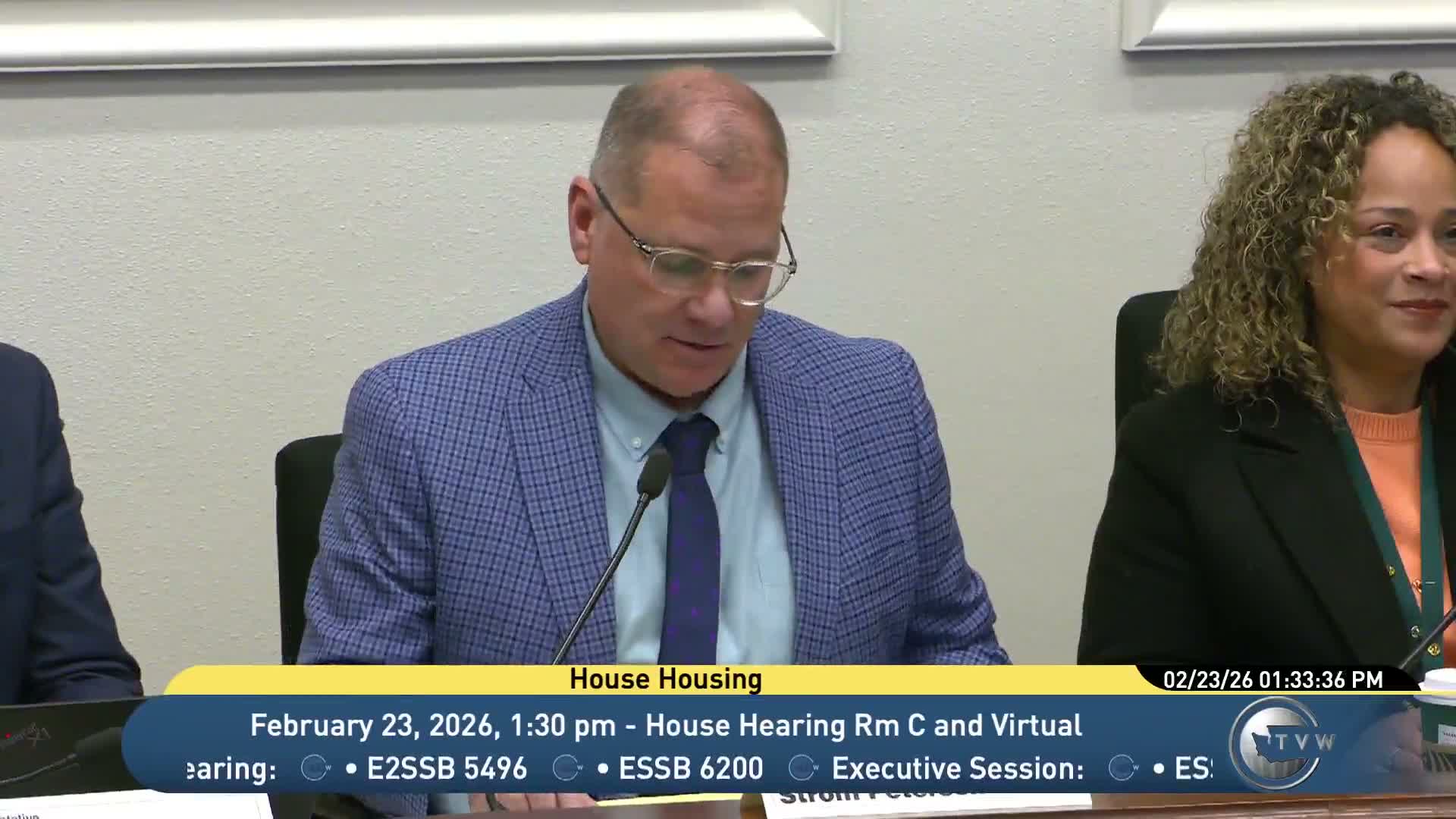
Senator Emily Alvarado (34th Legislative District) told the House Housing Committee on Feb. 23 that Engrossed Second Substitute Senate Bill 5,496 would limit purchases by large owners to preserve opportunities for Washington families to buy homes. "Home ownership is the American dream," Alvarado said, arguing that rapid institutional purchases have made it harder for typical buyers to compete with all‑cash offers.
The bill bans a "business entity" that already holds an interest in more than 100 single‑family residential properties from purchasing or otherwise obtaining an interest in another single‑family property, and bars defined "investment entities" (for example, real‑estate investment trusts or pooled‑fund managers) from acquiring any additional single‑family properties. Audrey Vacek, committee staff, told the panel the measure exempts purchases by nonprofit corporations for permanent affordability, acquisitions tied to new construction, and properties obtained through foreclosure servicing. Violations would be enforced under the state's Consumer Protection Act with civil penalties up to $100,000 per violation and a requirement to sell offending properties to an independent third party within a year of judgment.
Supporters and opponents framed the measure differently. Ryan Donahue of Habitat for Humanity (Seattle/King/Kittitas) said investor purchases have contributed to structural barriers to homeownership: according to testimony submitted in the hearing, CoreLogic data showed institutional investors bought many single‑family homes nationwide in 2024. "When single‑family homes are increasingly treated as financial assets rather than places for people to live, opportunity narrows," Donahue said.
Industry witnesses urged caution. Andrea Smiley of the Building Industry Association of Washington, testifying in opposition, said recent Seattle‑area data show about 0.8% of single‑family homes were owned by institutional investors holding more than 100 properties and asked for the raw counts behind percentage figures before making statewide policy changes. "We don't see that the data supports that this is an issue here in the State of Washington," she said.
Adrian Toddman of the National Rental Home Council and Catherine Mahoney of Tricon Residential, major single‑family rental operators, warned that the bill treats different ownership forms unequally (LLCs versus REITs and other investment entities) and could reduce rental supply in some markets. Toddman stressed that many single‑family rentals serve families not yet ready for ownership — military families, traveling nurses and similar households — and asked legislators to consider the consequences for those tenants and for retirement‑account investments tied to REITs.
Committee members asked for more jurisdictional comparisons and Washington‑specific data. Representative Marcus requested sale‑price breakdowns and average purchase prices of investor‑acquired homes; Senator Alvarado said she would follow up with state‑specific research, noting national studies such as Redfin and CoreLogic were being used to frame the issue.
The bill, as described to the committee, focuses on standalone single‑family houses and excludes condos and townhomes. It allows developers to continue building and owning newly constructed single‑family stock and exempts nonprofits that acquire homes to make them permanently affordable. The staff summary and sponsor testimony emphasized the policy goal is a preventive guardrail, not an immediate market overhaul.
The committee accepted public testimony both for and against the measure and asked staff for additional data. No final floor or chamber action is recorded in this transcript; committee members moved the bill out of committee with a due‑pass recommendation during the executive session portion of the meeting. The committee asked witnesses to submit follow‑up data on ownership counts and geographic distribution to inform further deliberations.