Get Full Government Meeting Transcripts, Videos, & Alerts Forever!
Committee holds survivor-protection bill for amendment after extended debate over standard of proof
Summary
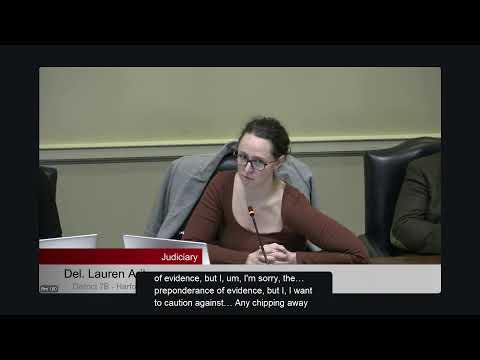
House Bill 465, which would protect people who report sexual-assaultive conduct from certain civil liability when acting in good faith, was the subject of extended debate on proof standards (actual malice, clear-and-convincing vs. preponderance); the committee held the bill for amendment and will revisit it at a Tuesday vote session.
House Bill 465 prompted extended debate in the Judiciary Committee on Feb. 20 as members discussed whether and how to protect people who disclose sexual-assaultive behavior from civil liability. Sponsors described an amendment that adopts an "actual malice" standard (reckless disregard for truth or knowledge of falsity) and raises the evidentiary standard to clear…
Already have an account? Log in
Subscribe to keep reading
Unlock the rest of this article — and every article on Citizen Portal.
- Unlimited articles
- AI-powered breakdowns of topics, speakers, decisions, and budgets
- Instant alerts when your location has a new meeting
- Follow topics and more locations
- 1,000 AI Insights / month, plus AI Chat