
Bill would empower Maryland attorney general to sue fossil‑fuel companies for alleged deception; AG recommends UCATA amendment
Get AI-powered insights, summaries, and transcripts
Subscribe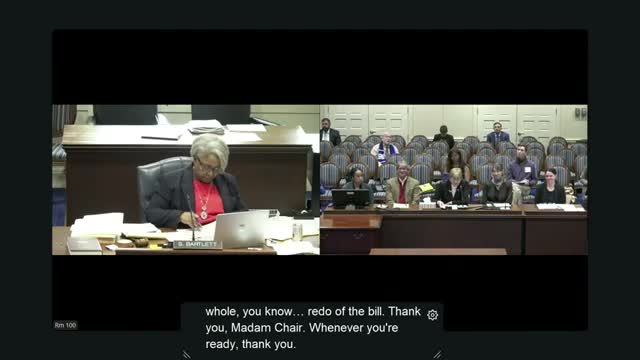
Summary
HB 572 would authorize the attorney general to investigate and bring suits against large fossil‑fuel companies for alleged deceptive conduct that contributed to climate harms and create a restoration fund for settlement proceeds; the attorney general's office supports the intent and proposes a technical amendment to ease multi‑defendant settlements.
Delegate Sheila Ruth presented House Bill 572 to the Judiciary Committee, arguing that decades of documented internal industry knowledge and coordinated disinformation justify giving the attorney general explicit authority to investigate and sue large fossil‑fuel corporations for tortious or unlawful conduct that contributed to climate harms.
Academic and scientific witnesses described internal industry documents and long‑running campaigns that misled the public about climate risks; environmental groups urged the committee to grant the attorney general tools to seek redress and create a fund to direct proceeds to mitigation and adaptation. William Piramite (University of Maryland Carey School of Law) and scientists from the Union of Concerned Scientists framed the bill as a fraud/accountability measure rather than a regulation of lawful emissions.
Assistant Attorney General Julie Kuspa said the office supports the bill’s intent but recommended an amendment to the Uniform Contribution Among Joint Tortfeasors Act (UCATA) exemption to enable practical settlements across multiple defendants, which the sponsor and staff said they are considering. Opponents from business groups and the Maryland Chamber said the bill risks federal preemption, expansive liabilities for downstream product use, and litigation costs; they urged waiting for ongoing studies and pending litigation results.
The committee did not vote; sponsors and the attorney general’s office indicated continued negotiations on UCATA language to preserve settlement options.