
Spokane council hears split testimony on proposed kratom sales ban during first reading
Get AI-powered insights, summaries, and transcripts
Subscribe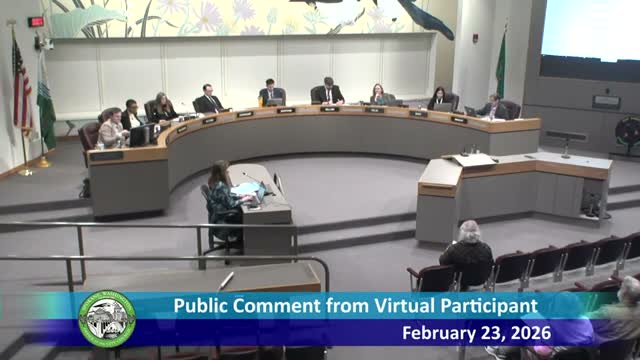
Summary
On first reading of ordinance C36820, the council heard hours of public comment split between grieving family members who urged a full ban on kratom products and users, health advocates and scientists who urged regulation and age restrictions rather than an outright prohibition.
The Spokane City Council received extended public comment during first reading of ordinance C36820, which would prohibit the sale and distribution of kratom products in the city. Testimony was sharply divided between those who said kratom contributed to deaths and those who described it as a harm-reduction or chronic-pain tool.
At the podium, Dan Gibbs recounted the death of his 25-year-old son and urged the council to treat kratom as an opioid-like risk. "Please do not let Spokane families learn that lesson the way we did," he said, calling for the council to support ORDC36820. (Dan Gibbs)
Other speakers, including people who said they rely on whole-leaf kratom for chronic pain or recovery, asked the council to distinguish between traditional kratom leaf and highly concentrated or synthetic derivatives (described in testimony as '7-OH' or '708') and to consider a regulatory framework. Jennifer Gillis, who said she has lived with chronic pain for two decades, testified, "Because of kratom, I can get out of bed, run errands, attend school functions, and live a somewhat normal life." (Jennifer Gillis)
Scientists, consumers and industry representatives urged nuance. Several public commenters referenced recent federal agency attention to synthetic kratom compounds and argued that local regulation — age gates, labeling, and quality standards — could reduce harms without removing access for adults who say they benefit from the natural product.
The item was a first reading only; no final vote was held. Council members did not adopt the ordinance at final reading during the meeting and indicated the matter would return for further deliberation.
The transcript shows a large volume of personal testimony on both sides, with consumer advocates and harm-reduction voices arguing that prohibition would displace sales to unregulated channels and hurt people in recovery, while grieving parents and public-safety advocates urged a strong regulatory response or ban. The council did not take a final vote at the meeting.