
Spokane City Council approves $100,000 emergency aid contract for immigrant families after hours of testimony
Get AI-powered insights, summaries, and transcripts
Subscribe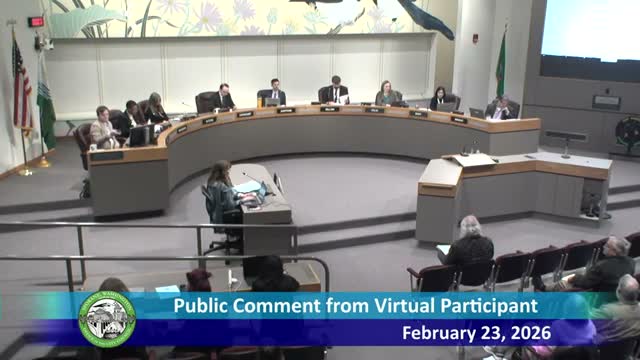
Summary
After more than an hour of public testimony, Spokane City Council voted 6–1 to approve a $100,000 personal-services agreement (OPR20260127) with the Spokane Immigrant Rights Coalition to fund emergency aid for immigrant and refugee households; council members called it a pilot that will be closely monitored.
The Spokane City Council on Monday approved a $100,000 personal-services agreement with the Spokane Immigrant Rights Coalition (SERC) to establish an emergency Community Justice Fund for immigrant and refugee households, voting 6–1 on OPR20260127 after extensive public testimony.
Supporters from community organizations and individuals told the council the fund is intended to provide rapid, person-centered aid — rent, food, transportation and legal referrals — to families facing sudden immigration enforcement actions or other immediate crises. Anne Martin, director of Greater Spokane Action and Greater Spokane Progress, urged approval, saying the funding will help families “meet basic needs, including paying rent and covering health care and transportation costs.” (Anne Martin, Director of Greater Spokane Action and Greater Spokane Progress)
The proposal reallocates existing community-outreach dollars from the Spokane Police Department budget, a point emphasized by Council member Dylan during debate. Dylan said the move is a small, targeted pilot that can be refined: “We have to move quickly and urgently. We will be watching how this fund is used very closely.” (Council member Dylan)
Opponents raised concerns about procurement, transparency, and whether the city followed an inclusive solicitation process. Council member McCatkart said she did not trust the process as it unfolded and criticized the narrow solicitation and lack of broader outreach, arguing the city should place funds in budget lines with clearer oversight. “I don't trust that these dollars will be appropriately spent,” she said. (Council member McCatkart)
Council discussion produced commitments to oversight and possible reforms. Several members described the allocation as a pilot that could inform budget decisions for 2027 and beyond. Council President Wilkerson and other members said Chief Hall and administration staff had identified available community engagement funding and that the allocation reflected an urgent response to community need.
Public testimony for and against the agreement was extensive. Supporters included neighborhood leaders, health and social-service advocates and people with direct experience of immigration-related hardship. Critics included residents who questioned whether the city’s process had been broad and transparent and whether the funds should instead be moved through formal budget changes.
The motion carried 6–1. The council recorded no named mover in the public transcript; the agreement is OPR20260127 and will be administered through the city’s personal-services process with reporting and monitoring pledged by council members.