
Sponsor says Maryland can codify federal protections to shield species from federal rollbacks
Get AI-powered insights, summaries, and transcripts
Subscribe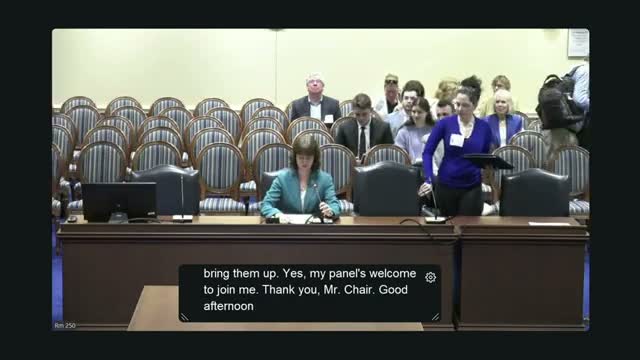
Summary
HB 578 would preserve Endangered Species Act and Migratory Bird Treaty Act protections in Maryland, allow designation of essential habitats, and add clarifying language requested by farming and conservation stakeholders; sponsors and conservation groups urged a favorable report.
Delegate Julie Plokovich Carr told members that House Bill 578 responds to recent federal rulemaking she says would weaken the Endangered Species Act (ESA) and the Migratory Bird Treaty Act (MBTA). The bill would codify protections now at risk at the federal level, authorize—but not require—the Department of Natural Resources to designate essential habitat, and update earlier state law to ensure continuity of protections.
"These are not idle threats by the current administration," Plokovich Carr said, arguing that 18 other states already protect migratory birds from direct and indirect harm and that Maryland should act to preserve longstanding safeguards.
Conservation groups including the National Aquarium, Audubon Mid-Atlantic and the Maryland Ornithological Society testified in support, citing steep declines in bird populations and warning that federal rollbacks could leave gaps in liability for incidental takes such as oil spills, poorly sighted wind turbines or collisions with infrastructure.
Plokovich Carr said sponsor amendments are forthcoming to (1) clarify that existing federally permitted livestock depredation methods remain allowed, (2) clarify DNR implementation and regulatory authority for essential-habitat designations, and (3) correct drafting errors in the migratory-bird provisions. Committee members asked whether the bill covers species beyond birds; the sponsor replied it applies to any organism qualifying under the ESA or MBTA protections (animals, plants, fish, insects).
There were no formal committee votes recorded in the hearing; the matter remains before the committee for consideration of sponsor amendments.