
Delegate Tarasa seeks to cement local power to set stricter air, water and waste rules
Get AI-powered insights, summaries, and transcripts
Subscribe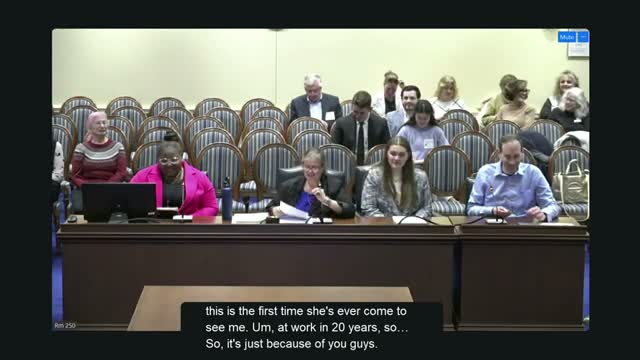
Summary
HB 517 would clarify that Maryland jurisdictions may adopt emission standards, ambient air quality rules and solid-waste regulations that are as strict or stricter than state and federal law; sponsor and environmental groups urged the committee to approve the bill to avoid litigation that has chilled local action.
Delegate Jen Tarasa urged the House Environment and Transportation Committee to give House Bill 517 a favorable report, saying the measure merely clarifies a long-standing intent: municipalities and counties should be able to adopt environmental standards that are more protective than state or federal minimums.
"This bill is simple," Tarasa told the committee. She and witnesses said recent court decisions have created uncertainty about whether the General Assembly intended to preserve local authority, producing costly litigation and discouraging local regulation.
Mike Ewol, executive director of Energy Justice Network and author of the bill, told lawmakers federal statutes including the Clean Air Act and Resource Conservation and Recovery Act already permit state and local rules that are as strict as or stricter than federal floors. Ewol said HB 517 corrects drafting errors in state law that courts have seized on and gives local governments confidence to adopt regulations without fearing successful legal challenges.
Representatives from the Maryland Municipal League and at least two environmental groups also testified in support, calling the bill a clarification rather than a substantive policy change. A virtual witness, Kurt Schwarz, told the committee he supported the bill because proposed local projects—he gave an example of a pilot plastic-recycling facility—could pose health risks to nearby seniors and schoolchildren if left unregulated.
There were no recorded motions or votes during testimony. Sponsor and supporters asked the committee to advance the bill to avoid chilling local policymaking if federal standards change.
The committee heard no opposing witnesses during the HB 517 panel, and the hearing record closed on that item before the committee moved to the next bill.