
Committee hears competing testimony on sweeping noncompete ban in HB 1155
Get AI-powered insights, summaries, and transcripts
Subscribe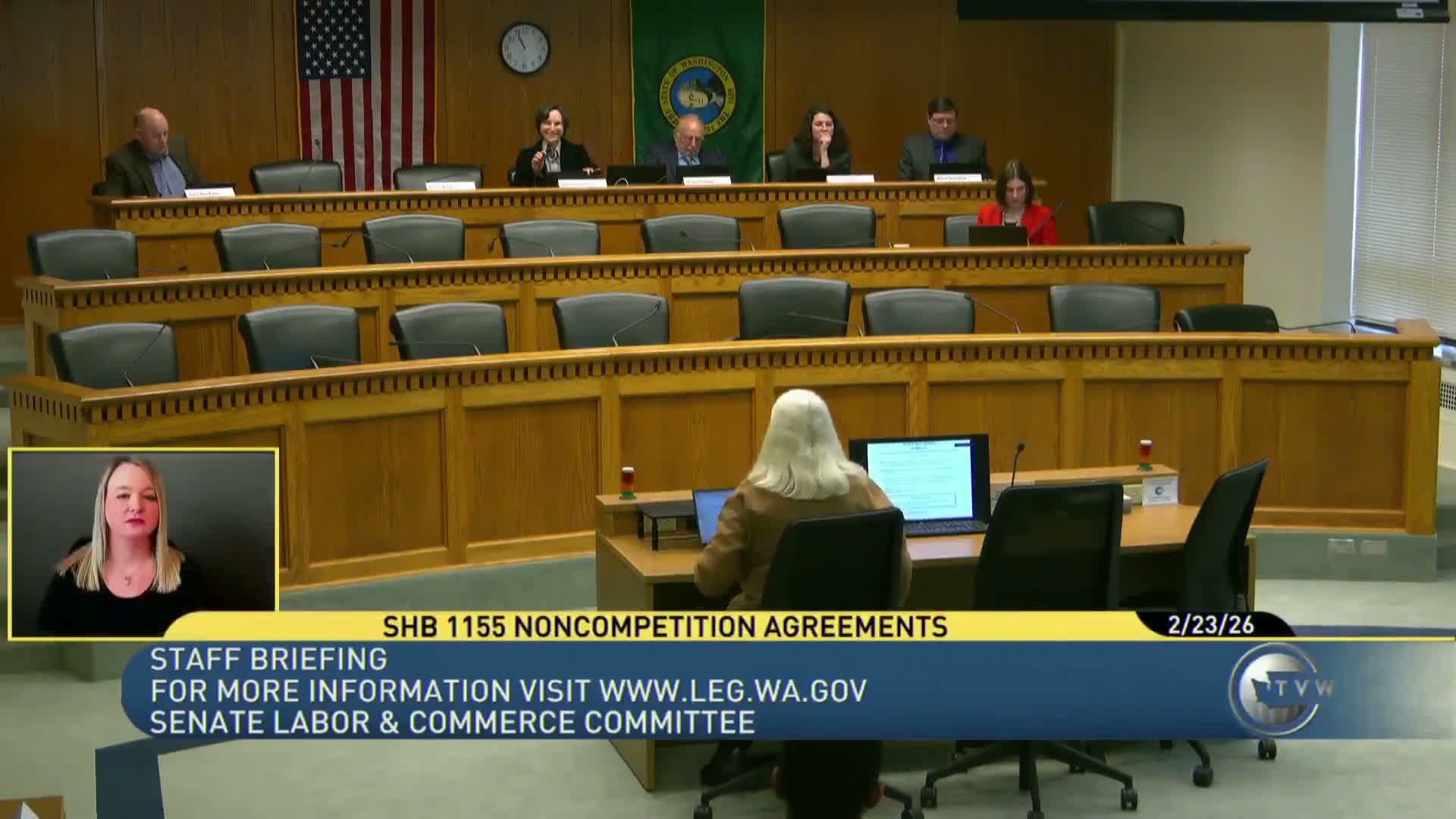
Summary
HB 1155 would render noncompete agreements void and unenforceable statewide; supporters say it increases worker mobility and protects patients, while business groups urge narrow exemptions for senior executives and financial institutions. Committee heard many personal accounts and mixed testimony before advancing other business to executive action.
The Senate Labor and Commerce Committee took testimony Feb. 25 on House Bill 1155, which would make noncompete covenants void and unenforceable in nearly all circumstances.
Committee staff summarized the bill’s changes: the proposal would invalidate noncompetes regardless of when they were signed, broaden the definition of noncompetes, allow an exception for agreements that pay for an employee’s educational expenses, and refine notice requirements that employers must use by Oct. 1, 2027, to inform affected current and former employees that applicable noncompetes are void.
Proponents framed the bill as a completion of a 2019 reform. Carissa Larson of the Washington State Labor Council told the committee, "HB 1155 would finally end the unfair and anti‑competitive practice that binds workers to their employers." Alex Whithanger of the Washington State Medical Association said many physicians reported noncompetes that "impede their career autonomy [and] intensify feelings of burnout."
Multiple witnesses recounted personal harm from enforcement. Sung Chin and Taifa Harris described litigation and professional disruption when former employers sued over alleged noncompete violations; Raquel Sadler, a licensed mental‑health counselor, said her small practice incurred "over a $100,000 in legal fees" defending client‑continuity actions she said arose from noncompetes.
Business groups urged caution. James Crandall (NFIB) and Brad Tower (Community Bankers of Washington) urged a narrow exemption for senior executives or roles whose departure could threaten institutional stability. Crandall said the 2019 compromise balanced worker mobility with protecting legitimate business investments.
Supporters argued alternative legal tools exist — nondisclosure agreements, trade‑secret protections and non‑solicitation clauses — to protect legitimate employer interests without broadly restricting worker movement. Jesse Wing of the Washington Employment Lawyers Association urged passage to increase employee mobility and reduce misuse of noncompetes.
The committee took testimony from a broad set of stakeholders and closed public comment. Several committee members asked about amendments debated in the companion Senate measure; sponsors and witnesses said they hoped to continue negotiations on narrow carve‑outs for specific circumstances.
No final committee vote on HB 1155 was recorded at the hearing; further work and potential amendments were discussed as the bill proceeds through the legislative process.