
Valley Regional Transit urges Nampa and Caldwell to hold baseline funding as ridership rises
Get AI-powered insights, summaries, and transcripts
Subscribe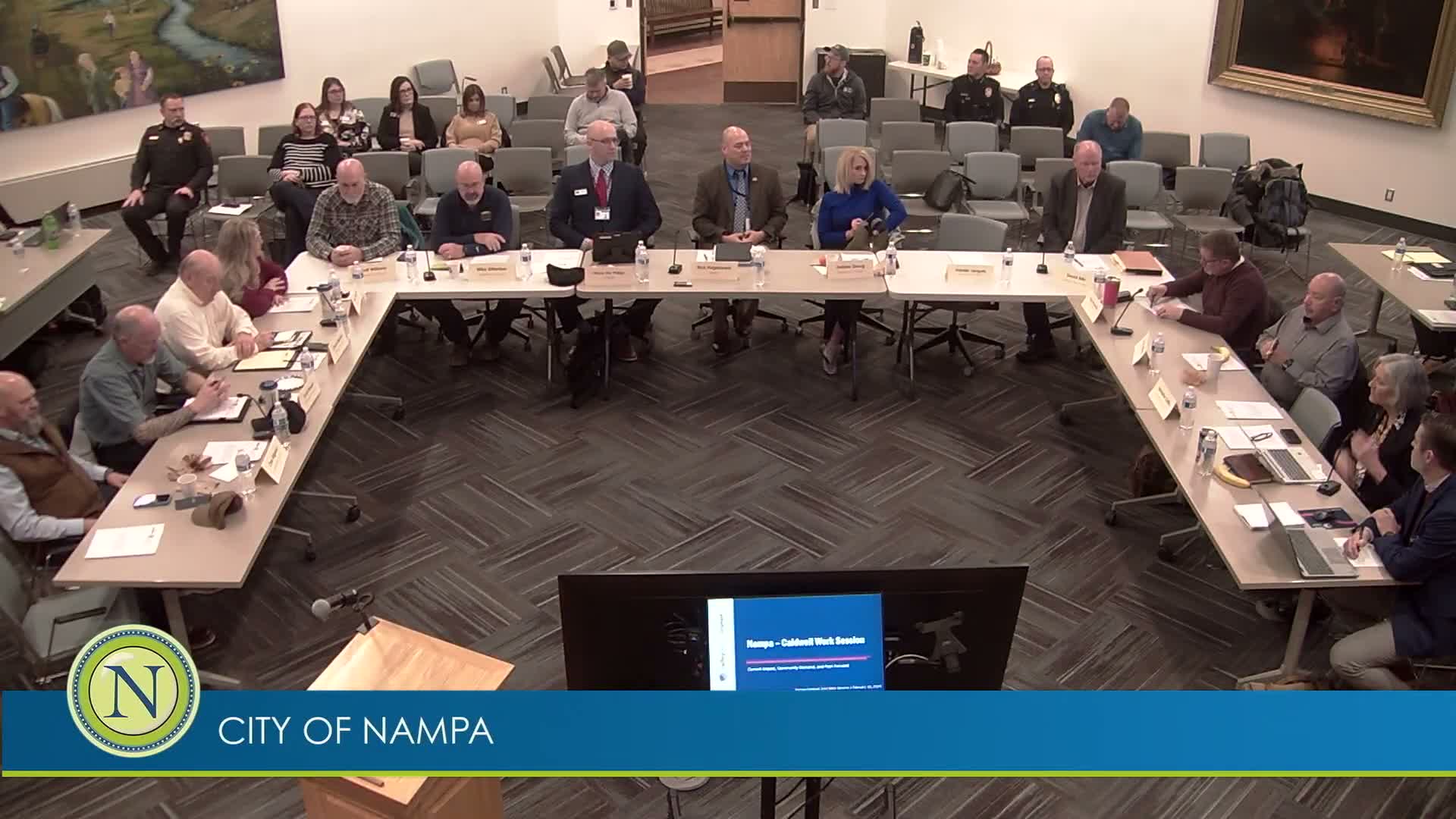
Summary
Valley Regional Transit told a joint Nampa–Caldwell workshop that ridership in Canyon County is up, service reliability improved after recent route changes and that cities should maintain baseline local contributions while VRT pursues stable, voter‑approved funding.
Valley Regional Transit (VRT) told a joint workshop of Nampa and Caldwell city councils that recent service redesigns have produced measurable ridership gains but long‑term stability depends on local contributions and a new, dedicated revenue source.
"I'm Elaine Clegg. I'm the CEO of Valley Regional Transit," Clegg said, opening the presentation and outlining recent changes. She said the agency’s 2024 service redesign and operational changes have yielded a 17% increase in ridership in Canyon County over two years, with Route 42 singled out for large gains after it was consolidated into reliable hourly service.
The presentation emphasized tradeoffs VRT has made to boost reliability. Officials described combining underperforming peak or express trips into all‑day hourly routes, consolidating five separate senior/Zonal services into the Beyond Access program and commingling on‑demand and paratransit rides through a single scheduling platform. Early operational data showed the seat availability gap on demand services fell from about 13% to roughly 6% after three weeks of the new system, VRT staff said.
Clegg warned that VRT is operating with fewer service hours per resident: "Our service hours have declined 6%" while population in the region has climbed about 15%, she said, noting service‑hours‑per‑capita have fallen nearly 20%. To sustain baseline service the agency is asking member cities to confirm they can maintain the proposed baseline contribution in budget processes and to notify VRT early if they cannot.
On funding, VRT staff said roughly 45–55% of its systemwide budget comes from federal sources and that Canyon County’s total annual transit budget is about $8 million, with roughly half from local sources. Clegg said Idaho is currently the only state without dedicated state transit funding and that VRT is exploring options to ask voters for levy authority or other measures to create reliable, locally controlled revenue. "We have a plan about what it would look like if we were able to provide that much service," she said, urging engagement from councils and the business community.
Council members pressed for more granular data. Several asked VRT to provide daily boardings for Routes 40 and 42 originating in Nampa and Caldwell and to break out Canyon County versus regional totals for specialty services such as Beyond Access. VRT agreed to provide those route‑level counts and follow‑up outreach videos from recent Transit Day events.
VRT also announced near‑term pilots and service experiments: a vanpool pilot launching in the spring through a private operator, a small events pilot funded from a $50,000 annual pilot pot, and a quarterly Canyon County performance dashboard to show route‑level targets and results.
On fleet strategy, staff said the agency will prioritize compressed natural gas buses for Canyon County due to current reliability and cost tradeoffs while maintaining electric buses in portions of Ada County where recent electric units have performed well.
The meeting concluded with council members acknowledging tight municipal budgets and differing tolerance for increased local contributions; one council member volunteered to support a voter‑approved levy if VRT develops a clear dollar amount and implementation plan. The session was informational and ended with no formal motions or votes.