Get Full Government Meeting Transcripts, Videos, & Alerts Forever!
Get email alerts on the Legislative topic
No spam. Unsubscribe anytime.
Joint conduct committee hears concerns that Rule 27 changes could curb political speech and alter investigation rules
Summary
A joint committee heard hours of testimony on SCR 208 and SB 1600, which would revise Legislative Branch Personnel Rule 27. Senators and public witnesses raised objections to a broader definition of "legislative business," changes to investigation and confidentiality rules, and the use of informal resolutions; the hearing closed with no vote.
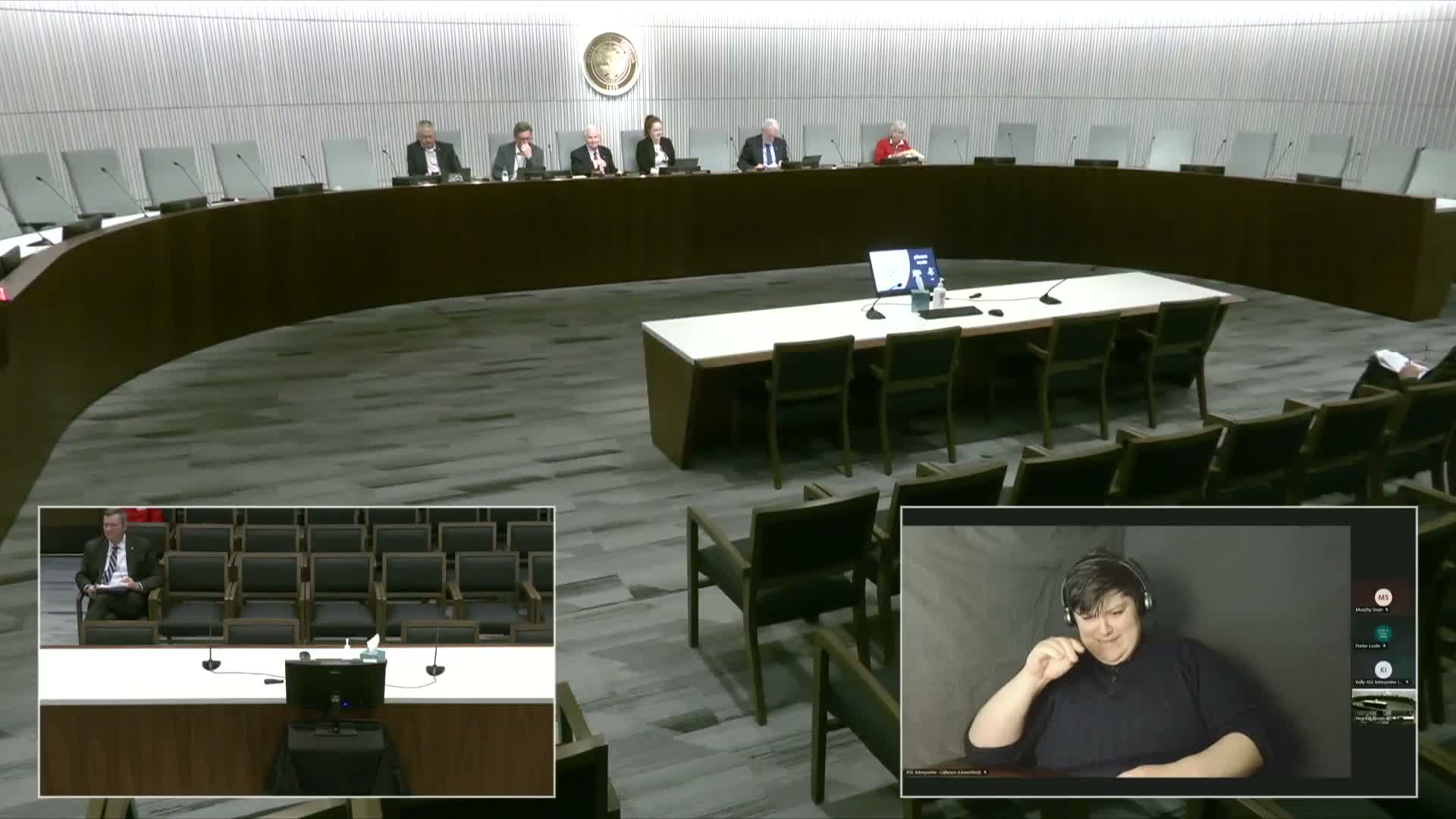
The joint committee on conduct heard testimony Tuesday on SCR 208 and SB 1600, proposals to change Legislative Branch Personnel Rule 27 governing workplace conduct.
Sen. Mike McClain, who identified himself as representing Senate District 30, told the committee he opposed SCR 208 because it would broaden the definition of "legislative business" and could sweep political speech, caucus discussion and some campaign activity into the rule’s reach. "I don't wanna be the speech police," McClain said, asking the committee to table the measure until a longer session allows more briefing for members.
Sen. Sarah Gelser Bloem (Senate District 8), who said she has been both an initiating impacted party and a respondent under the prior rule, urged caution about limiting public investigations and about expanding informal resolution processes. She recounted a prior investigation whose public report led to a resignation and helped other staff and interns come forward: "There were young women in this building, interns and staffers, some of whom left politics altogether," Gelser Bloem said, arguing that public resolution in some cases validated complainants and served the public interest.
Both senators and other committee members questioned how new definitions in the draft interact with the statutory and administrative standards for hostile work environment and harassment. Committee staff summarized the Dash 1 amendment as clarifying that the hostile-work-environment definition applies to harassment and to a separate category noted in the draft (transcript redaction shown as ******), and said the Dash 2 amendment adds certain member- or staff-controlled social-media content to the definition of "legislative business."
Witnesses raised practical and procedural concerns: McClain said the draft removes some prior language that helped define hostile work environment and gives the legislative equity officer discretion to decide whether political speech merits formal investigation; Gelser Bloem said the proposal could allow a public allegation to be withdrawn before completion of an investigation, leaving respondents and the public without a formal resolution. "If it was not for [a prior leader] making the decision over the objections of some to release that report, it never would have been possible to know that we were telling the truth," Gelser Bloem said.
Public commenter Karen Goodness opposed SCR 208 on free-speech grounds, asking whether expressing religious views or criticizing library books could trigger penalties under the revised rule: "Please don't step on my First Amendment rights," she said.
Committee members said the draft is meant to be a starting point and that co-chairs expect to receive written testimony and refine the language before any vote. The chair opened a second hearing on SB 1600, and staff summarized that bill as aligning statutory language with SCR 208, adjusting confidentiality and disclosure for Rule 27 investigations, eliminating the off-site process counselor role, and including an emergency clause declaring the measure effective on passage. Committee members recorded no votes that evening and closed the hearings.
The committee accepted written testimony and indicated further deliberation and possible amendments before any formal work session or vote.