Get email alerts on the Urban Reserves topic
No spam. Unsubscribe anytime.
Cities and conservation groups split with property‑owner advocates over urban‑reserve rule changes
Summary
Stakeholders before the committee were divided over two competing amendments to SB 15‑22: cities and land‑use organizations backed a narrowly tailored dash‑2 to define built constraints, while property‑owner groups urged adopting dash‑1 to loosen prioritization and make urban reserves more practicable for housing growth. Farmers warned of farmland loss.
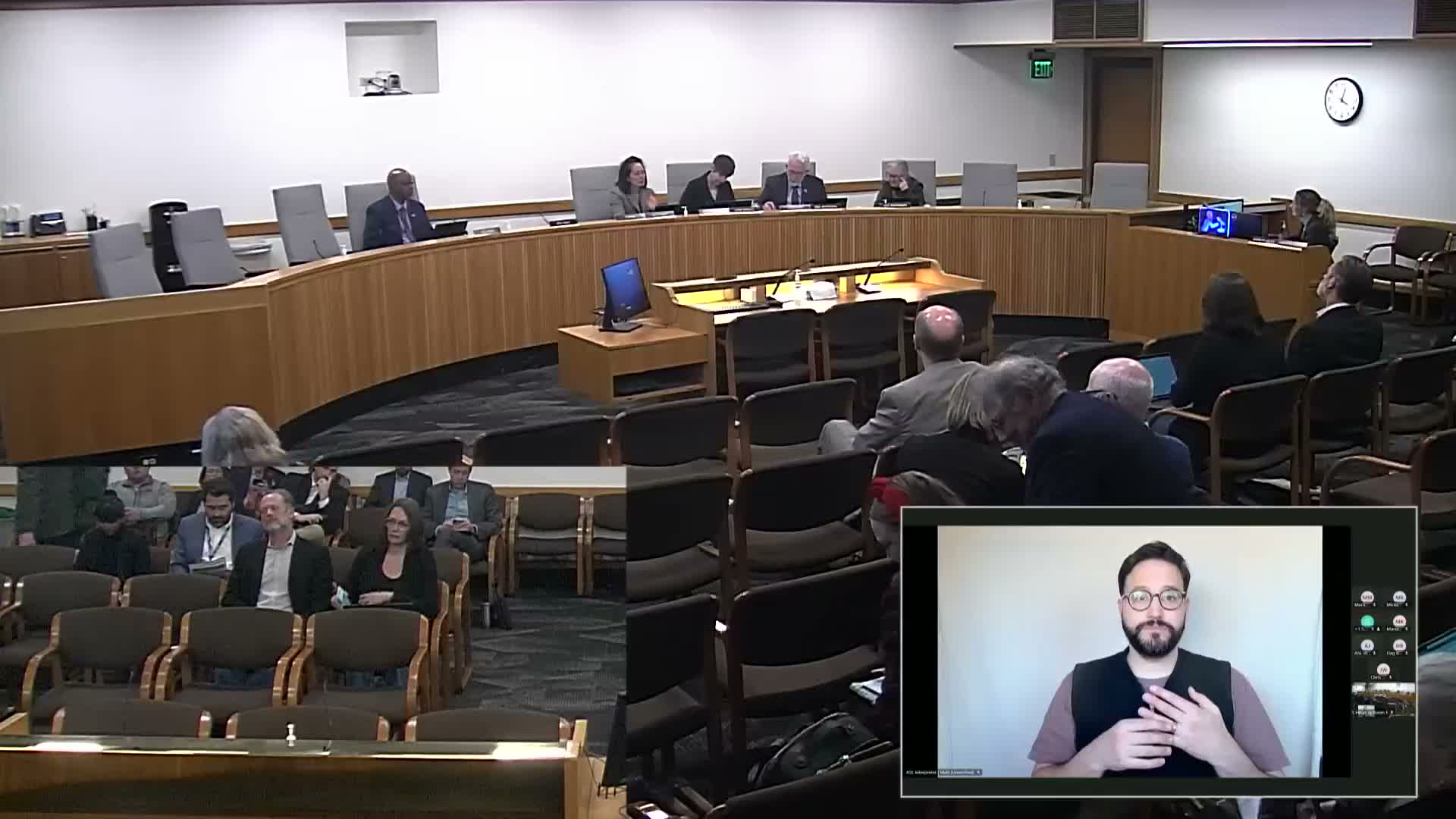
The committee held a public hearing on Senate Bill 15‑22, which concerns the statute and rules governing urban reserves — the outside‑of‑UGB areas that cities may hold for potential future urbanization.
Eric Chancellor of the City of Bend explained urban reserves' purpose as a long‑range planning tool to ensure land supply beyond a 20‑year urban growth boundary and described how the dash‑2 amendment would clarify that only existing physical constraints (including built constraints) should be considered — not planned future public investments — when evaluating lands for urban reserves. "We think the dash‑2 is an effective means of preserving the balance" between long‑term planning and resource protection, Chancellor said.
Conservation groups such as Central Oregon Land Watch supported the dash‑2 amendment and opposed dash‑1 on the grounds that dash‑1 would remove the statutory prioritization scheme that helps balance efficient development with preservation of farm and forest lands. "The dash‑1 amendment would roll back these significant efforts," Corey Harlan said.
Representatives of the Oregon Property Owners Association and Realtors urged the committee to adopt dash‑1 or pursue interim work to make urban reserves usable by cities. Dave Honeycutt argued that LCDC's implementation of the rule turned the urban reserve process into a test that has disincentivized cities from designating reserves, and he urged changes to make urban reserves more practical, asserting that the current rule often results in areas that are unlikely to be developed.
Farmers and rural residents expressed strong concerns about allowing additional farmland into potential urbanization. Theodora Schreier, a fourth‑generation farmer, said the dash‑2 and dash‑1 amendments "will destroy farmland" and urged the committee to protect agricultural land for future generations.
Cities' representatives, including the League of Oregon Cities, said urban reserves must be made practical for cities that need long‑term land supply to meet housing needs. Witnesses described a recent rulemaking history (cited work under SB 11‑29 and DLCD rulemaking) and urged the committee to adopt narrowly tailored clarifications so cities can responsibly plan for infrastructure and future growth without unintentionally foreclosing farmland protection.
The hearing included requests for more study, references to prior legislative intent, and technical disagreement about which constraints local governments should weigh when designating urban reserves. The committee closed the hearing and accepted written testimony.
What happens next: The testimony leaves the committee with competing paths: a narrowly tailored dash‑2 to clarify built constraints and preserve the prioritization scheme, or broader dash‑1 changes favored by property‑owner advocates. Additional interim work was suggested by multiple witnesses and committee members.
AI generated
The text on this page is AI generated. Summaries, highlights, analysis, and video transcripts are all produced from the original source material.
AI can make mistakes, so if you spot one, and we will fix it for everyone.
Note: the source content is unaltered by us. Any content source we link to, be it a video, an audio recording, or a document, is presented exactly as its publisher released it. That publisher is usually a government body, sometimes an individual official or another organisation.