Get Full Government Meeting Transcripts, Videos, & Alerts Forever!
Get email alerts on the Social Services topic
No spam. Unsubscribe anytime.
Senate committee adopts amendments to SB 1532, advancing rate changes and expedited eating-disorder placements
Summary
The Senate Committee on Human Services adopted two amendment packages to SB 1532—Dash 4, which restructures rate and licensing requirements for developmental-disability services, and Dash 7, which creates an expedited pathway for out-of-state eating-disorder placements—and sent the amended bill to the floor with a due-pass recommendation.
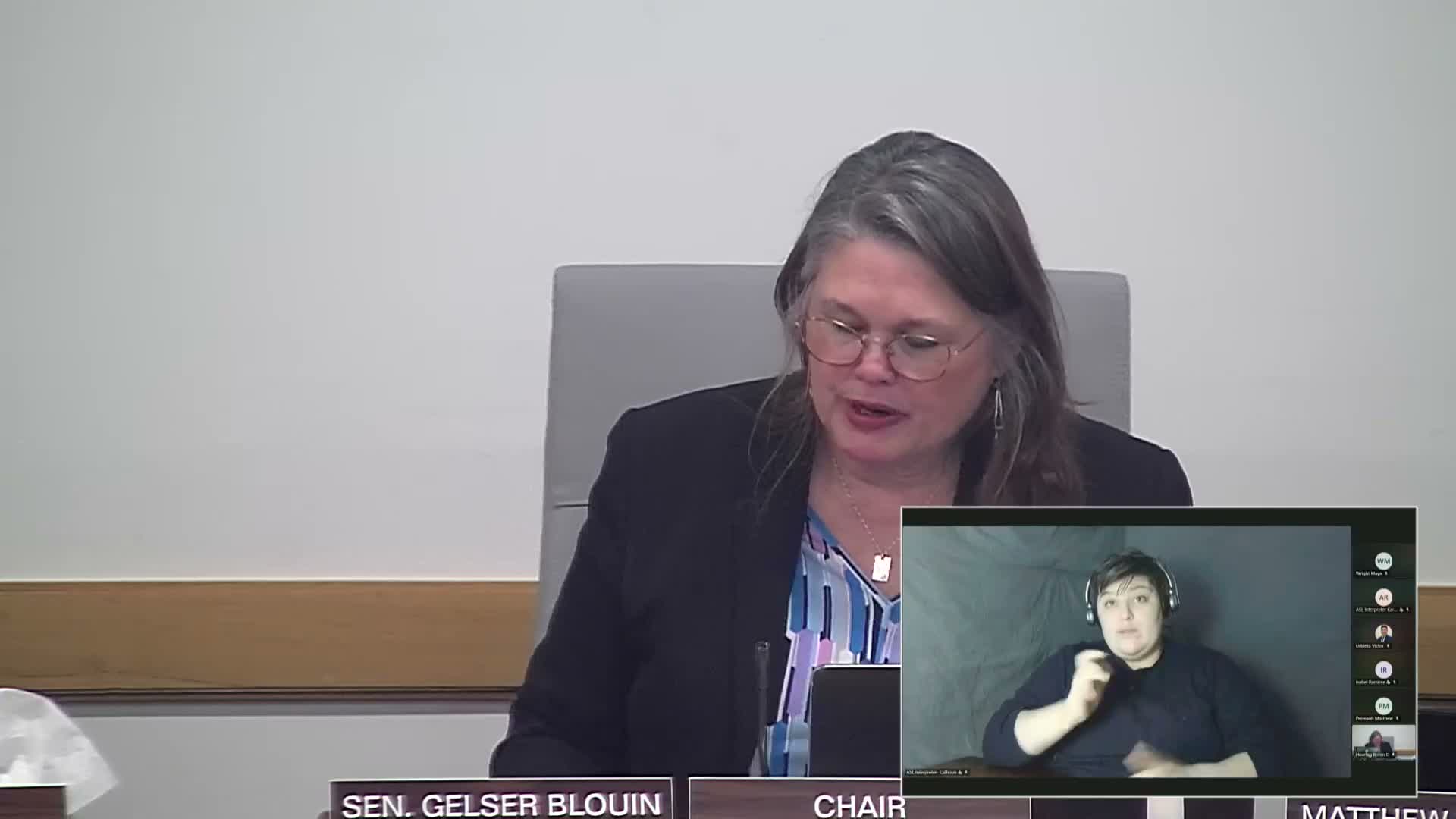
The Senate Committee on Human Services on Feb. 12 amended and advanced Senate Bill 1532, adopting two separate amendment packages and sending the measure to the floor with a due-pass recommendation.
Staff described Dash 4 as a substitute that replaces the base bill, adjusts requirements for the Oregon Department of Human Services (ODHS) to impose license conditions on residential or long-term care facilities following findings of immediate jeopardy, removes some reporting changes for the developmental-disability workforce, and directs ODHS to adopt a differentiated rate model for agencies that employ direct support professionals who live with clients with intellectual or developmental disabilities. Chair Gelser said the changes to the rate model are expected to generate net savings in the DD system, and that partners worked to reach agreement on the language.
The committee also adopted the Dash 7 amendment, which replaces base-bill provisions that would have required licensing for out-of-state placements for eating-disorder treatment. Under the adopted language, ODHS would be allowed an expedited pathway to place a child in an out-of-state eating-disorder treatment program without first licensing the facility; the department would still be required to visit the placement and maintain contact with the youth. Committee members described the change as a narrower, operational fix to permit quicker access to care.
Senator Linthicum moved to adopt the Dash 4 amendment and later moved the Dash 7 amendment; both motions were adopted by the committee. Following passage of the amendments, the senator moved SB 1532, as amended, to the floor with a due-pass recommendation; the motion passed and Chair Gelser said she will carry the bill to the floor.
The Legislative Fiscal Office had posted fiscal impact statements for versions of SB 1532. Chair Gelser and committee members noted that the bill’s modifications to the rate model are expected to generate savings rather than increased costs, and that LFO indicated no need to refer the bill to the Joint Committee on Ways and Means for the Dash 4/Dash 7 versions. The committee did not provide a full roll-call vote tally in the transcript for each motion and only recorded that the motions received the required votes.