Get Full Government Meeting Transcripts, Videos, & Alerts Forever!
Get email alerts on the Emergency Management topic
No spam. Unsubscribe anytime.
Officials push for regional training facilities and sustained resilience funding
Summary
Legislators and emergency management officials described gaps in training facilities, stockpile and recovery funding, urging multi‑year commitments to regional public safety facilities, stockpile sustainment and training hubs to sustain volunteers and meet large disaster demands.
State and local emergency management leaders told the Public Safety Subcommittee on Feb. 12 that Oregon has rebuilt many organizational structures for resilience but still lacks the regional facilities and sustained funding needed to train personnel and respond to large disasters.
Representative Paul Evans framed the history of Oregon’s emergency management realignment and tools such as SPIRE (a bottom‑up equipment and capability program) and the statewide stockpile. "We put OEM under the military because of the ability of logistics," Evans said in describing earlier organizational choices, and he argued the state also needs satellite training facilities and regional hubs to maintain volunteer and career responder readiness.
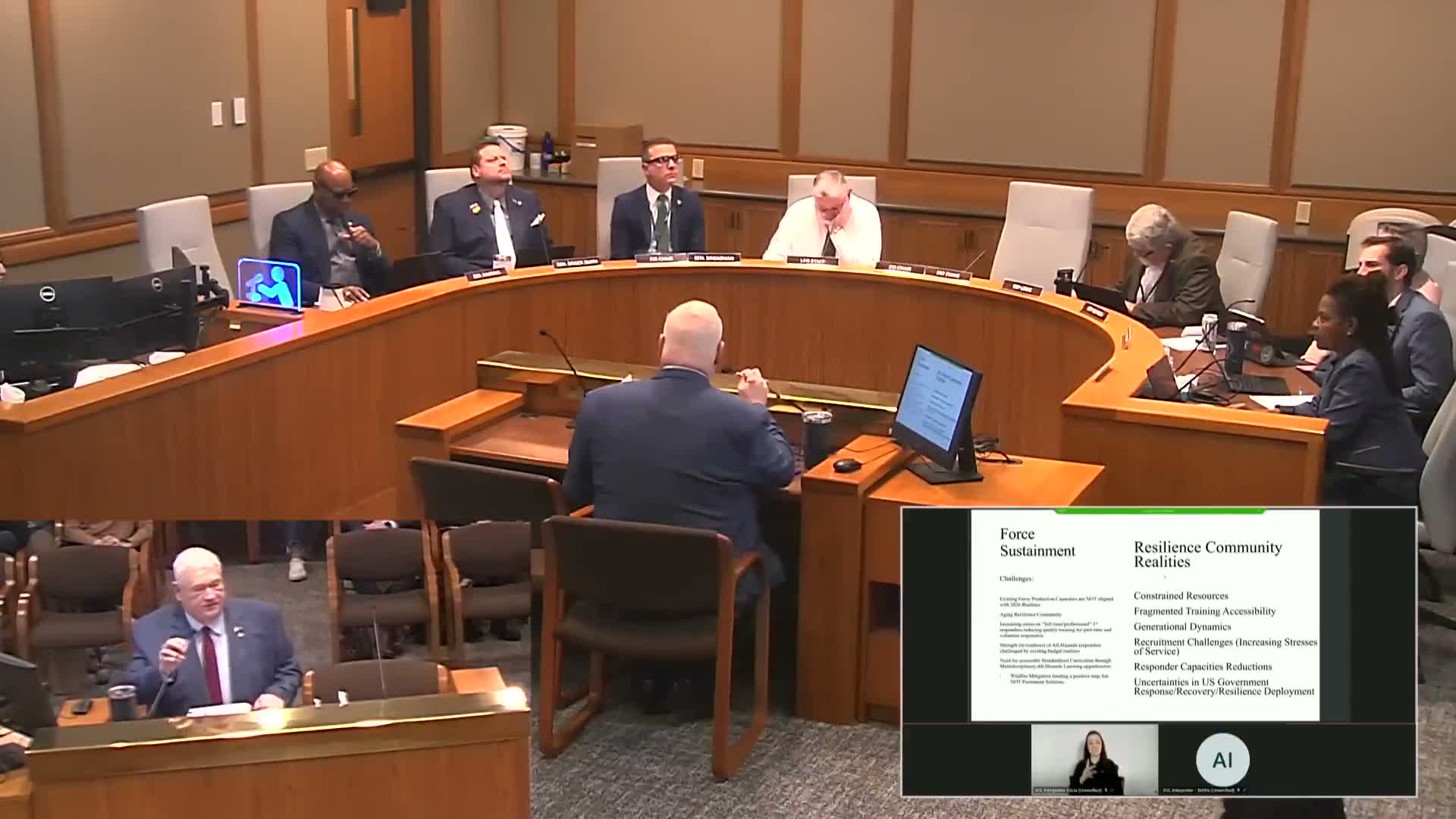
Ben Stange, chief of Polk County Fire District No. 1, told the committee that accessible regional training facilities produce higher participation and interoperable response: "When training is geographically accessible and regionally delivered, participation increases and statewide capacity grows," he said. Stange described regional facilities as dual‑purpose assets that serve daily training needs and can pivot to staging, logistics and evacuation roles in a major crisis.
Erin McMahon, director of the Department of Emergency Management and the governor’s Homeland Security Advisor, outlined recovery authorities and the new disaster recovery plan signed by the governor. McMahon said the state will update annexes over the next year and run a statewide exercise in October to test recovery functions. She also described 2025 disasters where some events did not meet federal Stafford Act thresholds for public or individual assistance and explained how the state has used case‑management, small‑business administration loans and targeted legislative allocations to support recovery where federal assistance was not available.
Speakers emphasized workforce and volunteer challenges: Oregon has roughly 8,000 volunteer firefighters and declining volunteerism, increasing EMS demands, and training needs that exceed current capacity. Lawmakers urged incentives and healthcare support for volunteers and asked for studies on long‑term health impacts from smoke exposure and trauma.
The briefing was informational. Committee members thanked presenters and stakeholders and the committee adjourned with a request for follow‑up briefings on facility design, funding scenarios and volunteer support strategies.