Get Full Government Meeting Transcripts, Videos, & Alerts Forever!
Get email alerts on the Tax Policy topic
No spam. Unsubscribe anytime.
Public hearing on HB 4,014 pits labor and community groups against business coalitions over tax treatment of international income
Summary
House Bill 4,014 (dash-1) would create an 11-member task force to study taxation of international corporate income. Supporters, including labor unions and policy groups, said it could restore revenue and fairness; business groups warned it risks politicizing technical tax rules and harming competitiveness. The committee closed the hearing with LRO follow-ups scheduled.
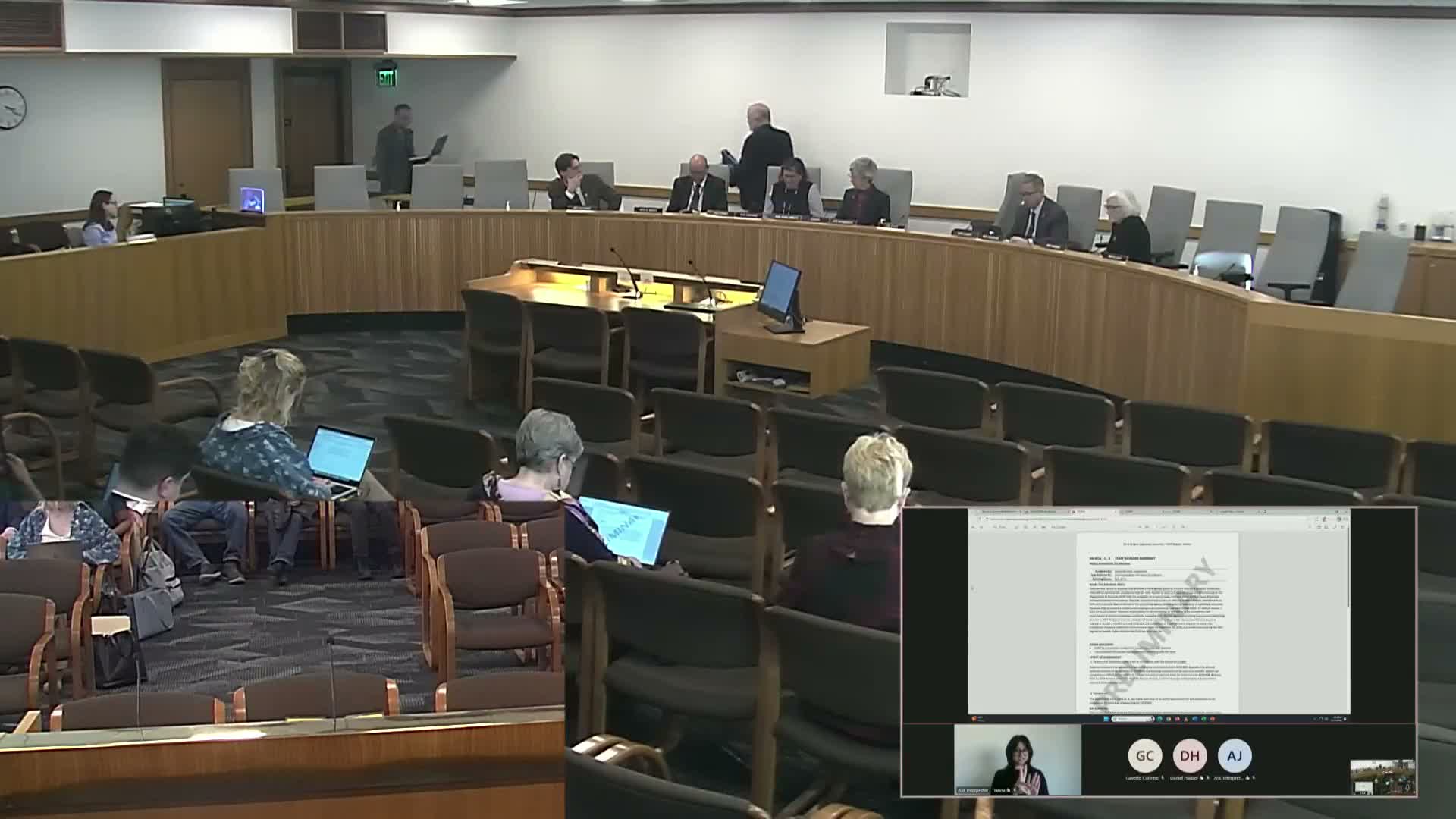
The House Committee on Revenue held a public hearing on House Bill 4,014 with the dash-1 amendment, which would replace the bill's initial study language with a task force charged to examine how Oregon taxes international corporate income and deliver recommendations to the interim revenue committee by Dec. 1, 2026.
Senator Courtney Nureon Mislan opened testimony in support, saying the task force would examine whether global corporations pay their fair share and whether sophisticated tax-planning gives them advantages over small Oregon businesses. Delina Bingham of All Families Oregon and Anthony Castaneda of SEIU 503 urged creation of the task force as a way to recover revenue and protect essential programs; Bingham warned that programs such as the state's employment-related daycare subsidy could run out of funds by January 2027 if revenue shortfalls are not addressed. Daniel Hauser of the Oregon Center for Public Policy provided data examples of profit shifting and argued that prior federal changes (the Tax Cuts and Jobs Act/TCJA) and Oregon's partial connection to federal rules have left revenue on the table.
Labor and education advocates framed the bill as a way to improve revenue stability and fairness for working families. Harper Havercamp of AFT Oregon and Kevin Sullivan of the Oregon Education Association described FDII and GILTI provisions as tax breaks that reduce state revenue and urged investigation and policy options that could fund education and social services.
Business and trade witnesses opposed the amendment. Jeff Newgard of the Smart Growth Coalition and Derek Sainston of Oregon Business and Industry said Oregon previously conducted extensive reviews (2018–2019) and developed a vetted framework; they warned that a new politically driven task force could produce indeterminate findings, add complexity, and hurt competitiveness. Jody Weiser of Tax Furnace Oregon cautioned that taxing multinationals could drive activity to other states or jurisdictions and urged careful sequencing with previously proposed disconnect-bill fixes.
Representative Rush asked substantive questions for the Legislative Revenue Office (LRO) about the impact of the federal Tax Cuts and Jobs Act and HR 1 on Oregon's international tax revenue and about the rationale for including labor representation on the task force; Chair Nathan said LRO responses would be provided at a subsequent meeting. The committee closed the public hearing with no vote taken on the amendment during this session.
Next steps: Committee staff will seek LRO analysis requested by committee members and may reconvene for further consideration of the amendment and the bill.