
Court docket: multiple revocations, treatment referrals and deferred adjudications in criminal dockets
Get AI-powered insights, summaries, and transcripts
Subscribe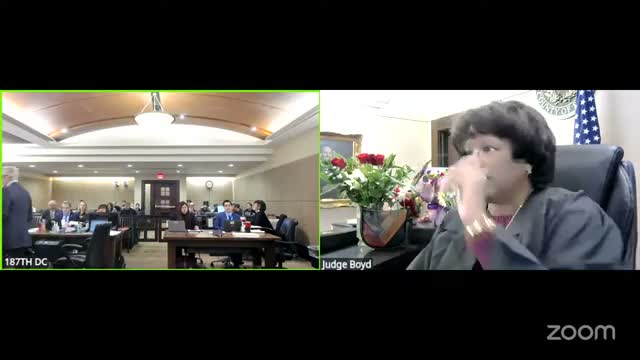
Summary
A criminal docket call produced several revocations and sentences (including a three-year term and multiple treatment referrals), a court-approved early termination of probation, and several plea-driven deferred adjudications and sentencing agreements.
The court’s docket call on Feb. 25 resolved a string of contested revocation hearings, accepted several plea agreements and approved one early termination of probation.
The judge revoked community supervision and sentenced Jeremiah Johnson to three years in prison after the court found violations 2 and 4 true, the court said. "The court is gonna revoke. The court is gonna sentence him to 3 years in the prison," the judge said during the hearing. The judge ordered credit for time already served and instructed clerks to verify custody credits.
In a separate hearing, the court found that Chris Sandoval had violated supervision conditions and revoked his supervision, sentencing him to four years in prison and ordering no residence with minors; the court said it would give credit for time served and for any successful inpatient treatment completed.
The court also accepted multiple plea agreements and deferred findings of guilt in cases where the state recommended deferred adjudication. In State v. Angela White Magpie, counsel waived formal reading of the indictment, the defendant confirmed understanding of plea admonishments and the court found sufficient evidence but deferred a finding of guilt while accepting deferred adjudication and supervision conditions including reporting, random UAs and community-service requirements.
The court granted a defense application for early termination of probation for a different defendant after probation reported no compliance concerns. "I'm gonna grant your application for early termination, and you've done fabulous work," the judge told the defendant after probation reported negative UAs, completion of required classes and timely fee payments.
Other notable case management decisions included scheduling a motion to suppress in the Juan Martinez case for a Wednesday morning setting, directing a defendant (Joe Victor Campa) to remain in custody until transfer to a treatment program (SADF) followed by aftercare or enrollment in felony drug court, and accepting pleas in multiple cause numbers for Joseph Ochoa that produced concurrent sentences (including a six-year prison term on one count and two-year state-jail terms on others). The judge requested therapeutic-community placement where appropriate.
In cases where the state sought revocation but the defense pressed mitigation or alternatives, the court frequently offered two paths: revocation and incarceration, or continued community supervision with amended conditions and referrals to treatment. For example, Sandra Torres was given the option and the court continued her supervision with amended conditions: upon release she must provide probation with a residence address, begin outpatient treatment and the court will refer her to felony drug court.
The court repeatedly reminded defendants to stay in contact with probation and warned that failure to do so could prompt different consequences. Several matters were reset for later dates — motion hearings, suppression hearings and plea-deadline dates — to allow counsel and the state to confer and for the court to review supplemental materials.
The judge handled each matter on the record, accepting stipulations of evidence where offered by the parties, and explained procedural consequences such as waiver-of-appeal paragraphs and the limits of the court’s authority to compel participation in outside treatment programs.
Next steps include the scheduled motion-to-suppress hearing for the Martinez case, various reset dates for pending motions and the transport or placement of several defendants into treatment programs as directed by the court.