
BOERNE ISD budget workshop highlights election-funded pay increases, stipends and benefits strategy
Get AI-powered insights, summaries, and transcripts
Sign Up Free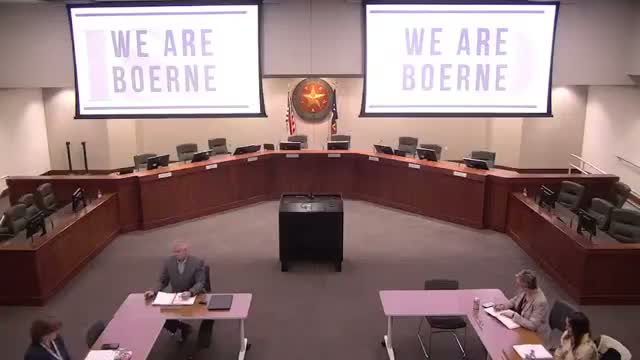
Summary
At the Feb. 2 BOERNE ISD budget workshop, staff outlined a $4.8 million election-funded package prioritizing staff compensation, described new stipends across special education and CTE/dual-credit/AP areas, and reviewed employee benefits strategy including a $750,000 increase in district health contributions, TRS ActiveCare timing constraints, and selection of Baldwin Group as the new benefits broker.
BOERNE ISD staff used the Feb. 2 budget workshop to review how the district's November election results and administrative planning will shape the 2026–27 budget, with a focus on staff compensation and employee benefits.
An administrator said the November election generated about $4.8 million by leveraging remaining local pennies and that roughly 98% of election‑earmarked funds for staff increases were directed to employees who directly affect students. Staff offered examples to illustrate the impact: a long‑tenured special education teacher whose prior salary was reported at about $61,854 is now at about $70,400; a 12‑year custodian was shown as moving from $18.02 to $20.00 per hour. The presenter also described increases for paraprofessionals and a broader stipend program for 132 special education positions and about 116 additional stipends across CTE, fine arts, dual‑credit and AP instructors.
Staff reviewed the district's budget development timeline: a demographic report and campus staffing allocations are expected in the coming weeks, initiative packages submitted by principals and directors will be prioritized by the executive team in April, the board will review staffing and compensation scenarios at the March meeting, and the board aims to consider approving the compensation plan in May ahead of the statutory budget adoption in June.
On employee benefits, the benefits presenter discussed statewide drivers of rising health costs (catastrophic claims, specialty drugs, provider costs) and described timing constraints tied to TRS ActiveCare: districts must notify TRS by December but TRS does not publish rates until May, and leaving TRS ActiveCare requires a five‑year minimum exit. The presenter said the district has increased contributions to employee health coverage by about $750,000 since July, providing roughly $720 per enrolled employee annually on plans offered through TRS ActiveCare. Staff said approximately 70% of employees enroll in TRS ActiveCare and that Boerne has absorbed about 88% of premium increases over the past decade.
Benefits staff cautioned against moving to self‑insurance without a full actuarial review. They noted statutory and administrative constraints (COBRA and ACA compliance, required parity with TRS coverage levels, and significant administrative costs if the district outsourced plan management) and cited examples of major claims that can drive losses; staff recommended a stop‑loss and risk analysis as prerequisites to any consideration of leaving TRS ActiveCare.
The board also approved the Baldwin Group as the district's benefits broker (the board previously authorized the engagement). Staff said Baldwin will analyze claims data, provide actuarial support and run an active open‑enrollment process for all employees this year; the broker contract was described as a three‑year engagement with renewable terms to support multi‑year bidding for policies.
Several board members asked clarifying questions — including whether benefit costs are taken pretax (staff confirmed premiums default to pretax unless an employee elects otherwise) and whether there is a staff size at which self‑insurance becomes viable (staff replied there is no single "magic number" and emphasized claims‑data analysis). Board members also asked staff to supply the exact count of employees affected by stipend changes; staff said they would follow up with that figure.
The workshop concluded with administrative items and a motion to adjourn that was moved by Rich Senna and seconded by Garrett Wilson; the transcript ends without a recorded roll‑call for the adjournment motion.
All statements in this article are based on the board's February 2 transcript. Where the transcript provided approximate figures or partial numeric text, numbers are reported as stated by presenters or marked approximately where the source wording was unclear.