Get Full Government Meeting Transcripts, Videos, & Alerts Forever!
Get email alerts on the Drug Policy topic
No spam. Unsubscribe anytime.
Maryland committee hears bill to repeal paraphernalia penalties, backers say it will save lives
Summary
Supporters told the House Judiciary Committee HB 551 would remove criminal obstacles to syringe‑service programs and harm‑reduction work; prosecutors warned the measure as written could decriminalize tools used in production and sale. Committee heard extensive testimony and questions; no vote recorded in transcript.
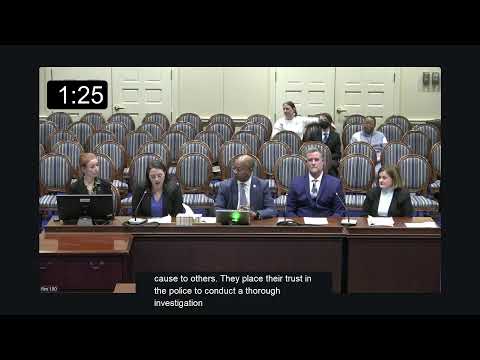
Supporters of a bill to repeal Maryland’s drug paraphernalia penalties told the House Judiciary Committee on Feb. 10 the change would expand access to lifesaving harm‑reduction services and reduce disease and overdose.
"This bill repeals Maryland's drug paraphernalia law because we want to stop penalizing legally purchased items like spoons," Delegate Dahlia Simpson said in opening testimony, arguing that criminal penalties have deterred participation in syringe‑service programs. Sherika Green of the Baltimore City Health Department told the committee, "This bill will not increase or encourage drug use. Instead, it will make it easier for people to access services that are proven to reduce drug use and overdose."
Proponents from syringe‑service programs and public‑health organizations described how sterile supplies and outreach increase entry into treatment and reduce HIV and hepatitis transmission. Darcey Kerwin Garber of a Baltimore SSP said participants carry the same syringes used for legitimate medical needs but fear criminal exposure; she told the committee that the current patchwork of exceptions leaves participants vulnerable to stops and searches.
A range of witnesses with lived experience and public defenders described personal harms and enforcement disparities. "Paraphernalia penalties push people to reuse and share supplies," testified Thomas Higdon of the Maryland Alliance for Sensible Drug Policy, who said unsafe disposal and fear of arrest are common consequences.
Opponents cautioned the bill’s broad text could hinder investigations and make tools used in manufacturing, storage or distribution harder to police. Mireille Williamson, an assistant state's attorney, told the committee, "HB 551 would completely decriminalize all drug paraphernalia used to consume, store, weigh, package for sale, measure, manufacture ... and would hinder the ability of law enforcement to investigate." The Maryland State's Attorneys Association argued narrowly tailored exemptions for syringe‑service programs would be preferable to a blanket repeal.
Committee members questioned practical implications — including whether removing the paraphernalia offense would affect probable‑cause standards or plea negotiations. National public‑health counsel Michael Abrams and others emphasized that the underlying drug offenses would remain criminal and said the measure aligns Maryland with other states that have decriminalized paraphernalia to support public health.
The bill drew broad public‑health and criminal‑justice advocacy support as well as vocal prosecutorial opposition. The committee concluded the hearing without a recorded vote; future steps were not recorded in the transcript.