Get Full Government Meeting Transcripts, Videos, & Alerts Forever!
Get email alerts on the Privacy Alpr topic
No spam. Unsubscribe anytime.
Oregon committee weighs tighter limits on license‑plate readers amid privacy concerns
Summary
At a Senate Judiciary hearing, civil‑rights groups and privacy advocates urged strict limits on automated license plate readers (ALPRs), including end‑to‑end encryption and bans on federal access; law‑enforcement witnesses defended ALPRs as essential investigative tools and cautioned against retention periods shorter than 30 days.
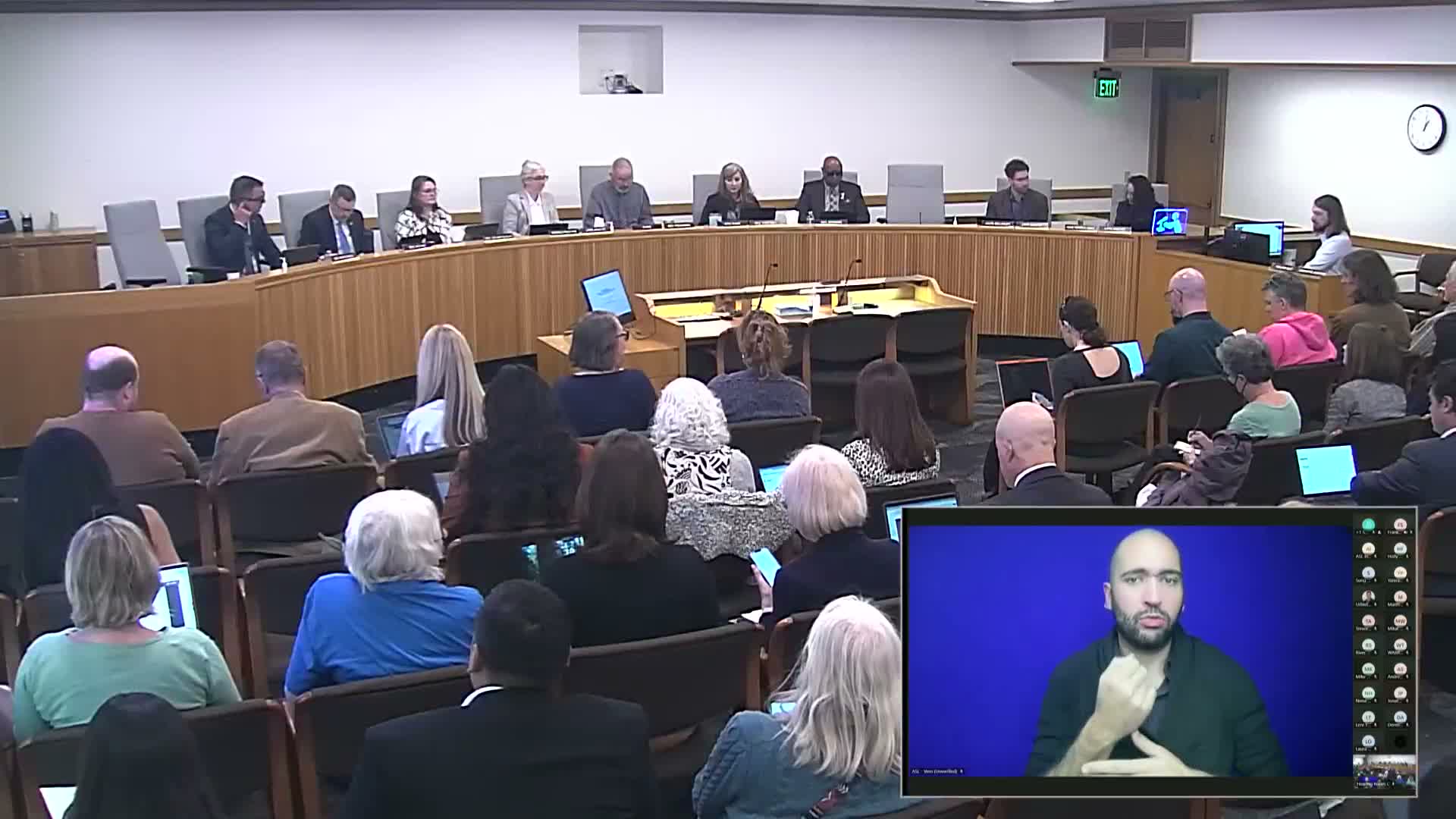
Chair Pruzanski reopened the public hearing on Senate Bill 15 16, an omnibus public‑safety measure whose dash‑2 amendment would impose statewide rules on automated license plate readers (ALPRs).
Privacy and immigrant‑rights organizations urged the committee to tighten the bill. Heather Merrick of the Oregon Law Center said recent public records show out‑of‑state and federal queries can reach Oregon plate‑capture networks and called for explicit prohibitions on immigration‑enforcement uses, end‑to‑end encryption, and retention limits shorter than 30 days. “Prohibit use for immigration explicitly,” Merrick said, and recommended expanding private right of action to cover agency as well as vendor violations.
Ethan Crowe of the ACLU of Oregon warned language added after the work group could allow federal enforcement to access Oregon data. “As we read this it would allow ICE to target undocumented immigrants,” Crowe said, and urged technical fixes to prevent that outcome.
Community advocates described concrete harms. Cynthia Ramirez of Pecun, Oregon’s Farmworker Union, told the committee ALPR access has led to targeting of vulnerable community members and called for strong data‑security and short retention windows.
Law‑enforcement witnesses defended the technology and the need for usable retention. Chief Mike Krantz of Bend, speaking for the Oregon Association Chiefs of Police and the State Sheriffs Association, said ALPRs have aided investigations for nearly 20 years and that a 30‑day retention period is a minimum for many multi‑agency inquiries. “ALPR systems have been a critical investigative tool,” Krantz said, adding the dash‑2 amendment builds transparency, policy requirements, and vendor contract limits into law.
Cybersecurity experts urged strong technical safeguards. Rick Osgood, a cybersecurity professional, warned that centralized plate‑capture networks are attractive targets for attackers and urged end‑to‑end encryption so vendors cannot access raw data. Sam Edwards, a computer‑security researcher, explained that end‑to‑end encryption makes data inaccessible to intermediaries and reduces compromise risk.
The testimony made clear the committee faces a trade‑off: privacy and civil‑liberties groups pressing to limit federal and vendor access and shorten retention, while police leaders and first‑responder witnesses emphasized ALPRs’ role in solving crimes that sometimes require historical plate searches. The committee took no final vote and carried related work sessions forward to the next scheduled meeting.