
NRCS buyout for View Drive likely to require large non‑federal share; most residents said no in informal poll
Get AI-powered insights, summaries, and transcripts
Subscribe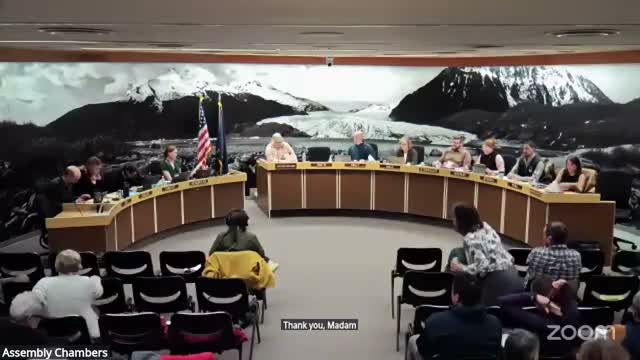
Summary
NRCS tentatively identified View Drive for its Emergency Watershed Program buyout with a preliminary project cost of $25 million; the program would cover about 75% of costs and requires a 25% non‑federal cost share or equivalent. An informal CBJ poll of 14 of 18 properties found most respondents unwilling to participate if they must pay 25%.
The Committee of the Whole on Feb. 23 received an update on a potential NRCS Emergency Watershed Program (EWP) buyout for View Drive.
Director Koch said NRCS conducted a preliminary damage survey and estimated a total project cost of about $25,000,000 for a View Drive buyout and restoration. Under standard EWP rules described in the briefing, NRCS would cover roughly 75% of eligible project costs and requires a 25% non‑federal cost share. Koch said CBJ requested a waiver of that 25% share, but the waiver was not granted.
Koch said CBJ conducted an informal, nonbinding poll of the 18 properties on View Drive and received 14 responses. Most respondents indicated they would not participate if they were required to provide the 25% non‑federal cost share. Of the two respondents who said they might participate, one was a property subject to severe, repetitive flooding and the other was a higher (non‑flooded) property. Koch cautioned that NRCS typically applies the EWP buyout in contiguous swaths and that their program rules focus on mitigating severe and repetitive loss, meaning NRCS may not accept a widely scattered set of voluntary participants.
Koch explained process steps if CBJ chooses to participate: CBJ would sign a program agreement with NRCS, then conduct a binding interest process among residents. If sufficient participants agree, NRCS would require appraisals and CBJ would negotiate purchase prices with owners; owners who decline after appraisal would be able to opt out. Koch said NRCS would require the properties selected for buyout to be vacated and secured prior to the 2026 GLOF season and that some project management costs are not eligible for reimbursement. She estimated CBJ’s non‑reimbursable costs per property (above the required 25% share) could range from approximately $50,000 to $100,000, depending on property values and project drivers.
Brett Nelson, the NRCS representative who has previously briefed the Assembly, participated remotely and clarified program mechanics: in kind contributions can sometimes satisfy a cost‑share requirement, but NRCS typically expects tangible, allowable contributions such as donated materials, equipment or documented city labor; land swaps are possible in theory but uncommon and depend on agreed valuation and eligibility.
Assemblymembers asked whether CBJ could pay all or part of the 25% share, whether the buyout could proceed with only a single participant, and whether CBJ should explore loans or other mechanisms to help property owners meet the share. Koch said that CBJ had not identified alternative nonfederal funding sources beyond homeowners and CBJ and that the city could consider options in coordination with the delegation and state partners. She also emphasized that the EWP process is voluntary for homeowners and that eligibility and NRCS acceptance remain uncertain.
Next steps: staff asked the Assembly whether it wanted additional information to support a decision about CBJ participation and offered to convene another neighborhood meeting with View Drive residents to clarify options and next steps. The Assembly agreed to schedule staff‑facilitated neighborhood engagement including up to three Assembly members.