
Residents urge Billings council to bar local cooperation with ICE; activists call for resolution
Get AI-powered insights, summaries, and transcripts
Subscribe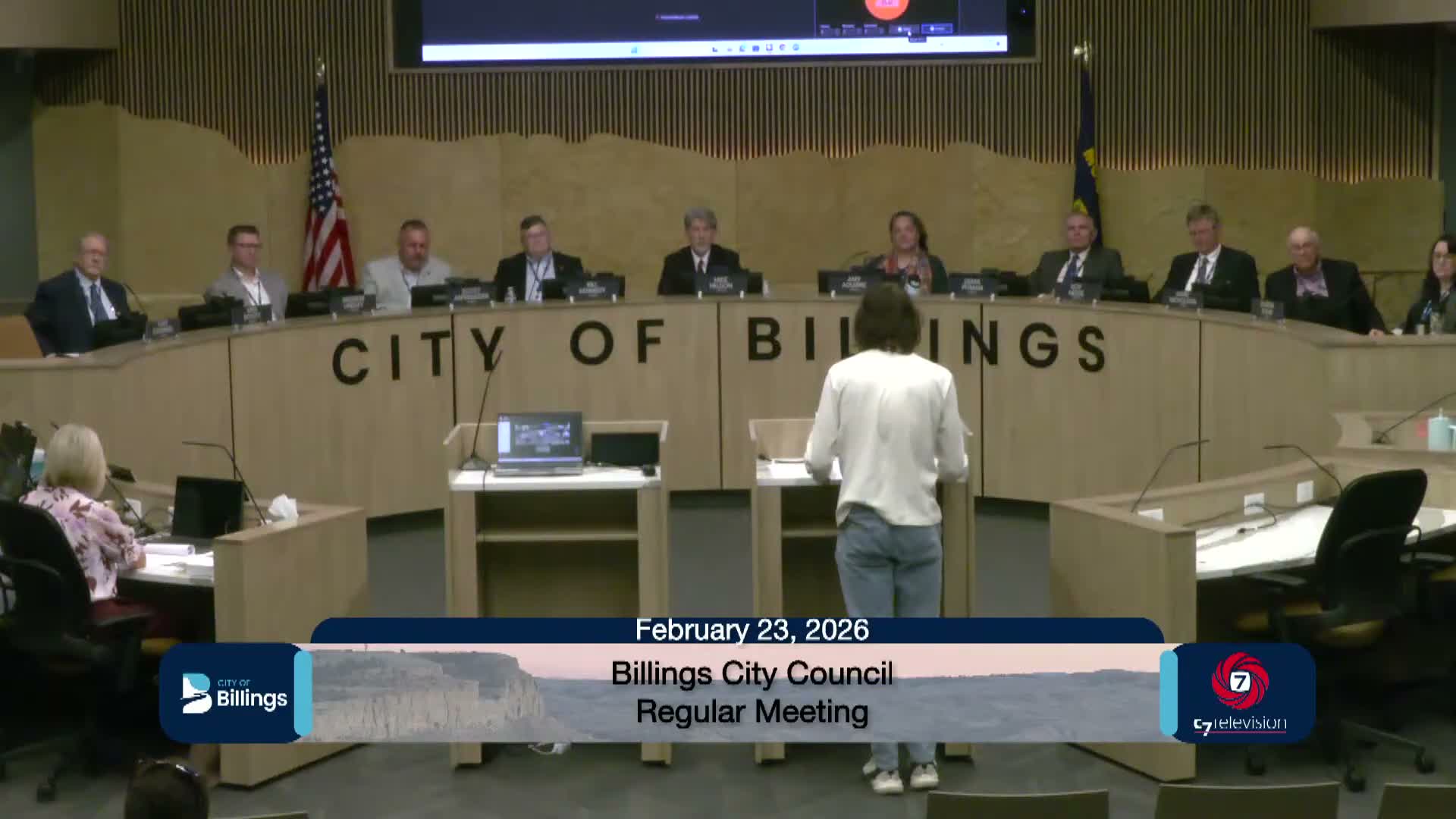
Summary
During non‑agenda public comment, several residents and immigrant‑rights groups urged the council to adopt a resolution directing the Billings Police Department not to enter 287(g) agreements or otherwise cooperate with ICE; speakers cited national incidents and demanded protections for immigrant residents.
A series of public commenters urged the Billings City Council to adopt a resolution directing the Billings Police Department not to enter 287(g) agreements or otherwise cooperate with U.S. Immigration and Customs Enforcement (ICE).
Andreas, speaking for the Billings Alliance for Immigrant Rights, pressed the council to “not allow ICE terror in Billings,” described national enforcement incidents and asked the council to follow Helena’s example by passing a resolution restricting police cooperation with federal immigration enforcement. He asked the council to direct the police department to refuse land use for federal operations, to require federal officers to identify themselves and to prohibit disclosure of a person’s birthplace, immigration status or national origin except as required by law.
Lane Dorsey, also with the Billings Alliance for Immigrant Rights, echoed those demands and framed them as necessary to prevent racial profiling and protect community members from what he described as “ICE terror.” Melinda Nielsen and other speakers described local cases and called for the council to act.
Speakers cited research and national reports while calling for local action, but no council motion or formal response to adopt such a resolution was recorded at the meeting. Council members did not take action on the request during the session; the item remained a public‑comment appeal rather than a council directive.
The council received several other non‑agenda comments at the same period — including a request to standardize three‑minute public‑comment rules at library board meetings, a community event announcement from the Breakfast Exchange Club, and calls for changes to work‑session public‑comment procedure — but the ICE‑related requests were the most substantive policy ask in the public‑comment period.