Get Full Government Meeting Transcripts, Videos, & Alerts Forever!
Get email alerts on the School Performance topic
No spam. Unsubscribe anytime.
Hewitt Trussville Middle School reports sustained academic growth and large drop in chronic absenteeism
Summary
At a Trussville City Schools board meeting, HTMS administrators reported a school report-card score of 92, sustained 100% academic growth, and a fall in chronic absenteeism from 7.8% to 3.73%, citing programs like Exact Path, CoGrader, focused PD and monthly problem-solving teams.
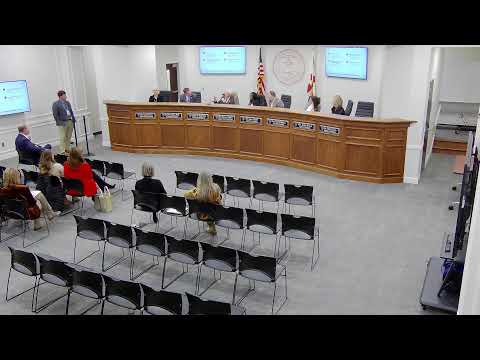
Hewitt Trussville Middle School administrators told the Trussville City Schools Board of Education on Tuesday that the school has sustained 100% academic growth, moved its academic achievement score up year over year and cut chronic absenteeism dramatically.
Mister Meads, introducing the school’s continuous-improvement presentation, said the HTMS report-card score stands at 92 and that the school has steadily increased academic achievement from 84 to 86 and then 88 in recent years, with a target of reaching 92 this year. "We'd really like to break into that 90, 92 range this year," he said during the presentation (SEG 1153–1156).
Presenters said academic growth — the state measure that compares a student’s year-to-year progress with academic peers — has hit the 100% target each year. Madison Black, addressing approaches to raise achievement, described teacher-led professional development, learning rounds and monthly content-data meetings that unpack unit assessments and practice ACAP results to pinpoint interventions for students who are close to the next performance level (SEG 1230–1247).
Administrators credited a mix of programs and practices for the gains. The school uses Edmentum’s Exact Path adaptive diagnostics to create individualized learning paths, CoGrader to provide scalable feedback on student writing, and a monthly Problem Solving Team (PST) to design targeted interventions for struggling learners (SEG 1192–1199, SEG 1201–1211, SEG 1224–1229).
Attendance, a key component of the report card, also showed marked improvement. Presenters said chronic absenteeism dropped from 7.8% to 3.73% after a sustained outreach strategy that includes periodic partnership emails, counselor interventions, and tiered supports for families. "We started with really sending…quarterly emails. I run a report and basically I earmark where we are in the year," one presenter said, describing the stepwise approach to identify and support students at risk of missing too much school (SEG 1540–1548, SEG 1550–1560, SEG 1568–1576).
Administrators highlighted additional elements of the plan: a writer’s workshop and an "ACAP blitz" to close small gaps, enrichment periods for targeted reteach and extension, more granular data tracking by student, and an emphasis on foundational wellness and character education led by counselors and peer-helper programs (SEG 1312–1331, SEG 1401–1410, SEG 1411–1424).
Board members raised questions about how potential state legislation could shift the meaning of report-card metrics. A board member referenced a "Terry Collins" bill under consideration in the legislature that, according to discussion at the meeting, could change report-card calculations and—if enacted—might lower many systems’ grades; administrators said they are monitoring the proposal (SEG 1629–1640).
The presentation closed with administrators recommending continued emphasis on the combination of targeted interventions, teacher collaboration, and family partnership as the path to meet the school’s goals and sustain the gains.
The board will consider the presenters’ materials and next steps as part of routine administrative oversight; no formal action on the HTMS plan was taken at this meeting (SEG 1047–1722).