
Wilson County residents submit petition, press court for independent water and environmental studies before data‑center development
Get AI-powered insights, summaries, and transcripts
Sign Up Free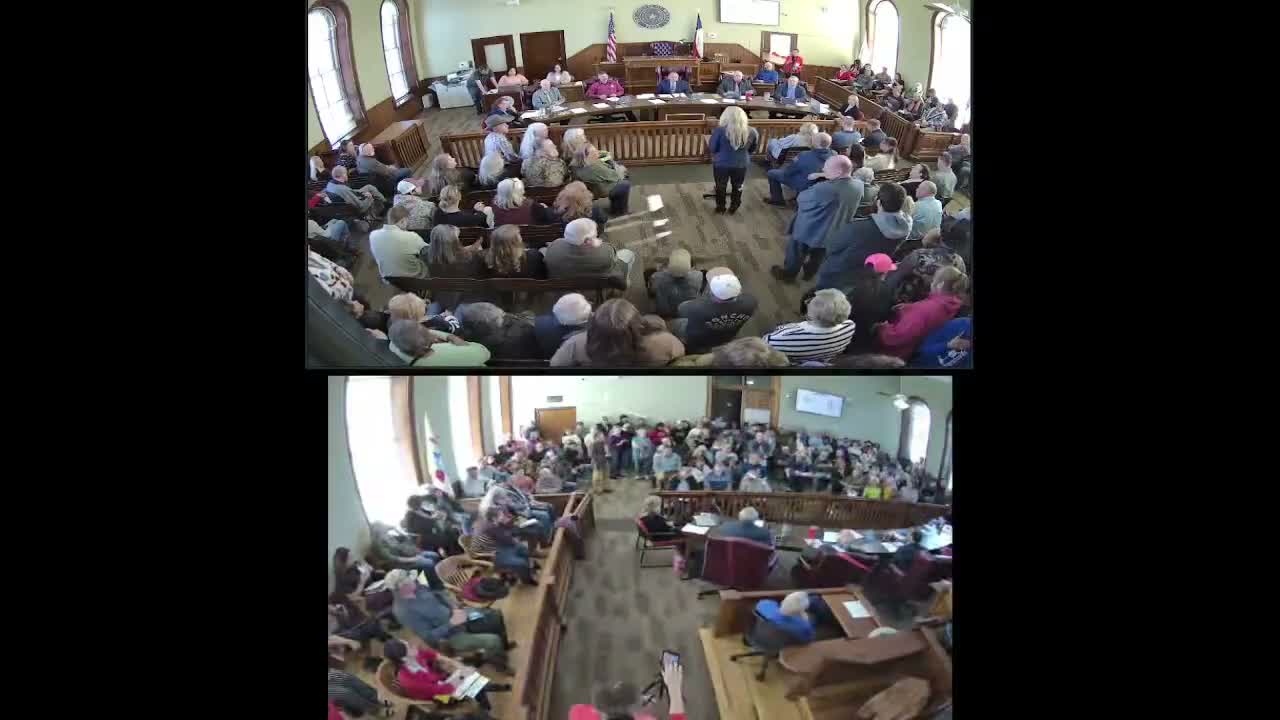
Summary
Residents told the Wilson County Commissioners Court they oppose proposed large-scale data center and utility energy projects, submitted a petition seeking guardrails, and requested independent water, air and land impact studies and emergency-services coordination before any approvals.
Dozens of Wilson County residents urged the county to require independent environmental and water‑use studies and tighter tax‑abatement guardrails before any large data‑center or utility‑scale energy projects move forward.
"I am formally submitting this petition and respectfully requesting that it be placed on a future agenda so that the court may consider the proposed guardrails outlined within it," Lori Dawn Masturi said, identifying herself as a Wilson County resident and the person submitting the petition. Masturi told the court petition organizers had collected substantial online and handwritten submissions; the verbatim transcript records a series of figures she read into the record ("In just 4 and a half days, we have received 14 21 online submissions... As of today... 1,500 online submissions... after removing duplicate entries... there were 13 85 verified Wilson County residents and landowners"). The transcript text is garbled at parts of those counts; petitioners also provided hard‑copy signatures for court review.
Speakers at the public‑comment period pressed three recurring demands: (1) full independent studies quantifying aquifer impacts, water use and wastewater disposal; (2) public disclosure of air‑quality impacts and mitigation plans; and (3) clearer coordination with emergency services and long‑term reclamation plans. "We respectfully ask this Court to ensure full transparency, comprehensive independent water, air and land impact analysis conducted and made publicly available," Masturi said.
Several residents described possible water‑use magnitudes and risks. Glynis Welby asked where water for the project would come from and said she had heard claims (the transcript records '1,700,000,000 gallons') that officials should verify. Farmer Jeffrey Black said the project "will pull 1 to 2,000,000 gallons of water every day," urged enforcement of an independent aquifer study and recommended mandated reclaimed‑wastewater or air‑cooling systems to avoid drawing directly from the aquifer.
Other commenters raised economic and tax concerns. Debbie C. W. addressed a pending change to the county's tax‑abatement policy (agenda item 8) and argued that long tax incentives for projects that mainly create short‑term construction jobs should be scrutinized. Several speakers noted counties lack zoning authority but said other county tools could influence developer behavior.
County staff responded that, according to the record, "nothing has been approved" and that the county had only preliminary contact with a company; officials said permits and further approvals would be required before any final decision. The court did not adopt any project approvals during the session covered by the transcript.
Next steps recorded in the meeting included receipt of the petition for placement on a future agenda and directions that staff continue studying the issues raised; petitioners also asked the court to consider a public meeting time and location that accommodates more residents.
Why it matters: Residents said potential industrial data centers could have long‑term effects on water supplies, air quality and rural livelihoods, and they asked the court to require independent, transparent analyses and public review before policy decisions or incentives are finalized.
What remains unresolved: The transcript records claims about water volumes, petition counts and other figures that are garbled or not independently verified in the record. County officials stated no approvals have been granted and that permitting and additional steps remain to be completed.