Get Full Government Meeting Transcripts, Videos, & Alerts Forever!
Get email alerts on the Special Education topic
No spam. Unsubscribe anytime.
Timberlane parents and staff praise in‑district NECC partner classrooms as route to earlier, local special‑education services
Summary
Timberlane School District told the State Board about its NECC partner classrooms—small, in‑district programs staffed by an NECC lead teacher with district tutors—and parents described substantial progress for children with autism and developmental delays.
Timberlane Regional School District officials told the State Board of Education that contractual partner classrooms with the New England Center for Children (NECC) are allowing students with autism and related developmental needs to receive specialized services in their home districts rather than being placed out of district.
Vesta Krieger, Timberlane superintendent, and Kim Rivers, the district’s early childhood learning coordinator, described a model in which NECC provides a specialized lead teacher and clinical supervision while the district provides facilities and tutors. Presenters said the partner classrooms run small—about six to seven students—and include transportation, speech and occupational therapy and one‑to‑one Registered Behavior Technicians (RBTs) when needed.
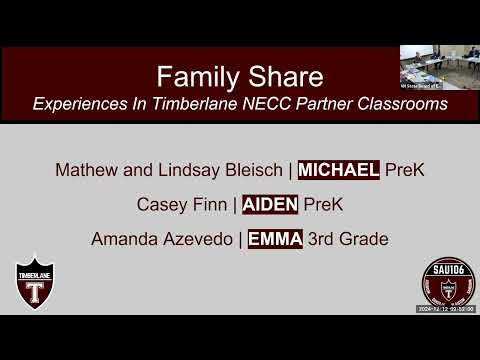
Parents who spoke to the board said the program had immediate, measurable benefits. Lindsay Gleich, whose son Michael attends a Timberlane NECC partner classroom, described improvements in communication, behavior and routine: “He blossomed overnight,” she said, crediting the combination of in‑class ABA supports, speech and occupational therapies and opportunities to participate with peers. Another parent whose daughter Emma attends the program at Atkinson Academy said behavioral episodes had shrunk from long durations to minutes a day and that Emma now participates fully in morning meetings, snacks and specials with general‑education classmates. Casey, another parent, said her son Aiden is speaking more, making eye contact and enjoying school after joining the partner classroom.
District staff told the board that the partnership can be cost‑effective for districts when compared with out‑of‑district placements, because it reduces transportation and placement costs and returns students to local classrooms. They also identified two practical constraints on expansion: (1) staffing—district pay scales for paraprofessionals are not competitive with private contractor rates, requiring the district to contract tutors rather than hire them directly—and (2) space, since dedicated classrooms are needed inside existing school buildings. Timberlane officials said they are exploring regional collaboration between districts and planning to expand services into middle and high school environments as early cohorts age.
Board members asked about scalability, funding and how families are connected to the program. Timberlane staff said they evaluated roughly 25 students from early supports and services last summer and recently opened an additional preschool classroom. The district has 10 speech and language positions connected to the program, three staffed directly and seven contracted; officials flagged workforce shortages for clinical positions as a statewide challenge.
What’s next: Timberlane will continue to pilot the model and seek options for regional scaling. The board invited additional information about funding strategies and workforce solutions to support wider adoption of similar in‑district partner classrooms.