Get Full Government Meeting Transcripts, Videos, & Alerts Forever!
Get email alerts on the School Building Aid topic
No spam. Unsubscribe anytime.
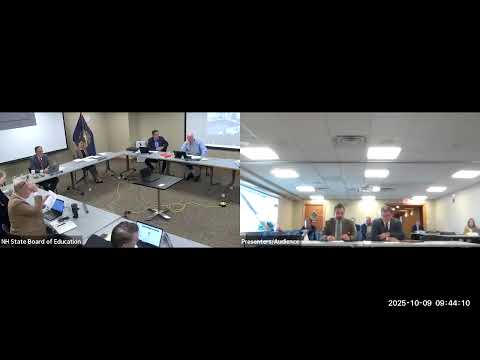
State Board approves ranked school building aid list after reconsidering energy‑efficiency scoring
Summary
The State Board approved and will publish a descending ranked list of school building aid projects after the School Building Authority asked staff to reassess how energy‑efficiency points were calculated; board members also discussed limited biennium funding and how disadvantaged‑community status factors into rankings.
The State Board of Education voted to approve and publish the department’s descending rank order list of school building aid projects after staff reconvened with the School Building Authority to revisit how points for energy efficiency were assigned.
Tim Carney, administrator of the Bureau of School Facilities, summarized the program and the recent re‑evaluation: "School building aid is a state aid, grant program that reimburses school districts between 30–60% of what we call eligible cost of approved school construction or renovation projects," he said, and explained that the bureau revised how it assigned energy‑efficiency points after the authority asked for reconsideration. Carney told the board the authority subsequently verified the revised rank list.
Representative Greg Hill, chair of the School Building Authority, said the change made sense because this year's applications differed from past tranches and energy calculations had created very small separations between top projects. "In the initial ranking, the 2 schools were so close it actually could have been 1A and 1B instead of 1, 2, and 3," he said, arguing that the re‑examination produced a fairer result.
Board members pressed staff on equity and cost implications. Staff explained that disadvantaged‑community status can yield up to 200 points in the ranking and that the ranking framework also accounts for a community’s overall ability to pay. Several members raised the larger budgetary context: the department may request up to $50 million in building aid per biennium but legislative funding decisions determine awards; staff noted portions of that amount are already committed to “tail” payments from prior programs.
After discussion, a board member moved that the State Board approve and publish the attached descending rank‑ordered list; the motion was seconded and approved by voice vote. Staff said the list must be posted on the department website before Nov. 15 as required by law and that the board’s approval starts the public posting and ensuing inquiry/confirmation process by the School Building Authority.