Get Full Government Meeting Transcripts, Videos, & Alerts Forever!
Get email alerts on the Behavioral Health Peers topic
No spam. Unsubscribe anytime.
Peers and providers warn Alameda County cuts will decimate peer-run behavioral-health programs
Summary
Peer-run organizations and service providers told the Board of Supervisors that proposed Proposition 1-related and other budget cuts would sharply reduce or eliminate peer-run services across Alameda County and urged emergency or transition funding and inclusion in planning.
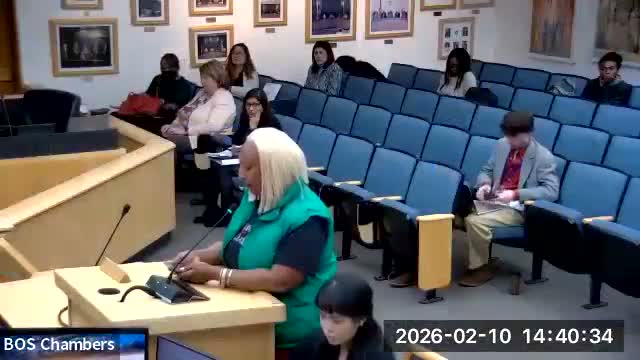
Representatives from PEERS, the Peer Wellness Collective and other peer-run organizations urged the Alameda County Board of Supervisors to pause or mitigate proposed cuts to peer-run behavioral-health services tied to Proposition 1 and BHSA funding transitions.
Speakers described severe funding reductions—some organizations reported internal projections of 80–100% cuts beginning July 1—and warned that losing peer-run services would reduce trusted, culturally responsive entry points for people in recovery. "PEERS offer solutions and support to community members ... If these programs become no more, so many people's mental health will be harmed," Zakiya Johnson said.
Multiple witnesses asked the board to provide bridge or transition funding, include peer leaders in Behavioral Health Services Act planning, and consider the workforce impacts of eliminating long-standing programs. Lynn Rivas, executive director of the California Association of Mental Health Peer Run Organizations, said the scale of cuts in Alameda County was larger than anticipated and could end organizations with decades of community ties.
Board members acknowledged the comments, and Supervisor Marquez encouraged speakers to review her opening remarks and flagged her interest in identifying transitional funding and working collaboratively with colleagues and the county administrator.
The board did not adopt emergency funding at this meeting but directed staff and supervisors to continue discussions; several speakers asked for a formal pause or a guaranteed transition plan ahead of the July 1 funding changes.