
Pinal County board denies 8,100‑acre Silver King Energy Center after hours of testimony
Get AI-powered insights, summaries, and transcripts
Subscribe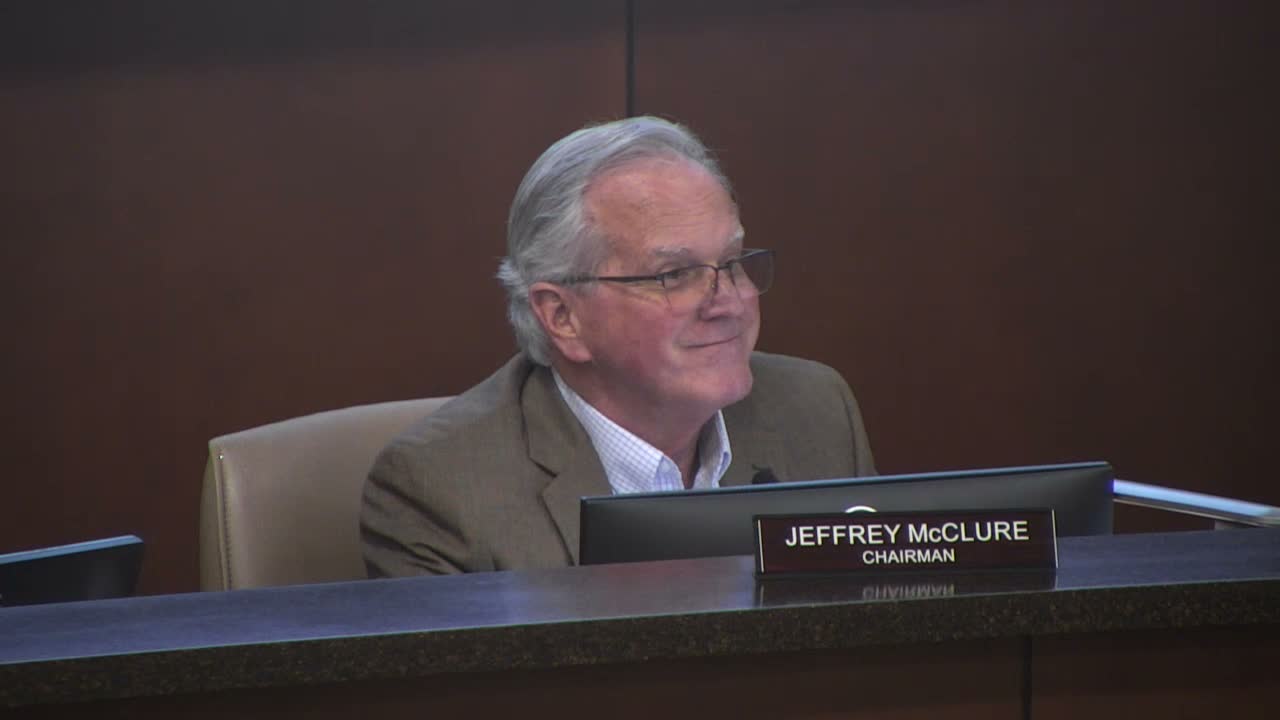
Summary
After a full‑day public hearing with hundreds of written submissions and more than a dozen in‑person speakers both for and against it, the Pinal County Board of Supervisors voted unanimously Feb. 18 to deny the Silver King Energy Center land‑use applications that would have rezoned roughly 8,100 acres for utility‑scale solar, battery storage and a proposed thermal plant.
PINAL COUNTY — After more than five hours of testimony, detailed staff presentations and repeated questions from supervisors, the Pinal County Board of Supervisors voted unanimously Feb. 18 to deny a trio of land‑use applications from Silver King Solar (also presented by Aurevia/Arabia Power) that sought a special‑district comprehensive‑plan change, rezoning and a planned‑development overlay for an approximately 8,100‑acre parcel south of U.S. 60.
The project proposed up to roughly 4,700–5,700 acres of solar arrays (after buffers), large‑scale battery energy storage (BESS) and a southern area that would allow a natural‑gas thermal plant plus mixed employment uses. County staff described the proposal as two development areas separated by the Magma railroad: an I‑3 (industrial)‑zoned northern area dedicated to solar and a southern area intended for a mix of industrial and commercial employment uses.
Alex Hayes, counsel for the applicant, said the project would provide “affordable, reliable, and firm power” for development in Pinal County and noted a civil‑sector off‑taker agreement with the Florence Technology Park. Hayes said the developer has committed infrastructure contributions and community payments, including a $12,500 per‑megawatt contribution structure intended to yield roughly $15 million for transportation improvements and a $3 million package for the local fire district.
“We are not proposing speculative development,” Hayes told the board. He said the project has a site‑specific interconnection filing in the local utility queue and that the developer has a binding agreement with an end user that would be served from the same substation the Florence Technology Park plans to use.
Opponents — including nearby residents, local conservation advocates and some supervisors — raised visual‑impact, wildlife‑corridor, water‑usage and long‑term land‑use concerns. Speakers described the area as part of the Sonoran Desert with mesquite stands and raptor habitat, and urged preserving scenic and recreational values along State Route 79 and Highway 60.
“I don't want this,” said Brenda Hiscox of Coolidge during public comment. “There’s no putting back an ecosystem that you destroy.”
Several supervisors pressed the developer on specifics. Supervisor Vitello asked how many permanent operations jobs the project would produce; the applicant said the solar field would likely support about 10 full‑time operations roles and the thermal plant roughly 20–30 permanent staff, while the bulk of employment would be during multi‑year construction. Supervisor Vitiello and others voiced concern that the entitled project would tie up large land tracts for decades while generating relatively few permanent local jobs.
Supervisor Surdy and others criticized the timing and scale, saying the county should be cautious about using state trust land for long‑term solar entitlements that could foreclose other economic development options. Supervisor Surdy also urged consideration of emerging technologies such as small modular nuclear reactors, which some speakers and supervisors noted are being advanced elsewhere but are not yet widely deployed.
The planning division staff noted the Planning & Zoning Commission had recommended denial (4–3) over compatibility and future‑use concerns; staff also presented a package of 20 stipulations that would have been applied to a PD overlay were the board to have approved the rezone.
After closing public comment and holding a brief executive session on legal and contractual matters, the board voted 5–0 to deny the comprehensive‑plan amendment (item 18), the rezoning (item 19), and the planned‑development overlay (item 20). Chairman McClure called for the motions; the board members who moved and seconded the motions and the roll call produced no recorded dissents at the votes.
The denials leave the property in its prior general‑rural designation and preserve the county’s stated ability to consider future, alternative proposals. The applicant said it would review next steps with state land and utility partners; county staff said they would work to document public testimony and the record for any subsequent filings.
The board returned to other business after the votes, and the meeting adjourned later that afternoon.