Get Full Government Meeting Transcripts, Videos, & Alerts Forever!
Get email alerts on the Assessment And Mtss topic
No spam. Unsubscribe anytime.
Clayton district review finds strong achievement overall but uneven growth; leaders emphasize MTSS, EduCLIMBER and targeted interventions
Summary
District leaders presented state-assessment and MSIP 6 results, saying overall achievement remains strong but growth measures lag for some student groups; the board heard plans to expand MTSS, use EduCLIMBER for longitudinal data, and scale tier 1–3 interventions and SIT/care teams.
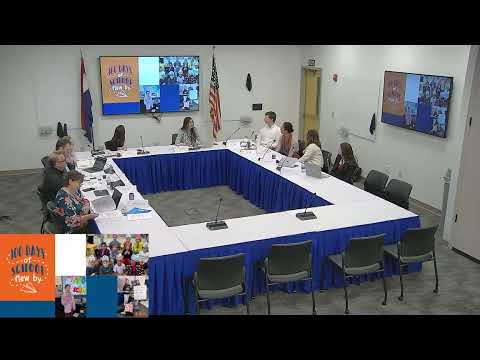
District administrators presented the annual assessment report and a districtwide MTSS (Multi-Tiered System of Supports) update on Feb. 19, describing achievement, growth and planned supports across grade bands.
Doctor Garganigo framed the presentation around MSIP 6, noting that performance measures (achievement) have been relatively strong — district scores were described as a little above 94% in recent years — but that growth metrics (the Missouri growth model) show uneven results. She said the district expects continued work on the Algebra I EOC alignment changes and described how growth and achievement are calculated differently for grade-level assessments and end-of-course exams.
Administrators highlighted disparities when data are disaggregated: while the district’s total population generally meets targets, the "student group" (which the presenters defined to include Black and Hispanic students, students eligible for free and reduced lunch, English-language learners and students with disabilities) shows lower average growth in some content areas. Presenters called out middle-school growth as an area with particular room to improve, while high school achievement and growth were described as stronger.
District staff described the tools and practices being used to address gaps: EduCLIMBER as the central longitudinal data visualization platform (with five years of historical data being loaded), a Students3D view to humanize data, KickUp for professional learning and walkthrough data, and an innovation-cycle professional learning model to build teacher capacity for tier-2 interventions. Principals and coordinators outlined tier-1 guaranteed-and-viable curriculum work, tier-2 eight-week intervention cycles led by classroom teachers, and tier-3 site intervention teams (SIT) that convene multidisciplinary experts to design intensive supports and, where needed, refer students for IEPs or 504 plans.
Several principals gave concrete examples: Glenridge described a new SIT process that brings specialists together to create focused plans and monitor progress in EduCLIMBER; secondary leaders described the difficulty of pulling small groups in a secondary schedule and noted pilots that send staff to elementary classrooms for observation to learn small-group practices. Administrators stressed that the district is working to align literacy and reading goals across grades, expand Wilson and SIP interventions where needed, and ensure interventions are documented and transferred during transition points (e.g., fifth- to sixth-grade handoffs).
During the board Q&A, members asked about staff workload, parent communication (ICAP awareness), and how progress will be measured and reported. Staff said ICAPs (Individual Career and Academic Plans) are being reconsidered for earlier rollout and that the district is working on ways to share ICAP information with families. Presenters repeatedly cautioned that state assessment data represent one point in time and that local measures are being used for more immediate instructional decisions.
The presentation closed with the board thanking staff for the depth of the MTSS work, and with administrators urging sustained attention to growth and to the integration of social-emotional measures (sense of belonging, self-efficacy) with academic data.