Get Full Government Meeting Transcripts, Videos, & Alerts Forever!
Get email alerts on the Infrastructure Water topic
No spam. Unsubscribe anytime.
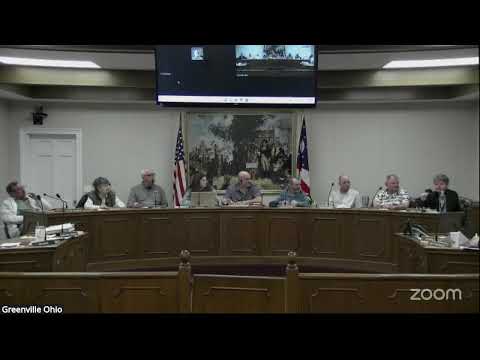
Council hears plan to replace lead water service lines, considers aggressive 4-year schedule to save millions
Summary
Safety Service Director Dell told the council that an aggressive four-year replacement plan for lead service lines could save about $20 million compared with a 10-year schedule, while requiring coordination on homeowner-side work and potential changes to sidewalk projects. Council asked staff to return with a finalized plan.
Greenville — Safety Service Director Dell told the Greenville City Council that the city is weighing two schedules to replace lead water service lines: a slower, 10-year approach and an aggressive four-year plan that, Dell said, could save "about $20,000,000" in projected costs because of current funding terms.
Dell said approximately 2,000 of the city's roughly 6,000 water services are lead service lines and that the aggressive plan relies on a funding package that Dell described as roughly 53% principal forgiveness (a grant) and 47% a 40-year, 0% interest loan. "If we go this aggressive route, it's looking like our payment will be about $350,000 a year for 30 years," Dell said; by contrast, he said the 10-year route would project payments of about $1,400,000 for 30 years under current assumptions.
Dell and council members also discussed homeowner-side responsibilities and federal reporting requirements. Dell said the city must make three attempts to replace a homeowner's side of the service line and must continue reporting and testing even if homeowners refuse. He said those homeowner-side issues and reporting obligations factor into whether to pursue the faster timeline.
Councilors asked how the replacement schedule would affect other projects. Dell said sidewalk phases will be rescheduled in areas with lead services and described breaking the work into eight phases (about 500 services per year under a four-year plan) so the city could pause or shift sidewalk construction in those neighborhoods. He also said staff is exploring applying for funding twice to split the work across application rounds.
The council did not vote on a schedule at the meeting. Dell said staff will prepare a final plan and present it to council for formal consideration once funding details and phasing options are finalized.