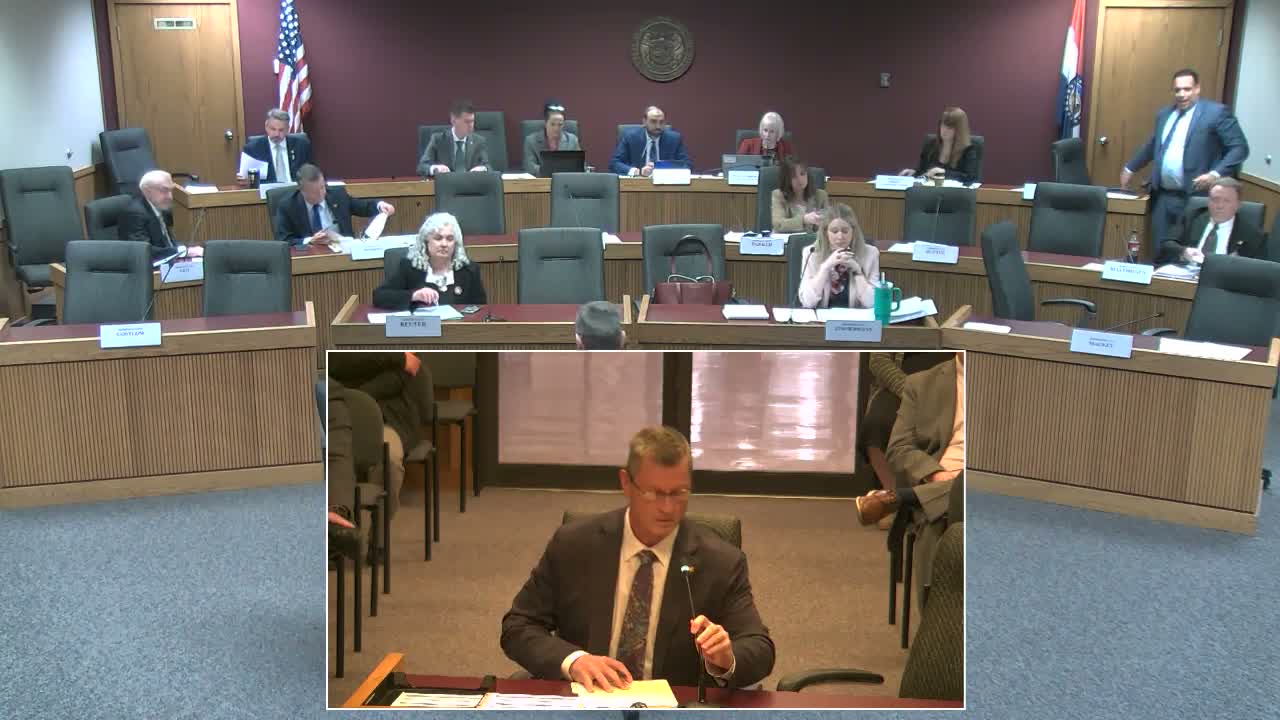
Committee hears staff and law-enforcement testimony on expanding school protection officers (HB 2504)
Loading...
Summary
House Bill 2504, which would allow additional classified school employees to be designated as school protection officers with required training and local board approval, drew supportive testimony from security consultants, superintendents and law-enforcement trainers focused on rural response times and training safeguards.
The House General Laws Committee heard testimony on House Bill 2504, which would permit school districts to designate additional classified employees (for example, janitors, bus drivers and coaches) as school protection officers (SPOs) authorized to carry on school grounds if they obtain the required concealed-carry endorsement and post-certification training.
Sponsor Representative Keith Elliott said the bill "adds other school personnel to the list of employees the school district can designate as a school protection officer" to reduce response times in rural districts where law-enforcement response can be lengthy. He said the change is voluntary and requires school-board approval and Department of Public Safety notification.
Nick Spencer, COO of Stratagos International, testified the bill "doesn't add more guns" because it preserves existing training and vetting; he said the proposal simply expands who may be eligible. Superintendent Tanya Woods of Thayer R-2 described intense training she and others underwent, said her district requires two-month range qualifications, and argued that non-certified staff such as maintenance workers or bus drivers may be better positioned to oversee whole facilities than teachers.
Captain Skyler Vibroch (Pettis County Sheriff's Office) described active-shooter training and said retired law-enforcement officers and other vetted candidates can be suitable SPOs; witnesses noted the statute or practice requires background checks, quarterly firearms training and local vetting by school boards. Committee members raised questions about psychological fit-for-duty screening and whether the state mandates regular psychological evaluations; witnesses said background checks and state requirements exist but that mandatory psychological testing was not confirmed in the hearing.
The hearing concluded after several supportive witnesses testified.