
Oklahoma Senate approves bill letting dentists set prices for services not paid by insurers after extended debate
Get AI-powered insights, summaries, and transcripts
Subscribe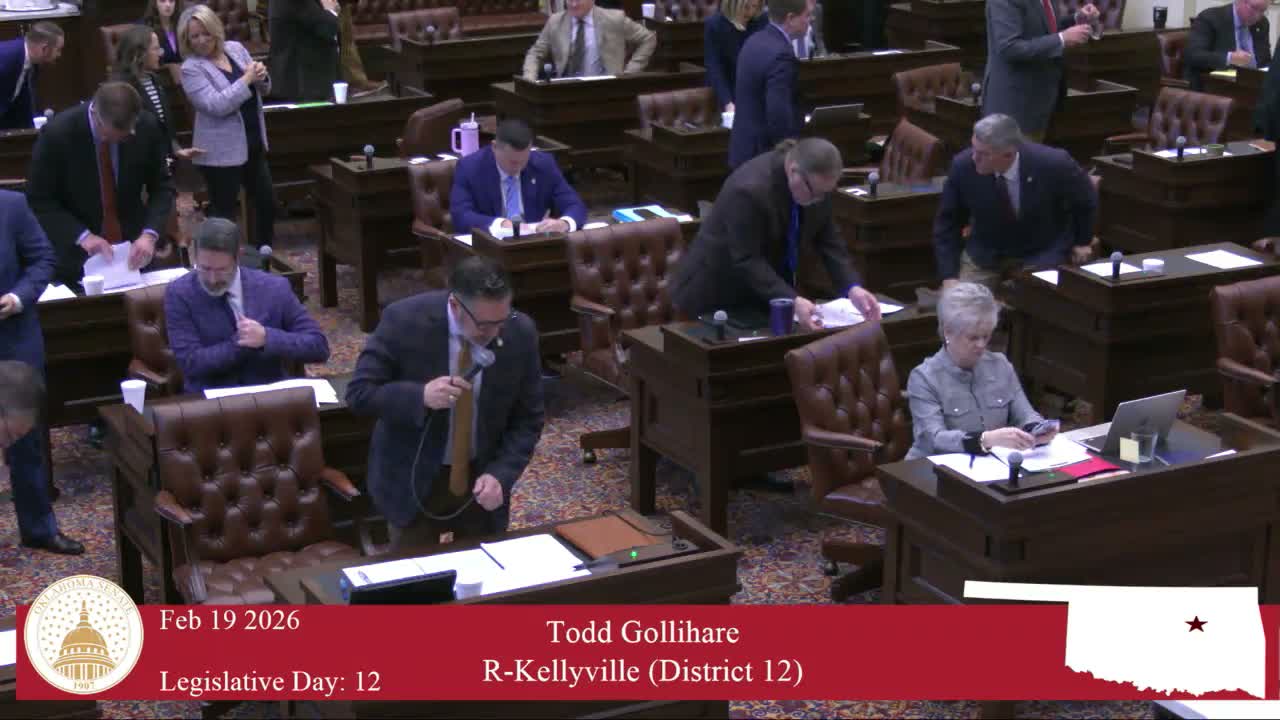
Summary
After an extended debate over surprise charges and contract limits, the Oklahoma Senate passed SB 1942 to clarify that when an insurer does not pay for a service, the insurer cannot fix the provider's price; the bill passed on final reading 40–3.
The Oklahoma State Senate on Feb. 17 approved SB 1942, legislation that clarifies the difference between "reimbursable" and "reimbursed" charges and removes insurer price controls for services insurers do not pay for. Senator Tom Thompson, the bill's sponsor, said the change is intended to return pricing authority to dental providers and to the "free market" for services not covered by insurance.
Thompson said the bill "simply clarifies" the distinction between reimbursable (able to be reimbursed) and reimbursed (actually paid), arguing that if an insurer does not pay for a service, it should not be able to fix the price charged by the provider. "If the service is not actually covered, paid for by the insurance company, they shouldn't be involved in fixing the price," Thompson said.
Opponents warned that the bill's replacement of language such as "subject to" with "notwithstanding" could permit dentists to charge more than limits listed in subscriber contracts. Senator Bergstrom asked whether the change would let providers "charge more than what the contract says," saying that many subscribers sign plans expecting contracted limitations. "If the contract has limitations, no one should be able to violate the limitations," Bergstrom said, urging a no vote.
Supporters, including Majority Leader Daniels and Senators Devers and Weaver, framed the measure as restoring autonomy to small providers and allowing negotiated pricing when insurance is not involved. Daniels said the Legislature can add transparency or penalties later if "bad actors" are found. Weaver described the bill as consistent with free‑market practice for small business owners.
After debate, the Senate voted on third reading and final passage; the clerk recorded 40 ayes and 3 nays, and the measure was declared passed. The transcript does not specify an effective date or the next procedural step in enrollment or implementation.
The arguments on the floor focused on consumer protection versus provider autonomy: opponents emphasized the risk of surprise charges for subscribers who purchased plans with specific limitations, while proponents emphasized market competition and the ability of patients to seek alternate providers.
SB 1942 passed final passage on the Senate floor and will proceed according to the Legislature's usual enrollment and transmittal processes; the transcript did not record further scheduling or an effective date.