
Farmers, students and MDA warn beginning-farmer tax credit is underfunded as applicants are denied
Get AI-powered insights, summaries, and transcripts
Subscribe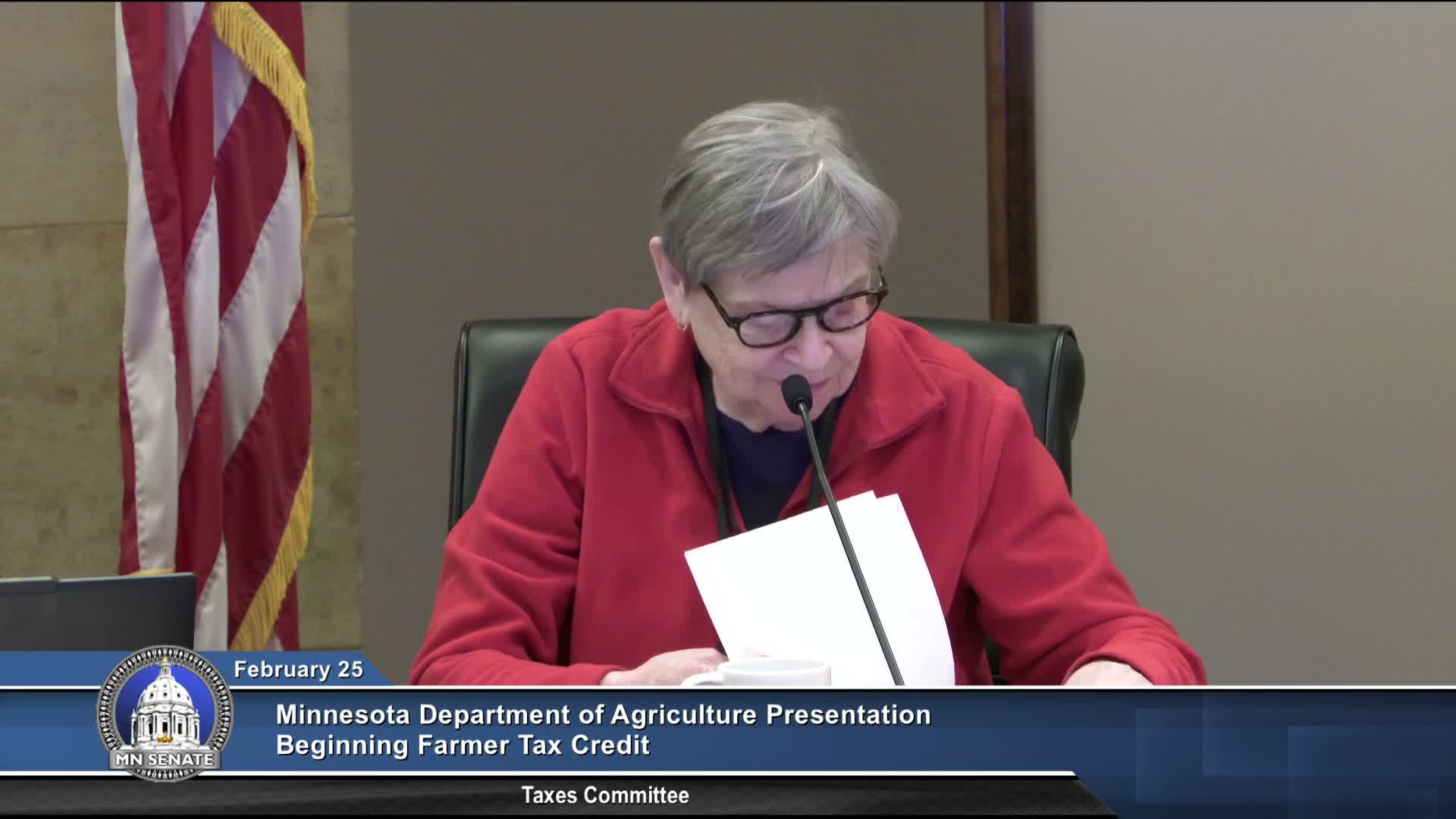
Summary
The Minnesota Department of Agriculture told the Senate Tax Committee the beginning farmer tax credit faces a funding shortfall after legislative changes and demand increases; the agency and affected farmers described denied applications, planning disruptions and legislative options to expand or redesign the program.
Tom Peterson, commissioner for the Minnesota Department of Agriculture, told the Senate Tax Committee the beginning farmer tax credit was created to make it easier for new farmers to access land and was intended as a nation‑leading model other states now emulate. The department’s program administrator, Jenny Heck, told lawmakers the credit is nonrefundable, limited to $4 million a year and allocated on a first‑come, first‑served basis.
Heck said eligible beginning farmers are Minnesota residents who have entered farming in the last 10 years and must meet a net‑worth limit of $1,042,000; asset owners may be individuals or business entities but equipment dealers are excluded. Credit amounts include 10% of cash lease rental income (maximum $7,000), 15% of share rent (maximum $10,000), and 8% (or 12% for limited‑land‑access farmers) of sale price for land sales, with a maximum sale credit capped at $50,000. Beginning farmers may also receive reimbursement for farm business management tuition up to $1,500 per year for three years.
Heck said recent 2023 legislative changes increased eligibility for direct family transfers, raised the maximum sale credit from $32,000 to $50,000, eliminated rollover funding, and reduced the program budget from roughly $6.5 million to $4 million—changes she described as combining to produce the current shortfall. The MDA reported that applications exceeded available funding for the third year in a row and that in 2025 it denied 585 applications; the agency said last year the program ran out of funds in about three weeks and this year in roughly three days.
Testimony at the hearing put a human face on those denials. Daryl Larson, who farms in Morrison County, said he and his buyer completed paperwork and assumed the credit would be available; he said they later learned their application was denied because funding was exhausted. "We're part of more than 50% of the applicants who were denied due to the lack of funding," Larson said, and estimated a significantly larger tax bill for 2025 than he had planned. Student Owen Bussey, a Glencoe‑Silver Lake junior active in FFA, told the committee that half of applicants are being turned away and said high land prices—he cited an average McLeod County land price of $11,000 per acre—are a major barrier for young farmers.
Committee members pressed for options. Senator Putnam said his preference is to remove the cap entirely to let more applicants access credits. Several members suggested mechanical fixes short of adding funds, such as reserving credit commitments earlier in the sales process or delaying payment so sellers and buyers can plan without the uncertainty of an annual first‑come allocation. Heck and Commissioner Peterson offered to provide additional application‑level data to the committee, including counts of sales versus leases and numbers of repeat applicants.
Stakeholders at the hearing also offered fiscal context. Stu Lohrey, government relations director for the Minnesota Farmers Union, relayed department revenue‑estimate figures that he reported as approximately $1.3 million for 2026 and about $1.04 million for 2027 for proposals discussed at the hearing.
The committee did not take legislative action at the hearing. Members agreed to revisit the program design and possible funding changes, and the department said it would follow up with requested data to help shape potential legislative fixes. The committee adjourned with the matter left for future consideration.