Get AI Briefings, Transcripts & Alerts on Local & National Government Meetings — Forever.
Witness tells House committee a Houston teacher used AI translation and reported a 20% test-score gain
Loading...
Summary
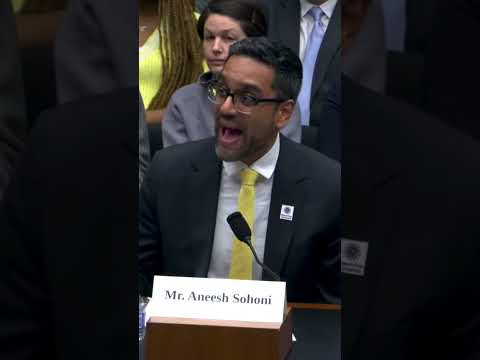
Mister Sahoney told the House Committee on Education and the Workforce that a Houston teacher used AI to translate classroom texts into students’ home languages—he said that change coincided with about a 20% increase in test scores and argued AI can free teachers to focus on relationships and personalization.
Mister Sahoney told the House Committee on Education and the Workforce that a Houston teacher used artificial intelligence to translate classroom texts into students’ home languages and that the change coincided with an approximately 20% increase in test scores.
An unidentified questioner opened the exchange by noting the written testimony that cited the Houston teacher and asked how AI produced such an improvement and whether other teachers could replicate it. "I wish that that person had been my teacher at certain points," the questioner said.
In response, Mister Sahoney described the practice behind the claim: "the teacher in Houston took text, for a classroom who was who had students that were speaking over 52 different languages. And so they were able to use AI to ensure the text was able to be translated into the languages that met the students where they were without reducing the complexity of the text at the same time." He added that the technology allowed the teacher to spend more time with students, "motivating the students to be able to access that technology."
Sahoney framed the Houston example as part of a broader argument that AI can support the personalization of learning while allowing teachers to preserve high academic standards and devote more time to relationship-building. "AI has the potential to help support the personalization of learning opportunities for students, while at the same time freeing up the teacher," he said.
The exchange in the hearing presented the Houston case as an illustrative example offered in written testimony; the committee did not vote on any proposal, and the claim was presented as testimony rather than an independently verified finding. The witnesses and the questioner discussed replicability and classroom practice, but the transcript does not show subsequent committee action or additional evidence verifying the 20% figure or the exact implementation details across other classrooms.
The committee's attention to the example highlights questions lawmakers may pursue about how schools pilot AI tools, how outcomes are measured, and how districts support multilingual learners. No formal actions, motions, or votes on related legislation were recorded in this exchange.