Get Full Government Meeting Transcripts, Videos, & Alerts Forever!
Get email alerts on the Hb 4066 A topic
No spam. Unsubscribe anytime.
Senate Education Committee hears technical fixes in omnibus HB 4,066 A; no vote taken
Summary
The Senate Education Committee held a public hearing on House Bill 4,066 A on Feb. 17, 2026, where state and university officials requested technical corrections affecting the MIC3 compact, OHSU board language, PSU study timelines and fixes for ESDs; committee members asked for follow-up details and no vote was taken.
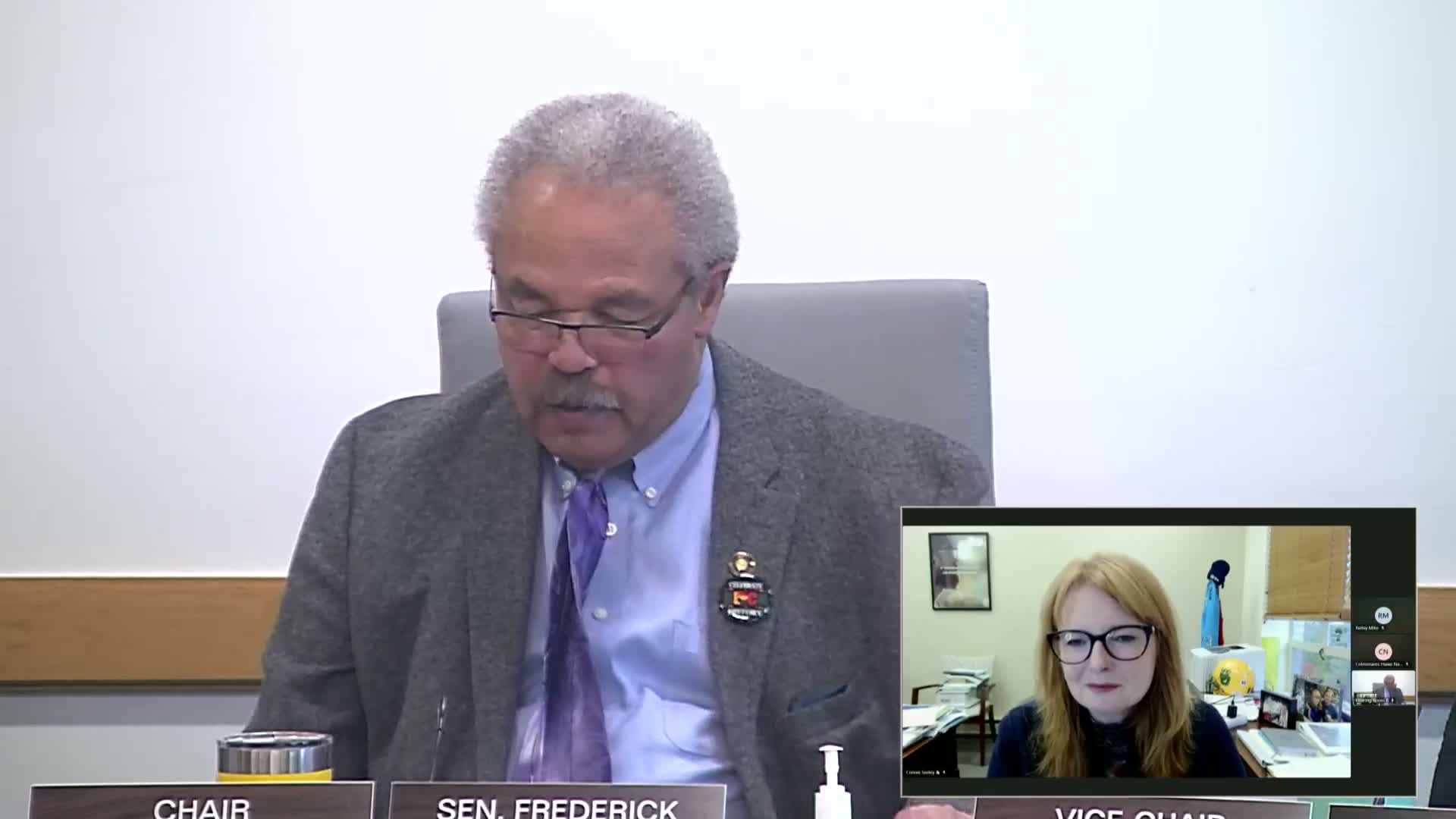
Chair Frederick opened a public hearing Feb. 17 on House Bill 4,066 A, an omnibus education bill that sponsors and agency staff described as a set of technical corrections across multiple education laws.
Ellen, a committee staff member, told the panel that HB 4,066 A “makes a series of changes to Oregon education laws, affecting the Oregon Health and Science University Board of Directors, education service districts, the military interstate children's compact, the state board of education, school district budget committees, and a study of farm worker labor standards by Portland State University.” She also noted the bill declares an emergency and would take effect on passage.
Deputy Director of Operations Teneal Weatherall of the Oregon Department of Education urged a narrow correction to ORS 326.552 so Oregon’s statute aligns with the Military Interstate Children's Compact (MIC3) model language. “This will help ensure that military connected students face minimal disruption in education when military families relocate across state lines,” Weatherall said, and warned current Oregon text “unintentionally expands eligibility to National Guard members serving on state missions such as disaster response or emergency activations even when families are not relocating across state lines.” Weatherall asked legislators to remove the Oregon-only reference to 32 U.S.C. §502(f) to match the uniform compact language.
Connie Seeley, Chief Administrative Officer at Oregon Health & Science University, described two OHSU-related updates in the bill. She said the language would align OHSU’s board meeting frequency with other public universities and adjust student-board-member rules so the student representative is exempted from certain collective-bargaining discussions. “This change in language ensures that we can align the intent of the statute to have quarterly reporting from the board and meet our obligations around OHSU's financial reporting,” Seeley said.
Kimberly Coops from Portland State University asked for flexibility in reporting timelines connected to a PSU study established under House Bill 2,548 (2025). She said a drafting issue could require PSU to deliver interim reports to the Higher Education Coordinating Commission (HECC) earlier than the statutory schedule, which would clash with research-compliance and human-subjects requirements. Coops described the fixes as necessary to allow researchers “to thoughtfully conduct the study.”
Adrienne Anderson, representing the Oregon School Boards Association, said OSBA supports three provisions in the bill: clarifying how an equity advisory council member can satisfy a seat on a school district budget committee, extending a prior stipend-related ethics fix to education service districts (ESDs), and including ESD buildings in a prior timing fix for lighting replacements. Anderson reported that some smaller districts have struggled to find volunteers to serve on budget committees and said she would follow up with details about recruitment and oversight procedures.
Senators pressed for more specifics. Senator Salman asked how districts document recruitment attempts for equity advisory council members and whether there is any enforcement for noncompliance; he also asked about the potential fiscal impact of allowing ESD boards to adopt stipends. Anderson said stipend decisions would be made locally through district budgets and promised to provide more information on recruitment processes.
No committee votes or formal actions on HB 4,066 A occurred during the hearing. Chair Frederick closed the public hearing and said the committee would not meet on Thursday, announcing the next scheduled committee appearance the following week.
The hearing gathered testimony focused on alignment and technical drafting corrections rather than substantive policy changes; committee members requested follow-up documentation on recruitment/oversight for equity-advisory appointments and the fiscal implications of extending stipends to ESD boards.