Get Full Government Meeting Transcripts, Videos, & Alerts Forever!
Get email alerts on the Presidential Fitness topic
No spam. Unsubscribe anytime.
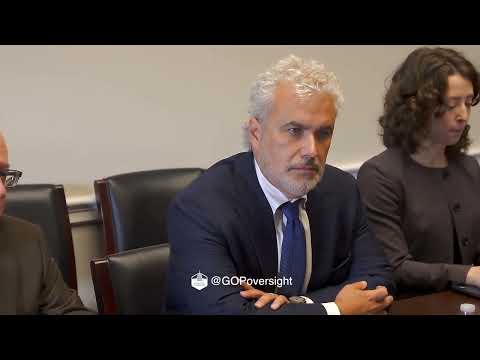
Jeffrey Zients tells House Oversight he saw no evidence President Biden was unable to do his job
Summary
In a transcribed interview before the House Committee on Oversight and Accountability, former White House chief of staff Jeffrey Zients said he never observed President Biden being mentally unable to execute presidential duties and denied knowledge of any cover-up. He framed many internal conversations as focused on public perception and reelection strategy, not on capacity to govern.
Jeffrey Zients, who served as White House chief of staff from February 2023 to the end of the term, told the House Committee on Oversight and Accountability that he had "no reservations" about President Biden’s ability to do the job and that he never saw the president be mentally unable to execute the duties of the presidency. The committee opened the interview by saying it seeks to investigate claims about President Biden's physical and mental condition; Zients repeatedly answered that concern about age was about public perception, not a determination of incapacity.
Zients said he had conversations with many senior advisers, elected officials and outside figures about the president’s age and how it affected voters’ perceptions. He described those conversations as focused on logistics and presentation — how to schedule the president, which public settings to use and when to employ teleprompters — and stressed that those steps were intended to manage perception for the re-election campaign. "There was never discussion about the president's ability to do the job," Zients said when asked about earlier private conversations.
When the committee cited polls and public concern about the president’s mental acuity, Zients said he was not a poll expert but relied on his daily interactions with the president. "I had firsthand knowledge of interacting with him all the time, and he was completely suited to be president," he said. He also answered repeatedly that he had "no knowledge" of any instance in which a White House official issued executive actions — including pardons, clemency or executive orders — without the president's authorization.
Zients acknowledged that the frequency of verbal stumbles and gaffes had increased over time but distinguished those episodes from any inability to govern. He told the committee that, in his judgment, the key question many staff and outside advisers raised was whether perception of age would harm the president’s reelection prospects — a political calculation rather than a clinical finding. He said that even after the campaign debate that produced widespread concern, his assessment of the president’s capacity to "make the very hardest decisions" had not changed.
The interview covered more than perception, including Zients' role in scheduling, interaction with White House medical staff and his view that decisions about the president's health were matters for the president and his doctor. He told the committee that he deferred medical judgments to the president’s physician, Kevin O'Connor, and that he lacked both the medical training and the direct knowledge to comment on clinical diagnoses.